


Power Energy Storage Cabinet with Battery: The Smart Heart of Modern Electricity Management
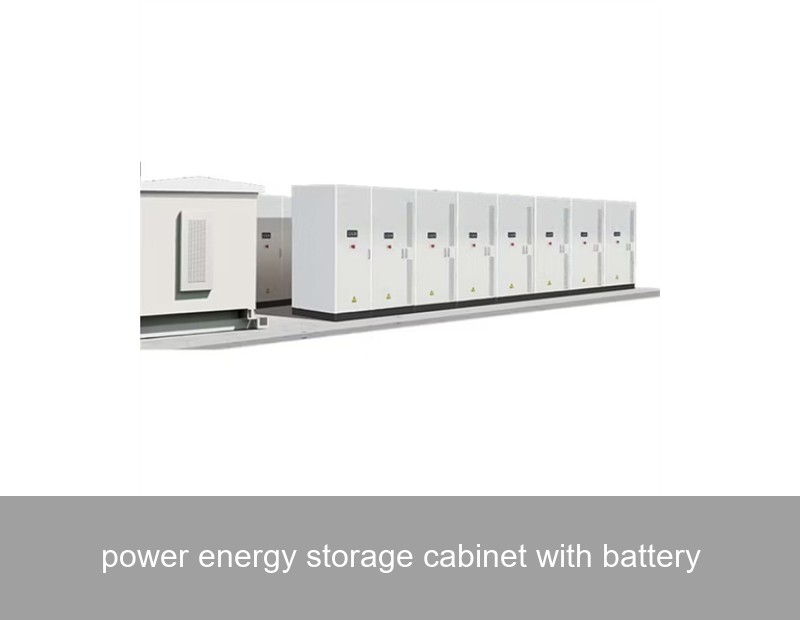
Have you ever wondered how businesses manage sudden power surges, or how a home with solar panels keeps the lights on after sunset? The answer increasingly lies in a sophisticated, unassuming unit: the power energy storage cabinet with battery. More than just a box of batteries, it's the intelligent core that stores electricity efficiently and dispatches it precisely when and where it's needed. For facility managers, homeowners, and grid operators across Europe and the U.S., this technology is transforming from a niche solution to a critical component for energy resilience, cost savings, and sustainability. Let's explore how this system works and why its "intelligence" is just as important as its storage capacity.
Table of Contents
What Exactly is a Power Energy Storage Cabinet?
Think of a power energy storage cabinet as a highly advanced, self-contained power bank for your building or microgrid. It integrates several key elements into a single, often modular, enclosure:
- Battery Modules: The actual energy storage units, typically using Lithium-ion chemistry (like LFP - Lithium Iron Phosphate) for their high density, long lifespan, and safety.
- Battery Management System (BMS): The "brain" that monitors cell voltage, temperature, and health, ensuring safe operation and longevity.
- Power Conversion System (PCS): The "interpreter" that converts stored DC battery power to AC power for your appliances, and vice-versa for charging.
- Thermal Management: A cooling/heating system to keep batteries at their optimal operating temperature.
- Energy Management System (EMS): The top-level "orchestrator" that makes intelligent decisions based on energy prices, consumption patterns, and grid signals.
Companies like Highjoule specialize in engineering these components into seamless, plug-and-play solutions. For instance, Highjoule's Commander Series Commercial Cabinet is designed for easy scalability from 100 kWh to multi-MWh installations, featuring built-in safety protocols and grid-interactive capabilities right out of the box. This integrated approach removes complexity for the end-user, delivering a reliable power energy storage cabinet with battery that just works.
The Driving Forces: Why is This Technology Booming Now?
The surge in demand isn't accidental. It's a direct response to several converging trends:
1. Volatility in Energy Markets
Both Europe and North America have experienced significant fluctuations in electricity prices. The International Energy Agency (IEA) highlights how geopolitical events and supply constraints have led to unprecedented price spikes. A smart storage cabinet allows users to "buy low, use high"—storing energy when tariffs are cheap and using it during expensive peak hours.
2. The Renewable Energy Integration Imperative
Solar and wind are intermittent. The sun doesn't always shine, and the wind doesn't always blow. Storage is the missing link that captures excess renewable generation for later use, turning variable sources into firm, dispatchable power. This is crucial for both individual prosumers and for grid stability as renewable penetration grows.
3. Increasing Grid Instability and Outages
From extreme weather events in the U.S. to grid congestion in parts of Europe, power reliability is a growing concern. A power energy storage cabinet with battery provides instant backup power, bridging the gap until the grid is restored or a generator starts.

Image: A modern industrial battery energy storage installation. Source: Unsplash (License: Free to use)
Beyond the Battery: The Intelligence Inside
The hardware is vital, but the software is what unlocks true value. Let's break down the intelligence layers:
| System Layer | Function | Highjoule's Approach |
|---|---|---|
| Battery Management (BMS) | Ensures cell-level safety, balance, and longevity. | Proprietary adaptive BMS that learns cell degradation patterns to optimize charging cycles. |
| Power Conversion (PCS) | Converts AC to DC and vice-versa with high efficiency. | Bi-directional inverters with >98% efficiency, enabling seamless grid feedback where permitted. |
| Energy Management (EMS) | The strategic brain for economic and operational control. | Highjoule's "SynergyOS" uses AI and weather forecasts to predict energy needs and automate cost-saving strategies. |
This integrated intelligence is what separates a basic battery bank from a modern power energy storage cabinet. It allows a supermarket, for example, to automatically reduce its grid draw during the 5-8 PM peak, power its coolers from storage, and even sell a small amount of power back to the grid if programs exist, all without manual intervention.
A Real-World Case Study: Boosting Resilience and ROI for a German Retail Chain
Let's look at a concrete example. A mid-sized supermarket chain in Bavaria, Germany, faced two problems: high "peak demand" charges from their utility and vulnerability to short grid outages that threatened food spoilage.
- Solution Deployed: Highjoule installed a 250 kWh Commander Series power energy storage cabinet at one of their flagship stores, integrated with the existing rooftop solar PV.
- How It Works: The system's EMS charges the batteries with surplus solar during the day. Then, 30 minutes before the store's historically highest consumption period (evening rush), it begins discharging to supplement grid power, "shaving" the peak demand.
- Results After 12 Months:
- Demand Charge Reduction: 40% decrease in peak power draw from the grid.
- Energy Cost Savings: 22% reduction in overall electricity costs (combining lower consumption and avoided peak charges).
- Reliability: Seamless backup through three brief grid outages, preventing an estimated €15,000 in potential lost inventory.
- Sustainability: Increased on-site consumption of solar power from 35% to over 70%.
This case, verified by Fraunhofer ISE research on storage system performance, demonstrates the multi-faceted ROI of a well-integrated system. It's not just backup; it's an active financial asset.
Choosing the Right Power Energy Storage Cabinet for Your Application
Not all cabinets are created equal. Key considerations include:
For Residential Users (U.S. & Europe):
Focus on safety (LFP chemistry is now standard), seamless integration with your solar inverter, and user-friendly monitoring apps. Highjoule's HomeHub series, for example, offers a compact design with built-in safety isolation and a simple app that shows savings and system health.
For Commercial & Industrial (C&I) Sites:
Scalability, robust grid-interactive features, and industrial-grade warranties are paramount. The ability to start small and add cabinets as needs grow is a major advantage. Highjoule's C&I solutions often include dedicated monitoring portals for facility managers and integration with building management systems.
For Microgrids & Utilities:
Grid-forming capabilities (the ability to "black start" or create a stable grid without external support) and advanced grid service functions (frequency regulation, voltage support) are critical. These systems are at the cutting edge of storage technology.

Image: Technician monitoring a large-scale BESS control system. Source: Unsplash (License: Free to use)
The Future Horizon: What's Next for Energy Storage Cabinets?
The technology is evolving rapidly. We're moving towards even more intelligent systems that participate in virtual power plants (VPPs)—where thousands of distributed storage units are aggregated to act like a single, large power plant, providing services to the grid. Furthermore, the integration of second-life EV batteries into stationary storage cabinets is gaining traction, promising a more circular economy. The core power energy storage cabinet with battery will become an even more active and collaborative node in a decentralized, resilient, and clean energy network.
Ready to Explore Your Potential?
The journey to energy independence and smarter power management begins with a clear understanding of your own consumption patterns and goals. What would a 30% reduction in your highest monthly electricity bill do for your operational budget? How much value would uninterrupted power bring to your home or business? Engaging with an expert who can analyze your needs and design a system that goes beyond simple storage is the crucial first step.
 Inquiry
 Online Chat