


Unlocking Grid Resilience: The Essential Guide to Grid-Tie Energy Storage Cabinets with Battery
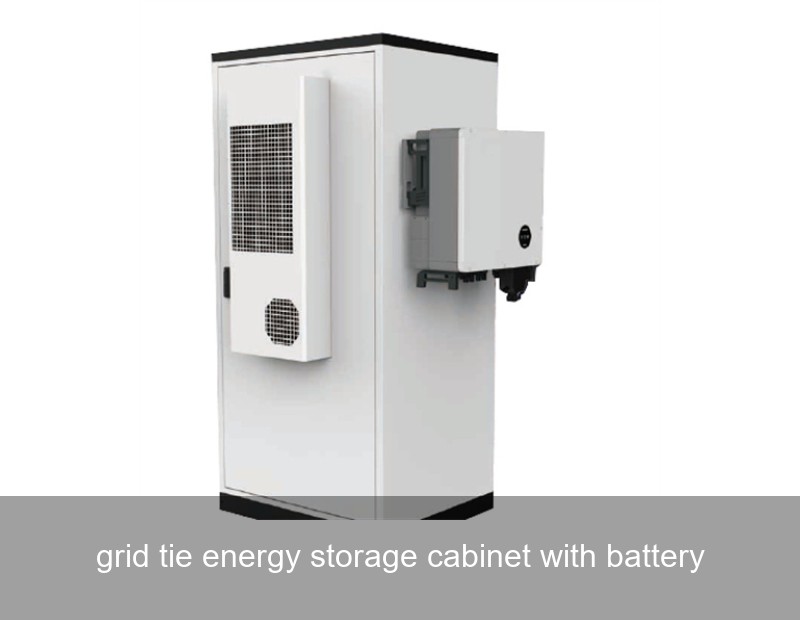
your business is humming along, machinery is running, servers are processing data. Suddenly, the grid voltage dips—a common occurrence during peak demand or due to intermittent renewable supply. For a moment, everything flickers. In the past, this might have caused costly disruptions. Today, a silent sentinel in your equipment room or yard seamlessly intervenes: the grid-tie energy storage cabinet with battery. This isn't just a backup power box; it's an active participant in your energy ecosystem, stabilizing your power, cutting costs, and supporting the broader electricity network. As a product technology expert at Highjoule, I've seen how this technology transforms how businesses and communities interact with power. Let's dive into what makes these systems a cornerstone of modern energy management.
The Grid Stability Imperative: More Than Just Backup
The energy landscape is undergoing a seismic shift. The phenomenal growth of variable renewables like solar and wind is a climate victory, but it introduces new challenges for grid operators. The sun doesn't always shine, and the wind doesn't always blow, creating fluctuations in power supply. Conversely, during hot summer evenings when demand soars, grids can become strained. This is where the traditional view of batteries as mere backup power fails. A modern grid-tie battery storage cabinet operates in constant dialogue with the grid.
Its primary functions extend far beyond outage protection:
- Peak Shaving: Drawing stored energy during expensive peak-rate hours, dramatically reducing demand charges, which can constitute up to 50% of a commercial electricity bill.
- Frequency Regulation: Providing instant injections or absorptions of power to maintain the grid's stable 60Hz (or 50Hz) frequency, a service often compensated by grid operators.
- Renewable Integration: Storing excess solar generation during the day for use at night, maximizing self-consumption and allowing for a smoother, more predictable feed-in to the grid.
- Voltage Support: Mitigating local voltage sags and swells, protecting sensitive equipment and improving power quality for you and your neighbors.
The data underscores the need. According to the International Energy Agency (IEA), global grid-scale battery storage capacity is set to multiply 15-fold by 2030, with advanced systems like grid-tie cabinets playing a pivotal role in this expansion.
Key Components of a Modern Grid-Tie Storage Cabinet
So, what's inside this pivotal cabinet? It's a sophisticated integration of hardware and software designed for safety, efficiency, and intelligence.
| Component | Function | Why It Matters |
|---|---|---|
| Battery Rack (Li-ion, LFP) | The core energy reservoir, typically using Lithium Iron Phosphate (LFP) for safety and longevity. | LFP chemistry offers superior thermal stability, longer cycle life (>6000 cycles), and is cobalt-free, aligning with sustainability goals. |
| Bi-Directional Inverter | The "brain" of power flow. Converts DC battery power to AC for the grid/building, and vice-versa for charging. | High-efficiency inverters (98%+) minimize energy loss. Grid-forming capabilities allow the system to stabilize microgrids. |
| Battery Management System (BMS) | Monitors cell voltage, temperature, and state of charge for safety, performance, and battery health. | Prevents overcharge/over-discharge, manages cell balancing, and is critical for ensuring a 10+ year operational life. |
| Energy Management System (EMS) | The strategic controller. Decides when to charge, discharge, or hold based on tariffs, weather, and consumption patterns. | This is where AI and machine learning unlock value, optimizing for cost savings or grid services automatically. |
| Thermal Management & Safety Enclosure | Climate control (cooling/heating) and safety systems (fire suppression, containment) within a robust, often IP54-rated cabinet. | Ensures optimal operating temperature for battery life and safety, allowing for reliable outdoor or indoor installation. |

Image Source: Unsplash (Representative image of industrial energy storage equipment)
Real-World Impact: A Case Study from California
Let's move from theory to tangible results. Consider a mid-sized fruit cold storage facility in California's Central Valley. Their challenges were twofold: crippling demand charges during peak cooling loads in the summer and frequent, brief grid disturbances that risked spoiling perishable goods.
In 2022, they installed a 500 kW / 1 MWh grid-tie energy storage cabinet system. The results, monitored over one year, were compelling:
- Demand Charge Reduction: By discharging the battery during the 4 PM to 9 PM peak window, the facility slashed its monthly demand charges by an average of 68%.
- Revenue Generation: The system was enrolled in the CAISO (California Independent System Operator) demand response program. By providing frequency regulation services, it generated an additional $18,000 in annual revenue.
- Reliability: The system's seamless transition during 12 recorded grid sags prevented potential spoilage events, saving an estimated $45,000 in product loss.
The project's payback period was under 5 years, factoring in incentives like the Federal Investment Tax Credit (ITC) for standalone storage. This case exemplifies the multi-revenue stream model modern storage enables.
Highjoule's Approach: Intelligent Grid-Tie Solutions Built for Scale
At Highjoule, with nearly two decades of deep expertise in advanced storage, we've engineered our GridSynergy Cabinet Series to address these exact challenges. Our philosophy is that hardware must be robust, but intelligence defines the return on investment.
Our cabinets are more than containers; they are integrated, grid-interactive platforms. Key differentiators include:
- Adaptive EMS with Predictive Analytics: Our proprietary brain doesn't just react; it forecasts. By integrating local weather data and grid price forecasts, it pre-charges batteries before a high-price or low-reliability event, maximizing value.
- Scalable & Modular Architecture: Starting from a compact 100 kW unit, systems can be paralleled to multi-megawatt installations. This allows a business to start small and expand as needs grow, protecting initial investment.
- Grid-Forming Inverter Technology: In the event of a grid outage, our systems can automatically form a stable local microgrid, keeping critical loads online—a feature increasingly vital for industrial operations and community resilience.
- Global Service & Monitoring: Every Highjoule cabinet is connected to our 24/7 global monitoring center. We perform proactive health checks and can often resolve software-level issues remotely, ensuring uptime and performance.

Image Source: Unsplash (Representative image of technician servicing energy storage system)
For a large logistics hub in Germany, we deployed a 2 MW system that not only manages their peak loads but also actively sells flexibility to the local grid operator, turning a cost center into a modest profit center. This dual-purpose application is the future we're building.
Is a Grid-Tie Energy Storage Cabinet Right for Your Operation?
Evaluating this technology requires looking at your specific energy profile. Ask yourself and your facility manager:
- Does our utility bill show high "demand charges" or do we operate in a region with significant time-of-use rate differentials?
- Do we experience frequent, brief power quality issues (sags, flickers) that disrupt processes or damage sensitive equipment?
- Do we have on-site solar PV, and are we seeking to increase self-consumption and reduce grid export?
- Is our operation located in an area with an aging grid infrastructure or increasing climate-related outage risks?
If you answered "yes" to any of these, a detailed feasibility assessment is likely the next step. This involves analyzing interval meter data (usually provided by your utility) to model the optimal size and financial return of a grid-tie battery storage cabinet.
Looking Ahead: The Evolving Grid Partnership
The conversation is shifting from simple payback to strategic value. How can your facility's storage asset contribute to community resilience during extreme weather events? As virtual power plants (VPPs) become more prevalent, how might you participate? The grid-tie energy storage cabinet is your gateway to being an active, empowered participant in the new energy economy, not just a passive consumer.
What specific energy challenge on your site—be it cost, reliability, or sustainability—would you want a smart storage system to solve first?
 Inquiry
 Online Chat