


The Grid-Tie Solar Inverter in Poland: Your Gateway to Energy Independence and Savings
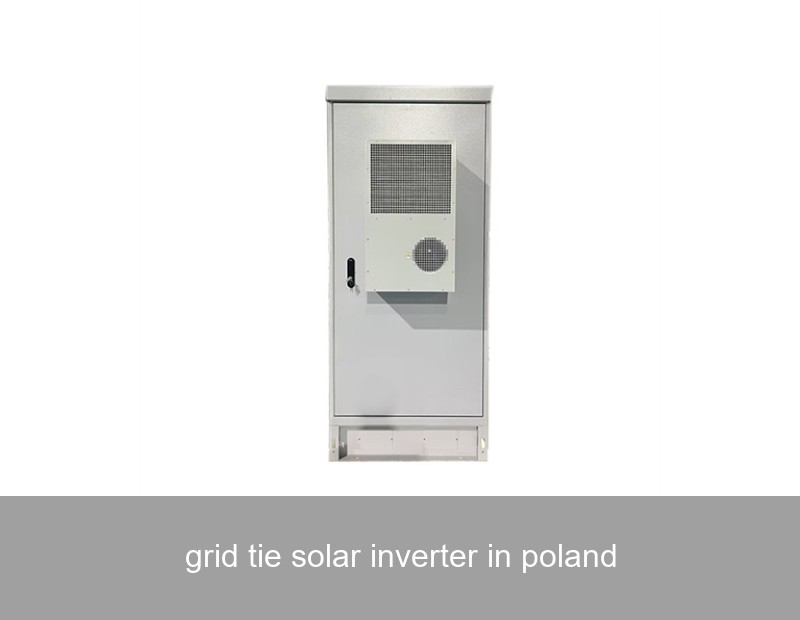
If you're exploring solar energy in Poland, you've likely encountered the term "grid-tie solar inverter." It's the unsung hero, the intelligent brain at the heart of most modern photovoltaic (PV) installations. But what exactly does it do, and why is choosing the right one particularly crucial for the Polish market? Simply put, a grid-tie solar inverter in Poland is the device that converts the direct current (DC) electricity generated by your solar panels into the alternating current (AC) used by your home and the national grid. More than just a converter, it's a sophisticated energy manager, ensuring every kilowatt-hour you produce is used optimally, safely fed into the grid, and ultimately, translates into lower electricity bills.
The Polish Solar Boom: A Perfect Storm for Grid-Tie Technology
Poland's energy landscape is undergoing a remarkable transformation. Driven by rising electricity prices, supportive government schemes like "Mój Prąd" (My Electricity), and a strong desire for energy security, Polish households and businesses are turning to solar power at an unprecedented rate. From a modest beginning, Poland has surged to become one of Europe's fastest-growing solar markets. The numbers speak for themselves: according to the Polish power transmission operator PSE, the total installed PV capacity skyrocketed from around 1.5 GW in 2020 to over 17 GW by the end of 2024, with prosumers (energy consumers who also produce) leading the charge.
This boom creates a unique environment for grid-tie solar inverter technology. The Polish climate, with its distinct four seasons, presents specific challenges: bright, sunny summers, cloudy winters, and significant temperature variations. Your inverter must be robust enough to handle these conditions while maximizing yield year-round. Furthermore, as the grid becomes saturated with renewable energy, technical requirements for inverters are evolving, focusing on grid stability and advanced features that go beyond simple conversion.

Image: A modern solar installation in a European setting, highlighting the importance of reliable inverter technology.
Why the Inverter is More Than Just a Box on the Wall
Think of your solar panels as a team of hard workers. The grid-tie inverter is the foreman. It doesn't just take their raw output (DC); it constantly tracks the maximum power point (MPPT) to ensure they are working at peak efficiency, even on a partially cloudy day in Poznań. It synchronizes the electricity perfectly with the grid's frequency and voltage—a critical safety and compliance function. Finally, it provides you with data, the insights you need to understand your energy production and consumption. Choosing a weak or incompatible "foreman" can significantly undermine the performance of your entire solar investment.
Choosing the Right Grid-Tie Inverter for Poland's Climate
Not all inverters are created equal, especially for Central European conditions. Here are the key features to prioritize when selecting a grid-tie solar inverter in Poland:
- High Efficiency Over a Wide Power Range: Look for European efficiency ratings (like 97%+). It should perform well not just at full sun, but also under partial load, which is common during spring and autumn.
- Robust MPPT Performance: Multiple Maximum Power Point Trackers (MPPTs) are advantageous for systems with panels on different roof planes or subject to varying shading, ensuring one shaded panel doesn't drag down the rest.
- Grid Support Functions: Modern inverters should offer features like voltage and frequency ride-through, which help stabilize the local grid as renewable penetration increases—a growing priority for Polish grid operators.
- Durability and Warranty: The inverter should operate reliably from -25°C in a Podkarpackie winter to 40°C in a summer heatwave. A long warranty (10+ years) is a strong indicator of manufacturer confidence.
- Smart Monitoring & Integration: User-friendly apps that show real-time production, consumption, and grid feed-in are essential for managing your energy. Future-proof inverters can also integrate with battery storage systems.
| Feature | Why It Matters for Poland | What to Look For |
|---|---|---|
| Efficiency | Maximizes scarce winter sun and cloudy-day production. | European weighted efficiency > 97%. |
| MPPT Range | Handles long summer days and low-light winter conditions effectively. | Wide voltage input range; dual MPPT for complex roofs. |
| Grid Compliance | Ensures safe, legal operation and future-proofing against grid code updates. | Compliant with Polish and EU grid codes (e.g., VDE-AR-N 4105). |
| Temperature Rating | Guarantees operation during harsh winters and hot summers. | Full power output from at least -25°C to +60°C. |
Case Study: Boosting Competitiveness for a Silesian Industrial Plant
Let's look at a real-world application. A medium-sized manufacturing plant in the Silesian region faced steep and unpredictable energy costs, which directly impacted its operational expenses. In 2023, they decided to install a 250 kWp rooftop solar system. The core of this system was a trio of advanced, three-phase grid-tie solar inverters selected for their high efficiency and robust grid management capabilities.
The results, monitored over one full year, were compelling:
- Annual Generation: The system produced approximately 255,000 kWh of electricity.
- Self-Consumption: Thanks to aligning production with daytime operational hours, the plant achieved a self-consumption rate of over 80%, drastically reducing draw from the grid.
- Financial Impact: The installation led to an estimated annual saving of over 200,000 PLN on electricity bills, with a projected return on investment (ROI) of under 6 years. The inverters' precise monitoring also allowed the facility manager to identify and shift non-critical loads to peak production times, further optimizing savings.
This case underscores that for Polish businesses, a high-performance grid-tie inverter is not just an eco-friendly choice, but a strategic financial decision that enhances competitiveness.
Highjoule's Smart Solutions for the Polish Market
At Highjoule, with nearly two decades of global experience in advanced energy storage and conversion, we understand the nuanced demands of the Polish energy transition. Our products are engineered to thrive in diverse climates and meet the highest standards of grid compliance. For Polish prosumers and businesses, our H-Volt GT Series grid-tie inverters are a perfect fit.
These inverters are built with the Polish context in mind. They feature exceptional low-light performance to capture every possible watt during the long twilight hours of a Gdańsk winter. Their advanced thermal management ensures stable operation during the peak heat of a Lubelskie summer. Crucially, they come equipped with Highjoule Energy Hub monitoring software, providing you with crystal-clear insights into your energy flows and savings. Furthermore, our inverters are designed to be storage-ready. When you decide to add a battery system—like our H-Cell Modular Battery—to achieve true energy independence and backup power, the integration is seamless. This future-proofs your investment against rising prices and evolving needs.

Image: A professional inspecting a commercial-scale inverter installation.
The Future of Grid-Tie Systems in Poland: Opportunities and Challenges
The journey for solar in Poland is just getting started. The next phase will likely involve a greater emphasis on hybrid systems that combine grid-tie inverters with battery storage. This allows Poles to store excess daytime production for use in the evening, increasing self-consumption to 90% or more and providing valuable backup power. As grid codes tighten, inverters with advanced grid-forming capabilities will become essential for maintaining a stable and resilient national electricity network.
However, challenges remain. Grid capacity constraints in some regions may lead to limitations on new connections. This makes choosing an inverter with the smartest self-consumption features and storage compatibility even more critical. The goal is no longer just to feed into the grid, but to intelligently manage and consume what you produce on-site.
Given the rapid evolution of technology and regulations, what specific energy goal is driving your consideration of a solar installation—is it immediate bill reduction, long-term protection against price volatility, or achieving full energy autonomy for your home or business?
 Inquiry
 Online Chat