


Choosing the Right Solar Panel for Your 2kVA Inverter: A Complete Guide
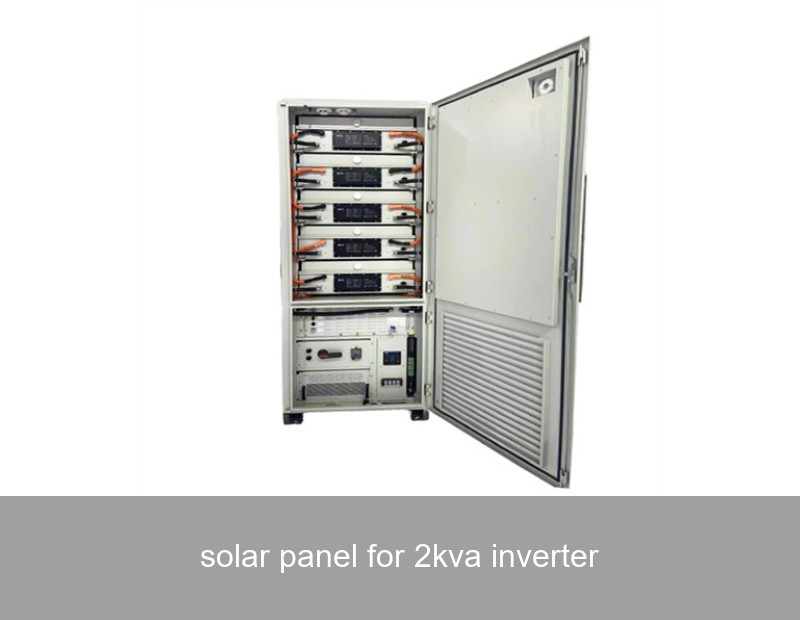
So, you've invested in a 2kVA inverter—a smart move for gaining energy independence. But here's a common puzzle we hear from homeowners and small business owners alike: "Why isn't my system performing as expected?" Often, the culprit isn't the inverter itself, but the solar panels connected to it. Selecting the correct solar panel for a 2kVA inverter is the single most critical factor in unlocking your system's full potential. It's the difference between a system that just works and one that delivers maximum savings and reliability. This guide will walk you through the essential calculations, technology choices, and real-world considerations to ensure your investment pays off for years to come.
Table of Contents
Understanding the Perfect Match: Inverter & Panel
Think of your 2kVA inverter as the brain of your solar system. Its primary job is to convert the direct current (DC) electricity generated by your solar panels into usable alternating current (AC) for your home appliances. A 2kVA (or 2000VA) inverter typically has a maximum continuous power rating of around 1600-1800 watts. This is your first key number.
The solar array must be sized to feed this inverter efficiently. Under-sizing leaves the inverter idle and wastes its capacity. Over-sizing significantly can lead to "clipping," where excess energy is simply lost because the inverter can't process it. The goal is to find the sweet spot where your panels provide optimal, consistent power throughout the day, maximizing the inverter's output without overwhelming it.
Key Calculations: From Watts to Sunlight
Let's move from theory to practical numbers. The first step is determining the total solar panel wattage needed.
- Inverter Capacity: A 2kVA inverter with an 1800W continuous rating.
- General Rule of Thumb: In sunny regions (like Southern Europe or California), you can often oversize the DC array by up to 130-150% of the inverter's AC rating. This accounts for less-than-ideal conditions and ensures the inverter operates at peak capacity for more hours of the day.
- Calculation: 1800W (inverter) x 1.3 (oversizing factor) = 2340W of solar panels.
Therefore, a system of around 2300-2400W of solar panels is an excellent target for a 2kVA inverter. Now, how many panels is that?
| Panel Wattage (W) | Number of Panels Needed | Total System Size (W) |
|---|---|---|
| 400W | 6 | 2400W |
| 450W | 5 | 2250W |
| 550W | 4 | 2200W |
Remember, these are electrical calculations. Your physical roof space, shading, and orientation are equally crucial. A south-facing (Northern Hemisphere) roof with a 30-degree tilt is ideal. Heavy shading can drastically reduce output, making micro-inverters or power optimizers a worthwhile consideration.

Image Source: Unsplash - A well-sized rooftop solar array is key for a 2kVA inverter system.
Solar Panel Technologies: Which is Best for You?
Not all solar panels are created equal. The technology impacts efficiency, space requirements, and cost.
- Monocrystalline: The most efficient (20%+). Made from single-crystal silicon, they perform better in low-light conditions and require less roof space. Ideal for most residential installations where space may be limited.
- Polycrystalline: Slightly less efficient (15-17%) but often more affordable. They have a blue, speckled appearance. A good choice if you have ample roof space and a tighter budget.
- Thin-Film: Less efficient and requires more space, but flexible and performs better in high heat. More common in large commercial installations.
For a solar panel for a 2kVA inverter system, high-efficiency monocrystalline panels are typically recommended. They allow you to reach your target wattage with fewer panels, which simplifies installation and is more aesthetically pleasing.
Real-World Performance: A Case Study from Spain
Let's look at data from a real installation. A family home in Valencia, Spain, installed a system with a 2kVA hybrid inverter and six 410W monocrystalline panels (total 2460W).
- Annual Generation: Approximately 3,600 kWh.
- Self-Consumption: The system covers ~75% of the household's annual electricity needs, with excess energy stored in a 5kWh battery for use at night.
- Financial Impact: Reduced their grid electricity bill by over 70% annually. The system paid for itself in under 8 years, thanks to high local electricity prices and sunny conditions.
This case highlights the importance of pairing the right panels with not just the inverter, but also considering inverter functionality and grid services. A hybrid inverter, like the one used here, was essential for integrating battery storage.
Integrated Solutions: The Highjoule Advantage
Matching components from different manufacturers can lead to compatibility headaches and suboptimal performance. This is where a fully integrated system shines. At Highjoule, with nearly two decades of experience, we design systems where every component is engineered to work in perfect harmony.
For a solar panel for a 2kVA inverter application, our ResiCore 2.0 solution is ideal. It pairs our high-efficiency 420W monocrystalline panels with our intelligent 2kVA hybrid inverter and scalable battery storage. The system's integrated energy management software constantly optimizes energy flow—prioritizing self-consumption, managing battery charging from solar or grid, and providing seamless backup power during outages.
Our panels are built with durable, anti-PID cells that resist performance degradation in hot climates, a common issue in Southern US and Mediterranean regions. By choosing a unified system like ResiCore 2.0, you eliminate guesswork, ensure warranty coverage across the entire system, and gain access to a single point of monitoring and control through our user-friendly Highjoule Hub app.

Image Source: Unsplash - Modern monitoring software is crucial for managing a 2kVA solar system's performance.
Beyond the Panel: Installation & Maintenance Insights
Proper installation is non-negotiable. Ensure your installer is certified and understands local building codes and grid-connection requirements. Key considerations include:
- Mounting: Secure, corrosion-resistant racking that allows for air circulation behind panels to keep them cool.
- Wiring: Correct DC cable sizing to minimize power loss over distance from panels to inverter.
- Safety: Proper grounding and the use of NEC (NFPA 70) compliant components, especially for US installations.
Maintenance is minimal but important. Periodically cleaning panels of dust, pollen, or bird droppings can recover significant output—studies from the National Renewable Energy Laboratory (NREL) show soiling can reduce output by 5-25%. An annual professional check of electrical connections and inverter operation is also advised.
Your Next Step Towards Energy Independence
Choosing the right solar panel for your 2kVA inverter is a blend of precise calculation, technology selection, and understanding your own energy habits. It's about building a system that not only fits your roof but fits your life. With the right setup, your 2kVA system becomes a reliable, money-saving power plant on your property.
What specific challenge is holding you back from maximizing your solar investment—is it understanding your roof's potential, navigating local incentives, or finding a truly integrated and reliable system?
 Inquiry
 Online Chat