


Grid Tied Solar System with Generator Backup: Your Ultimate Energy Security Blueprint
Imagine this: a powerful storm knocks out the grid, but your lights stay on, your fridge hums, and your home office remains powered. This isn't just a dream of energy independence; it's the practical reality made possible by a grid tied solar system with generator backup. For homeowners and businesses across Europe and the US, this hybrid setup is becoming the gold standard for achieving true resilience. It merges the economic and environmental benefits of solar with the steadfast reliability of a generator, creating a seamless safety net. But how do these systems work in harmony, and what does it take to build one that's intelligent and efficient? Let's dive in.
Table of Contents
- The Challenge: When Solar Alone Isn't Enough
- How a Grid-Tied Solar + Generator System Works: The Symphony of Power
- Key Components of a Robust Hybrid System
- A Real-World Case Study: Weathering the Storm in Bavaria
- Highjoule's Role: The Intelligence Behind the Power
- Making the Decision: Is This System Right for You?

Image: A modern resilient home setup. Source: Unsplash
The Challenge: When Solar Alone Isn't Enough
Here's a fact many new solar owners discover the hard way: a standard grid-tied solar system shuts off during a blackout. This safety feature, called anti-islanding, protects utility workers repairing lines. So, when the grid goes down, your panels stop powering your home—even on a sunny day. This leaves a significant gap in resilience. According to the U.S. Energy Information Administration (EIA), the average U.S. customer experienced just over seven hours of power interruptions in 2021, with major events being the primary cause.
Generators, whether propane, natural gas, or diesel, have been the traditional backup. But they come with their own hassles: manual startup, fuel storage, noise, emissions, and ongoing maintenance. The solution? Intelligently integrating both. A grid tied solar system with generator backup automates the process, creating a system where each component plays to its strengths: solar for daily savings and clean energy, the generator for guaranteed, long-duration backup.
How a Grid-Tied Solar + Generator System Works: The Symphony of Power
Think of it as a well-conducted orchestra. The solar panels are the string section, producing clean power. The generator is the brass, powerful and commanding. The conductor ensuring they play in perfect harmony is a critical piece of technology: a hybrid inverter or a smart transfer switch with battery integration.
Here's the typical sequence of events:
- Normal Operation: Solar panels power your home and export surplus to the grid (often earning credits).
- Grid Failure Detected: The system automatically disconnects from the public grid in milliseconds.
- Backup Power Activation: If batteries are present, they instantly take over critical loads. If not, or once batteries deplete, the controller signals the generator to auto-start.
- Generator Takes the Load: The generator powers the home's essential circuits. Advanced systems can even use excess generator power to recharge batteries.
- Grid Returns: The system monitors the grid, resynchronizes, and seamlessly switches back, shutting down the generator.
Key Components of a Robust Hybrid System
| Component | Role | Consideration |
|---|---|---|
| Solar PV Array | Primary energy source | Size based on energy consumption and roof space. |
| Hybrid Inverter / Energy Management System | The system's brain. Manages power flow between solar, grid, generator, batteries, and home. | Must have generator start/stop controls and be compatible with all components. |
| Backup Generator | Secondary, fuel-based power source. | Automatic start (ATS) is crucial. Size it to handle essential loads simultaneously. |
| Automatic Transfer Switch (ATS) | Safely switches load between power sources. | Integrated into advanced inverters or a separate unit. |
| Battery Storage (Optional but Recommended) | Provides instant backup, smooths generator operation, stores excess solar. | Allows generator to start less often, saving fuel and wear. Enables solar self-consumption during outages. |
A Real-World Case Study: Weathering the Storm in Bavaria
Let's look at a concrete example from our work at Highjoule. A medium-sized dairy farm in Bavaria, Germany, was plagued by frequent short grid outages affecting its milking and cooling systems. Their existing solar installation was useless during these events. Our challenge was to deliver resilience without wasting their solar investment.
The Solution: We designed and deployed a system centered around a Highjoule HPS-30 Hybrid Power Station (a unit combining a hybrid inverter, MPPT solar charge controller, and grid charger) paired with a 20kWh lithium-ion battery bank. A pre-existing 25kVA natural gas generator was integrated via a smart ATS. The HPS-30's logic was programmed with a critical priority: use solar to charge batteries first, power loads from batteries, and only start the generator if battery charge fell below 20% during an extended outage.
- Grid Outages Handled: 14 events (totaling 42 hours).
- Generator Runtime Reduced: By over 70% compared to a generator-only backup plan. It only started for 2 of the longest outages.
- Fuel Savings: Approximately €850 saved.
- Solar Self-Consumption Increased: From 35% to 60% by storing excess daytime solar in batteries for use at night.
The farm achieved uninterrupted operation, significant cost savings, and a lower carbon footprint for their backup power—a true win-win-win.

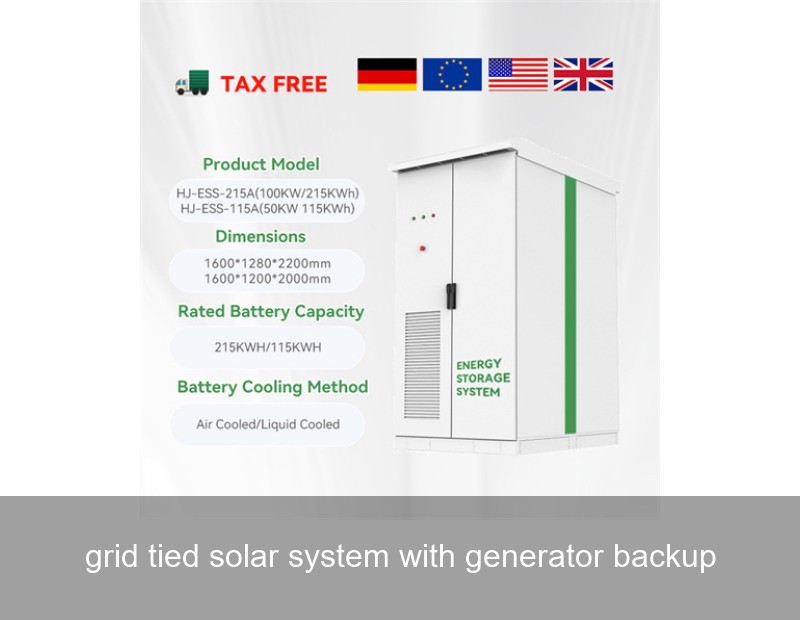
Image: A modern industrial battery energy storage system. Source: Unsplash
Highjoule's Role: The Intelligence Behind the Power
At Highjoule, we understand that a grid tied solar system with generator backup is more than just hardware; it's an intelligent ecosystem. Since 2005, we've specialized in making these systems not just functional, but smart and optimized. Our products like the HPS Series Hybrid Power Stations are designed specifically for these complex integrations. They feature sophisticated software that allows you to set precise protocols: when to start the generator, which loads to prioritize, and how to maximize solar consumption.
For larger commercial or microgrid applications, our Energy Management System (EMS) platform provides granular control and monitoring, often predicting outages based on weather data and pre-charging batteries. Our service goes beyond installation—we offer ongoing system health monitoring and optimization to ensure your investment delivers peace of mind for decades.
Why This Matters for the European and US Markets
In regions like North America with hurricane and wildfire risks, or parts of Europe facing grid constraints and extreme weather, the value of resilience is skyrocketing. Furthermore, policies are evolving. In the US, the Investment Tax Credit (ITC) now includes standalone storage and microgrid controllers, making these systems more affordable. In Europe, the drive for energy sovereignty is accelerating adoption. A well-designed hybrid system future-proofs your property against both blackouts and volatile energy prices.
Making the Decision: Is This System Right for You?
Considering a grid tied solar system with generator backup? Ask yourself these questions:
- How frequent and long-lasting are grid outages in my area?
- What are the "must-run" loads during an outage (e.g., sump pump, medical equipment, refrigeration)?
- Do I have a suitable, well-ventilated location for a generator?
- Is my primary goal maximum independence, or is cost-effective resilience the main driver?
Starting with a hybrid-ready inverter, even if you add the generator later, is a wise strategy. Consulting with an expert who understands the control logic and integration nuances is critical—this isn't a DIY project.
What's the first load you would prioritize to keep running when the lights go out, and how would that shape the design of your ideal energy resilience system?
 Inquiry
 Online Chat