


Solar Farm Site Selection: The Critical Foundation for Renewable Energy Success
So, you're planning a solar farm. You have the vision, the funding, and the drive to contribute to the clean energy transition. But before a single panel is ordered, the most crucial decision awaits: solar farm site selection. Choosing the right location isn't just about finding empty land; it's a complex, multi-layered analysis that determines the project's financial viability, long-term performance, and community impact for decades. A misstep here can turn a promising renewable energy project into a costly underperformer. Let's explore the key pillars of successful site selection and how modern technology, including advanced energy storage, is reshaping the criteria for what makes a site "ideal."
Table of Contents
- The Non-Negotiables: Solar Irradiation and Land
- Beyond the Sun: Grid, Environment, and Community
- The Game Changer: How Energy Storage Expands Site Potential
- Case Study: Transforming Grid Constraints in Southern Spain
- Highjoule's Role: Integrating Intelligence from Site to Grid
- The Future of Site Selection: AI and Hybrid Systems
The Non-Negotiables: Solar Irradiation and Land
The primary fuel for any solar farm is sunlight. Site selection begins with a deep dive into solar irradiance data—measuring the kilowatt-hours per square meter per day (kWh/m²/day) the location receives. Tools like NASA's Power Data Access Viewer or commercial satellite data services provide historical and predictive models. In the US, the Southwest's "solar belt" (Arizona, Nevada, California) and regions in Southern Europe like Spain and Italy naturally score high. However, high irradiance alone isn't enough.
The land itself must be suitable. Key considerations include:
- Topography & Slope: Gently sloping, south-facing (in the Northern Hemisphere) land is ideal. Steep slopes increase construction costs and may cause self-shading.
- Soil Type & Geotechnical Stability: Soil must support the mounting structures without excessive foundation costs. A geotechnical survey is essential.
- Land Use & Cost: "Brownfield" sites (abandoned industrial land) are increasingly attractive, avoiding land-use conflicts. Agricultural land classification is a major factor in Europe under the RED III directive.
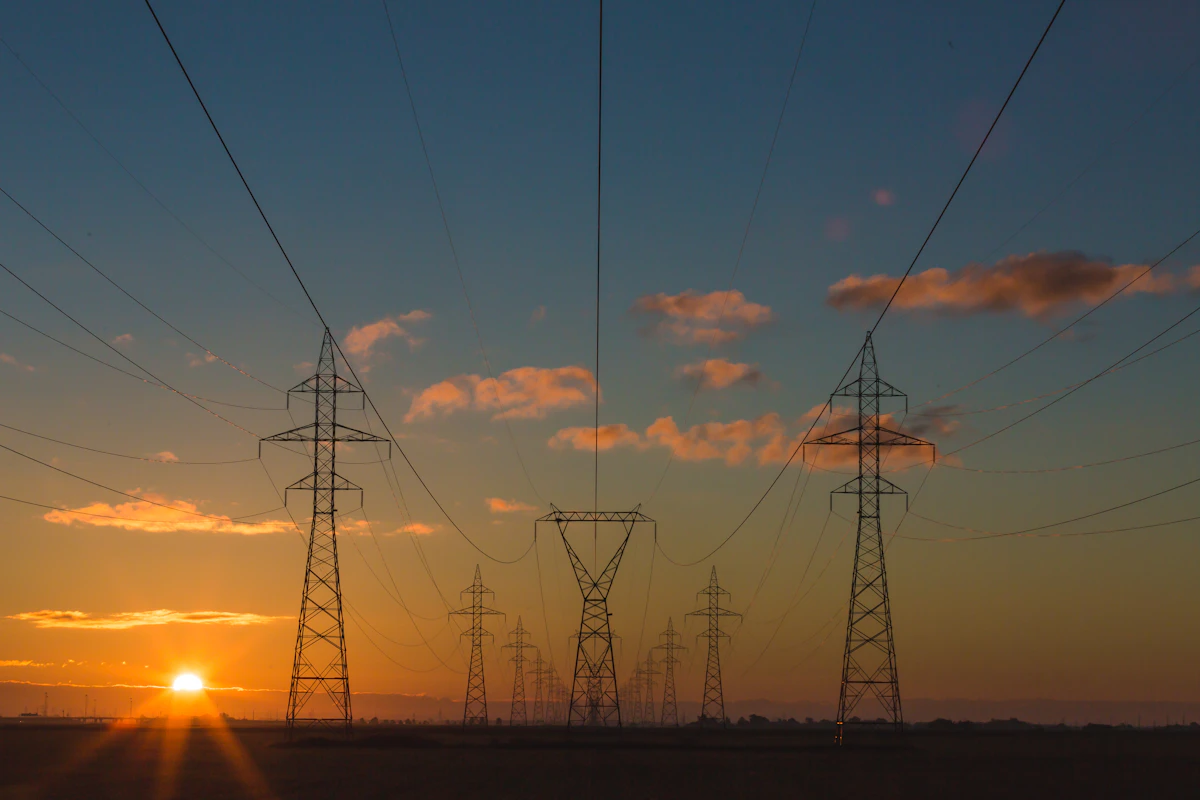
Topography and unobstructed access to sunlight are fundamental in early-stage site screening.
Beyond the Sun: Grid, Environment, and Community
Once the sun and land check out, the real-world challenges emerge. The most common pitfall for developers is underestimating grid connection complexities.
- Grid Interconnection Capacity & Proximity: Is there a high-voltage transmission line nearby? What is the available capacity at the nearest substation? A weak or distant grid connection can require expensive upgrade costs or "non-firm" connection agreements that limit output.
- Environmental & Regulatory Hurdles: Permitting processes vary wildly. Sites must be assessed for ecological impact (protected species, wetlands), flood risk, and visual impact. In the EU, adherence to strict Environmental Impact Assessment (EIA) directives is mandatory.
- Community Acceptance & Local Policies: Engaging with local communities early is paramount. Opposition can derail projects. Understanding local tax incentives, zoning laws, and renewable energy targets is crucial for both the US and European markets.
The Game Changer: How Energy Storage Expands Site Potential
This is where the narrative of solar farm site selection is being fundamentally rewritten. Traditionally, a site with great sun but poor, congested grid access might be abandoned. Today, it can become a strategic asset. Integrating a Battery Energy Storage System (BESS) directly into the solar farm's design solves multiple site-specific challenges:
| Site Limitation | How BESS Provides a Solution |
|---|---|
| Weak or Congested Grid Connection | Storage can "firm" the solar output, staying within grid capacity limits by storing excess midday generation for later injection. |
| Remote Location with Grid Upgrade Costs | Storage can reduce the required size and cost of new transmission infrastructure by managing peak power flows. |
| Market Price Volatility (e.g., CAISO, ERCOT) | Enables energy arbitrage—storing cheap solar power and selling it during high-price evening peaks, dramatically improving project economics. |
| Intermittency & Curtailment Risk | Captures energy that would otherwise be curtailed, maximizing asset utilization and revenue streams. |
Suddenly, a broader range of sites becomes financially and technically viable. The selection criteria evolves from "find the perfect grid connection" to "find great sun and let storage manage the grid constraints."
Case Study: Transforming Grid Constraints in Southern Spain
Let's look at a real-world example from Andalusia, Spain—a region with superb solar resources but localized grid congestion. A 50 MWp solar farm project faced a "non-firm" grid connection offer, meaning it would be forced to curtail (shut off) up to 30% of its potential generation during periods of low demand or grid stress. This directly threatened the project's bankability.
The Solution: The developer redesigned the project as a 50 MWp solar + 20 MW / 40 MWh integrated storage facility. The co-located BESS was programmed to:
- Store excess solar generation during midday peaks.
- Discharge stored energy in the early evening when the grid was less congested and electricity prices were higher.
- Provide grid stability services (frequency response) to the TSO for additional revenue.
The Outcome: The project secured a firm connection agreement. Curtailment was reduced to under 5%. By adding storage, the Levelized Cost of Energy (LCOE) for the deliverable electricity improved, and the project's internal rate of return (IRR) increased by an estimated 4 percentage points. This case demonstrates how storage turns a grid constraint into a commercial opportunity, fundamentally altering the site's value proposition.
Highjoule's Role: Integrating Intelligence from Site to Grid
At Highjoule, we see storage not as an add-on, but as a core component of modern renewable energy project design. Our expertise helps developers during the solar farm site selection and feasibility phase by modeling the economic and technical impact of adding storage to specific site conditions.
Our HPS (Highjoule Power System) series of containerized, utility-scale BESS solutions are designed for seamless integration with new or existing solar farms. With features like advanced cycle life, high round-trip efficiency, and our proprietary Energy Management System (EMS) platform, they allow developers to:
- Optimize power flow to meet specific grid connection limits.
- Automatically stack revenue streams (energy arbitrage, capacity markets, ancillary services).
- Future-proof the asset against changing grid codes and market structures.
By partnering with Highjoule early in the site selection process, developers can evaluate a wider array of potential sites with confidence, knowing that grid challenges can be mitigated and revenue can be maximized through intelligent storage.

Integrated storage solutions require careful planning from the earliest design stages.
The Future of Site Selection: AI and Hybrid Systems
The process is becoming more sophisticated. Artificial Intelligence and machine learning platforms now analyze terabytes of data—from historical weather patterns and satellite imagery to real-time market prices and future grid upgrade schedules—to score and rank potential sites. Furthermore, we're moving towards "hybrid" or "multi-technology" sites combining solar, wind, and storage to create a more consistent and valuable generation profile, further expanding viable locations.
The old paradigm of site selection was static. The new paradigm is dynamic and integrative. It asks: "How can we make this site work optimally with the technology and market tools available?"
What's Next for Your Project?
As you evaluate your potential sites, are you considering grid constraints as permanent barriers or as solvable challenges? Have you modeled the economic uplift that a tailored storage solution could bring to your specific location's irradiation profile and interconnection agreement? The landscape of solar farm site selection has expanded. The question is no longer just "Where is the sun?" but "Where can we create the most resilient, efficient, and profitable clean energy asset?"
 Inquiry
 Online Chat