


Finding the Right Grid-Free 2kW Supplier: Your Guide to Reliable Off-Grid Power
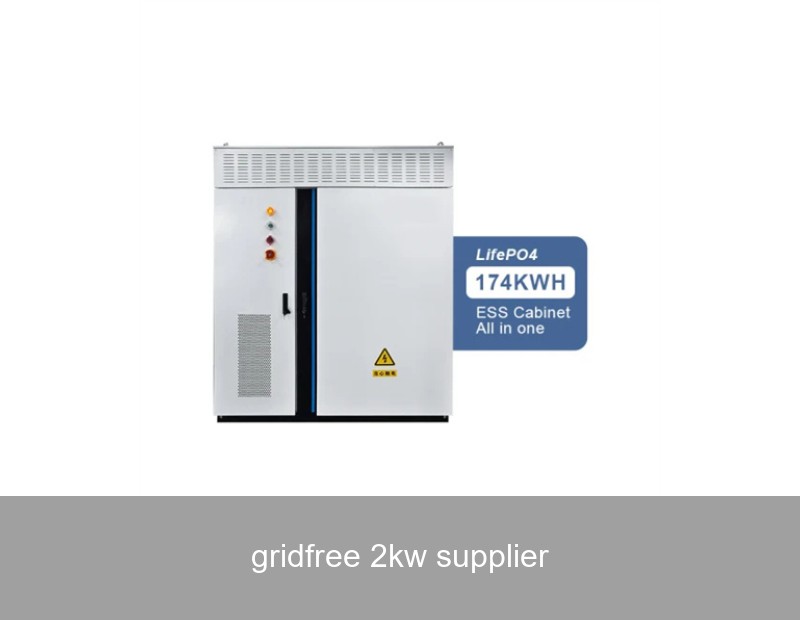
Imagine a small farm in rural Spain or a remote cabin in the mountains of Colorado. The main power grid is either unreliable or simply non-existent. For decades, the solution was a loud, polluting diesel generator. But today, a quiet revolution is powering these locations: sophisticated, grid-free solar and battery storage systems. At the heart of many of these systems is a robust 2-kilowatt (kW) power unit—a sweet spot for essential off-grid living and critical operations. But with so many options, how do you choose a trustworthy grid-free 2kW supplier? This guide will walk you through the key considerations, blending industry insights with real-world applications to help you make an informed decision.
Table of Contents
- What is a True Grid-Free 2kW System?
- Why 2kW? Understanding Your Power Needs
- Case Study: Off-Grid Hospitality in the Greek Islands
- Highjoule's Role in Advanced Grid-Free Solutions
- Future-Proofing Your Investment
What is a True Grid-Free 2kW System?
Let's clarify the terminology. A "grid-free" or off-grid system operates completely independently from the public electricity network. A 2kW rating typically refers to the continuous power output the system's inverter can provide from the battery bank. Crucially, this doesn't exist in isolation. It's the core of a triad:
- Energy Generation: Usually solar panels (photovoltaics/PV), sized to recharge the batteries even on low-sun days.
- Energy Storage: The battery bank (like Lithium Iron Phosphate/LiFePO4) that stores the generated power for use anytime.
- Energy Management: The inverter and smart system brain that converts DC to AC power and intelligently manages flow between generation, storage, and consumption.
A reputable grid-free 2kW supplier doesn't just sell you a box; they provide an integrated solution that balances these three elements for your specific location and usage patterns.
Why 2kW? Understanding Your Power Needs
Why is 2kW such a popular benchmark for off-grid systems? Think of it as the power budget for a streamlined, energy-conscious lifestyle or business operation. A continuous 2,000 watts can comfortably run:
| Appliance | Typical Power Draw | Runtime on 2kW (with adequate battery) |
|---|---|---|
| Refrigerator | 100-200W | Continuous + extra |
| LED Lighting (entire small home) | 50-100W | Continuous |
| Laptop & WiFi Router | 50-100W | Continuous |
| Water Pump | 500-800W | Several hours per day |
| Power Tools (e.g., circular saw) | 1,500W | Short bursts (requires surge capacity) |
The key is that not everything runs at once. A good system design involves "load scheduling." You might run the washing machine (500W) when the sun is shining directly on your panels, reducing the draw on your batteries. This intelligent management is what separates a functional system from a frustrating one.
The 5 Pillars of a Reliable Grid-Free 2kW Supplier
Choosing a supplier is about more than price per watt. Here are the five critical pillars to evaluate:
1. System Integration & Smart Management
Can all components communicate? A high-quality supplier offers systems where the inverter, battery management system (BMS), and charge controller are designed to work in harmony. This prevents damage, optimizes battery life, and allows for remote monitoring via an app—a feature you'll come to cherish.
2. Battery Technology & Warranty
The battery is the heart and most significant long-term cost. LiFePO4 chemistry is now the industry standard for off-grid due to its safety, longevity (typically 6,000+ cycles), and stable performance. Demand a clear warranty that guarantees both a period of years and a retained capacity (e.g., "10 years or 70% residual capacity").
3. Scalability & Future-Proofing
Your needs may grow. Can you easily add more battery modules or solar panels to the system later? A modular design from your grid-free 2kW supplier protects your investment.
4. Local Support & Installation Network
This is crucial for the European and US markets. Does the supplier have certified installers in your region? Local expertise ensures proper setup, compliance with regional electrical codes, and access to timely service if needed.
5. Proven Track Record & Certifications
Look for suppliers with a history of deployed systems. Check for international certifications like UL 9540 (US) or IEC 62619 (EU) for batteries, which are rigorous safety standards. These are non-negotiable for peace of mind.

Image Source: Unsplash (Photographer: Andreas Gücklhorn)
Case Study: Off-Grid Hospitality in the Greek Islands
Let's look at a real example from the Mediterranean. The "Aegean Retreat," a small eco-lodge on a non-interconnected Greek island, faced exorbitant costs and noise from diesel generators. Their goal was to power 4 guest bungalows (lighting, fridge, ventilation, guest charging) and a common area, with a peak load of around 1.8kW.
They partnered with a specialist grid-free 2kW supplier who designed a system featuring:
- Generation: 6kWp of solar panels (over-sized to ensure summer surplus and winter adequacy).
- Storage: A modular 20kWh LiFePO4 battery bank.
- Management: A 2kW/5kVA hybrid inverter with smart load management.
The Results (Data from 12-month operation):
- Diesel Displacement: 100% reduction. Zero generator runtime after commissioning.
- Energy Autonomy: Achieved 99.5% self-sufficiency from solar, with the battery covering 100% of nighttime loads.
- Financials: Payback period calculated at 4 years versus continued diesel costs, with at least 15+ years of subsequent near-free energy.
- Guest Satisfaction: Noise pollution eliminated, enhancing the "eco" branding significantly.
This case, documented in the EU's Clean Energy for EU Islands initiative, highlights how the right supplier delivers not just hardware, but a turnkey outcome.
Highjoule's Role in Advanced Grid-Free Solutions
As a global leader in advanced energy storage since 2005, Highjoule understands that reliability in off-grid scenarios is paramount. Our approach to the grid-free 2kW segment is built on the pillars discussed above.
For residential and small commercial off-grid applications, our EverPower Off-Grid Series provides integrated, modular solutions. The system is built around our high-cycle LiFePO4 batteries, known for their stability and long service life, paired with our intelligent hybrid inverters. What sets Highjoule apart is our Grid-Free IQ monitoring platform, which uses predictive weather data and usage learning to optimize charge cycles, effectively "thinking ahead" to prevent energy shortfalls. For clients in Europe and North America, this means maximum reliability through harsh winters or periods of low sun.
Furthermore, we work through a network of certified installation partners, ensuring that every system is tailored to local climate patterns and complies with all regional safety standards. We don't just supply components; we provide a blueprint for energy independence.

Image Source: Unsplash (Photographer: American Public Power Association)
Future-Proofing Your Investment
The technology is constantly evolving. When speaking with a potential grid-free 2kW supplier, ask about their roadmap. Are their systems ready to integrate with emerging technologies, like vehicle-to-home (V2H) capabilities, where an electric car can act as a backup battery? How do they handle software updates for the energy management system? A forward-thinking supplier, like Highjoule, designs with these future connections in mind, ensuring your system remains at the cutting edge for years to come.
According to a recent report by the International Energy Agency, the global capacity of behind-the-meter battery storage is set to grow exponentially, driving further innovation and cost reductions in the very technology that powers off-grid living.
Ready to Start Your Grid-Free Journey?
Choosing your energy partner is a decision that will impact your daily life and operations for over a decade. We've covered the importance of integrated design, robust batteries, local support, and proven results. Now, we're curious: What's the single biggest challenge or uncertainty holding you back from exploring a grid-free 2kW system for your specific needs? Identifying that hurdle is the perfect next step.
 Inquiry
 Online Chat