


Beyond the Grid: Your Guide to a Reliable Ground Power Supplier for Energy Independence
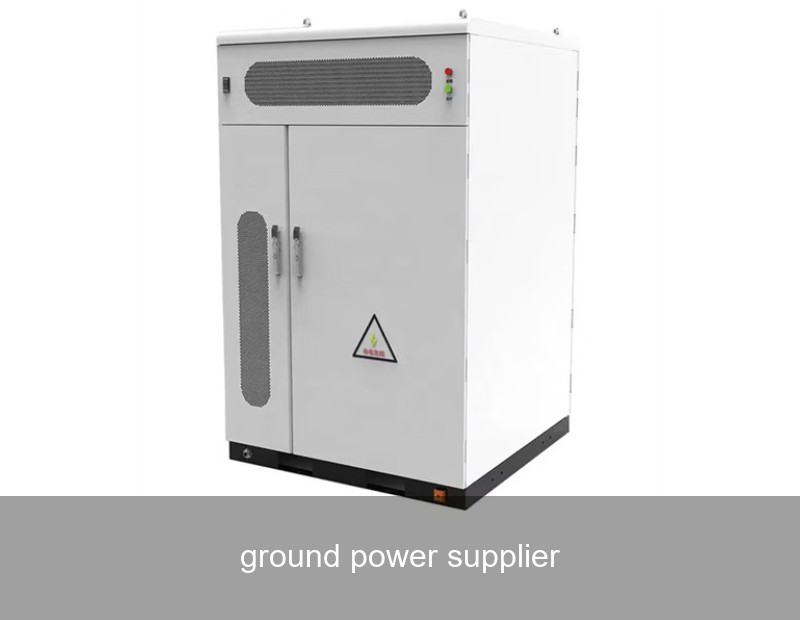
Have you ever experienced a sudden power flicker that halted your production line? Or opened an electricity bill that made you wince? If so, you're not alone. Across Europe and the U.S., businesses, communities, and homeowners are grappling with aging infrastructure, volatile energy prices, and a growing desire for sustainability. This is where the concept of a modern ground power supplier comes into play. No longer just a backup generator in a shed, today's ground power supplier is an intelligent, integrated energy system installed on your property—your very own source of resilient, clean, and controllable power. It's the cornerstone of true energy independence.
The Shift: From Grid Dependence to Energy Independence
For decades, our relationship with electricity was simple: we drew power from the main grid, a one-way street. But the landscape is changing rapidly. The phenomenon is clear: extreme weather events are causing more frequent and prolonged outages. The U.S. Energy Information Administration (EIA) notes that the average U.S. customer experienced just over eight hours of power interruptions in 2020, with major events being a significant driver. Simultaneously, the cost of grid electricity remains subject to geopolitical and market forces.
The data tells a compelling story. A report by BloombergNEF highlights that the global market for behind-the-meter energy storage—a key component of a ground power system—is set to grow exponentially, driven by commercial and industrial demand. Why? Because the financial and operational logic is becoming undeniable. Businesses aren't just looking for backup; they're seeking a strategic asset that reduces operational costs, ensures continuity, and meets corporate sustainability goals.
This is the logical progression: from passive consumer to active prosumer. A modern ground power supplier system allows you to generate, store, and manage energy on-site. It turns your facility from a cost center into a resilient energy hub.

Image: Commercial solar installations are a primary component of a modern ground power supplier system. Source: Unsplash
The Core Components of a Modern Ground Power System
So, what makes up this system? Think of it as a sophisticated energy ecosystem:
- Generation: Typically solar photovoltaic (PV) arrays, capturing free energy from the sun.
- Storage: The heart of the system—a large-scale battery energy storage system (BESS) that acts as a "power bank" for your entire facility.
- Energy Management System (EMS): The "brain." This intelligent software orchestrates energy flow, deciding when to store, use, or even sell power back to the grid.
- Power Conversion & Integration: Inverters and controllers that safely connect everything to your building's electrical infrastructure.
The Technology Behind Energy Independence: It's Smarter Than You Think
Gone are the days of loud, diesel-guzzling generators that only react to failure. The intelligence of a contemporary ground power supplier lies in its predictive and adaptive capabilities. Let's break down the key technological pillars.
1. Advanced Battery Energy Storage Systems (BESS)
Lithium-ion technology, particularly Lithium Iron Phosphate (LFP) chemistry, has become the standard for its safety, longevity, and performance. But the real magic is in the system architecture. Companies like Highjoule design containerized or modular BESS solutions that are scalable, safe, and seamlessly integrable. For instance, Highjoule's H-Cube Industrial series offers plug-and-play containerized storage from 500 kWh to multi-MWh scales, featuring integrated climate control, fire suppression, and advanced battery management systems that maximize cycle life and safety.
2. AI-Driven Energy Management
This software is the strategic commander. It doesn't just react; it forecasts. By analyzing weather patterns, your energy consumption history, and real-time grid electricity prices (in deregulated markets), it makes autonomous decisions. Should it charge the batteries with cheap solar power at noon, discharge them during the expensive evening peak, or hold reserve for a predicted grid instability event? It optimizes for cost, carbon footprint, and resilience simultaneously.
3. Seamless Grid Interaction & Microgrid Capability
A sophisticated ground power system can operate in multiple modes:
| Mode | Function | Benefit |
|---|---|---|
| Grid-Tied | Imports/Exports power based on optimization algorithms. | Maximizes financial return through arbitrage. |
| Island Mode | Disconnects from the main grid during an outage. | Provides uninterrupted power to critical loads. |
| Microgrid | Can power a cluster of buildings independently. | Enhances community or campus resilience. |
Case Study: A European Logistics Hub's Journey to Resilience
Let's move from theory to tangible results. Consider a major logistics and distribution center in Northern Germany. Their challenges were universal: high energy costs, a critical need for 24/7 operational reliability (cold storage, sorting systems), and ambitious corporate net-zero targets.
The Solution: They partnered with Highjoule to design and deploy a comprehensive ground power supplier system. The installation included:
- A 2.1 MW rooftop solar PV array.
- A 1.8 MWh Highjoule H-Cube Industrial battery storage system.
- The NeuroGrid EMS for intelligent control.
The Data-Driven Outcome (12 months post-installation):
- Energy Cost Reduction: By storing excess solar energy and strategically avoiding peak grid tariffs, the center reduced its annual electricity expenditure by 34%.
- Reliability: The system has seamlessly handled two grid disturbances, keeping critical cooling and automation systems online, preventing an estimated €200,000 in potential spoiled goods and downtime.
- Sustainability: The facility increased its on-site renewable consumption to over 80%, cutting its carbon footprint by approximately 1,200 tonnes of CO2 annually.
This case exemplifies the triple bottom line: profit, planet, and operational peace of mind. The system isn't an expense; it's a competitive advantage.

Image: A technician performs checks on a containerized battery storage system, the core of industrial energy independence. Source: Unsplash
Choosing the Right Ground Power Supplier System: Key Considerations
Embarking on this journey requires a trusted partner, not just a vendor. Here’s what to evaluate:
- Total Solution Expertise: Can they provide an integrated package of generation, storage, and software? Highjoule, with nearly two decades of experience since 2005, specializes in these end-to-end, intelligent systems.
- Technology & Safety: Scrutinize the battery chemistry, system design, and safety certifications (like UL 9540).
- Financial Modeling: A good partner will provide a clear analysis of CAPEX, OPEX, ROI, and available incentives (like the U.S. Investment Tax Credit or European Union grants).
- Service & Longevity: Look for comprehensive warranties, remote monitoring, and maintenance support to protect your investment for its 15-20 year lifespan.
The Future Horizon of On-Site Power
The evolution of the ground power supplier is intertwined with the rise of electric vehicle (EV) fleets and vehicle-to-grid (V2G) technology. Imagine your facility's BESS not only being charged by solar but also by a fleet of electric delivery trucks during the day. The boundaries of the "ground power system" are expanding to include all mobile and stationary assets on your property.
Furthermore, as virtual power plants (VPPs) gain traction, your on-site system could become a revenue-generating grid asset, participating in demand response programs by aggregating with thousands of others to provide stability to the wider grid.

Image: The future of ground power integrates EV fleet charging, creating a unified energy ecosystem. Source: Unsplash
The question is no longer if a decentralized, resilient energy model is the future, but when you will choose to participate. As energy markets evolve and climate resilience becomes non-negotiable, what will the first step be for your organization to transition from a grid consumer to a empowered ground power producer?
 Inquiry
 Online Chat