


Choosing the Right Renewable Energy Company and Supplier for Your Sustainable Future
You've decided to make the switch to renewable energy. It's a fantastic decision for your wallet, your energy independence, and our planet. But now you're faced with a crucial question: how do you choose the right renewable energy company supplier? The market is bustling with options, from solar panel installers to full-service energy providers. The difference between a seamless transition to clean power and a costly, frustrating experience often boils down to the partner you select. This guide will walk you through the essential criteria, helping you identify a supplier that offers not just products, but a true partnership in your energy journey.
Table of Contents
- Beyond Panels: The Full-System Expertise of a Modern RENU Supplier
- The Data Reality: Why Storage is Non-Negotiable
- Case Study: A German Manufacturing Plant's Journey to Resilience
- Key Criteria for Evaluating Your Renewable Energy Partner
- How Highjoule Fits Into Your Renewable Energy Ecosystem
- Is Your Current Energy Strategy Truly Future-Proof?
Beyond Panels: The Full-System Expertise of a Modern RENU Supplier
Gone are the days when a renewable energy supplier was just a seller of solar panels. Today, a leading renewable energy company supplier acts as a solutions architect. Think of it this way: solar panels are the engine, but without a sophisticated battery storage system, smart energy management, and long-term service, you're not building a reliable vehicle—you're just collecting parts.
The modern energy landscape, especially in markets like Europe and the U.S. with volatile energy prices and grid modernization efforts, demands an integrated approach. A top-tier supplier looks at your entire energy profile—consumption patterns, peak demand charges, local utility rates, and even future plans like adding an EV charger—to design a system that optimizes for your specific goals, be it maximized self-consumption, backup power, or pure financial return.
The Core Components of a Complete Solution
A comprehensive renewable energy solution should seamlessly integrate several key technologies:
- Generation: Typically solar PV, but could include wind or other renewables.
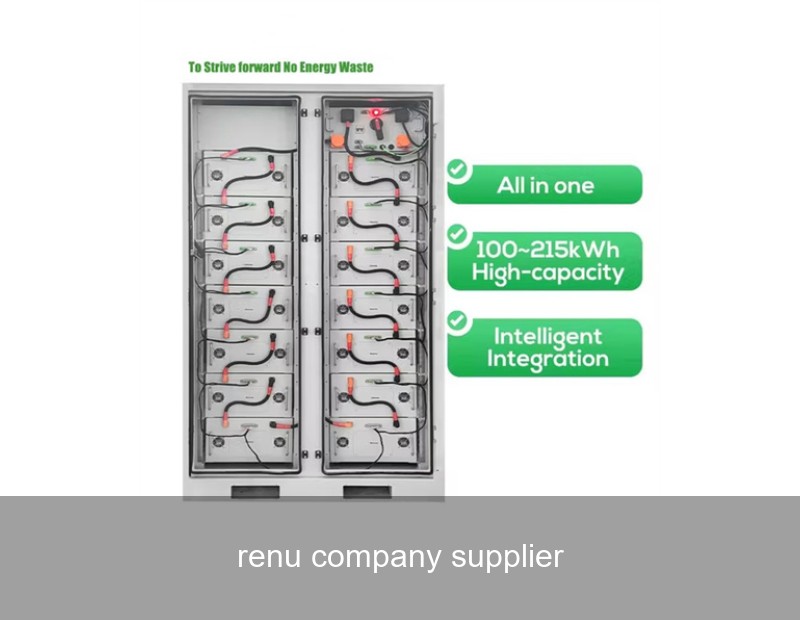
- Storage: The heart of modern energy independence. High-capacity battery systems store excess generation for use when the sun isn't shining.
- Energy Management System (EMS): The "brain" that intelligently controls when to charge, discharge, import, or export energy, often using AI to predict usage and weather patterns.
- Grid Integration & Safety: Certified inverters, transformers, and protection devices that ensure safe, code-compliant interaction with the public grid.
The Data Reality: Why Storage is Non-Negotiable
Let's talk numbers. According to the U.S. Department of Energy's Solar Futures Study, solar could provide up to 40% of the nation's electricity by 2035. But the report also emphasizes the critical need for storage to manage this intermittent resource. Similarly, Europe's REPowerEU plan aggressively pushes for energy independence, with storage being a cornerstone technology.
Without storage, a typical home solar system might only directly use 30-50% of the energy it produces, sending the rest back to the grid for minimal compensation (a trend known as declining feed-in tariffs). With a properly sized battery system, you can increase self-consumption to 70% or more, shielding yourself from peak-time electricity rates that can be 2-3 times higher than off-peak rates. For commercial and industrial users, the savings from "peak shaving"—using stored energy to avoid short periods of maximum demand charges—can be transformative, often paying for the storage system itself in just a few years.

Image: A modern commercial solar plus storage installation. Credit: Unsplash
Case Study: A German Manufacturing Plant's Journey to Resilience
Let's make this concrete with a real-world example. A mid-sized automotive parts manufacturer near Stuttgart, Germany, was facing two major challenges: skyrocketing energy costs and increasing pressure from its parent company to reduce its carbon footprint. Their existing rooftop solar array, installed in 2015, was offsetting only a fraction of their daytime load, and they were fully exposed to Germany's high and variable electricity prices.
They partnered with a sophisticated renewable energy company supplier who conducted a detailed audit. The solution wasn't just more panels. The supplier designed and deployed a integrated upgrade:
- Phase 1: Expansion of the existing solar PV system from 500 kW to 750 kW.
- Phase 2 (The Game-Changer): Installation of a 1.2 MWh containerized battery energy storage system (BESS) with an advanced EMS.
The results, monitored over 12 months, were significant:
| Metric | Before Upgrade | After Upgrade |
|---|---|---|
| On-site Renewable Consumption | 35% | 89% |
| Peak Grid Demand | 950 kW | 450 kW |
| Annual Energy Cost Savings | Baseline | €182,000 |
| CO2 Emissions Reduction | 285 tonnes/year | 610 tonnes/year |
The BESS was programmed to charge from excess solar and during low-cost night hours, then discharge during expensive afternoon peaks and during brief grid outages, which had previously caused costly production halts. The project achieved a return on investment in under 5 years, while future-proofing the facility's energy profile.
Key Criteria for Evaluating Your Renewable Energy Partner
So, what should you look for? Here’s a checklist to separate commodity sellers from true solution partners:
- Technology Agnosticism: Do they offer best-in-class components tailored to your need, or are they locked into a single brand?
- Proven Storage Expertise: Can they show detailed case studies and performance data for their storage installations? Storage is complex; it's not just another box.
- Software & Intelligence: Do they provide a proprietary or best-in-class EMS with transparent monitoring and control capabilities?
- Financial Modeling: Do they provide clear, conservative projections of savings, ROI, and system performance?
- Long-Term Service & Warranty: Do they offer comprehensive O&M (Operations & Maintenance) agreements? A 25-year panel warranty is useless if the company vanishes in 5.
- Local Knowledge & Compliance: Are they deeply familiar with local grid connection rules, permitting, and available incentives (like the EU's smart grid frameworks or the U.S. Investment Tax Credit)?
How Highjoule Fits Into Your Renewable Energy Ecosystem
This is where a company like Highjoule becomes a pivotal partner. Founded in 2005, Highjoule has evolved from a battery technology innovator into a global leader in providing intelligent, integrated storage solutions. We don't sell solar panels. We specialize in the critical "brains and muscle" that make renewable energy systems reliable, profitable, and smart.
When you work with a forward-thinking renewable energy company supplier, they will often integrate Highjoule's storage systems and our Horizon Energy Management Platform into their designs. Our products, like the Highjoule CORE commercial & industrial BESS and the Highjoule HOMES series for residential applications, are engineered for safety, longevity, and seamless integration. Our Horizon platform provides the intelligence that dynamically manages energy flows, maximizing economic value and resilience.
In essence, Highjoule provides the core technology stack that enables your chosen supplier to deliver on their promise of a complete, future-proof energy solution. We empower them to offer you a system that doesn't just generate energy, but actively manages it with precision.

Image: A professional battery energy storage system installation. Credit: Unsplash
Is Your Current Energy Strategy Truly Future-Proof?
The transition to renewable energy is no longer a simple purchase; it's a strategic partnership. The right renewable energy company supplier will act as your guide, not just your vendor. They will help you navigate technology, finance, and regulations to build an asset that delivers value for decades.
As you have conversations with potential partners, ask them this: "Beyond the panels and the price per watt, how will your system's intelligence and storage components protect my investment against tomorrow's energy prices, grid changes, and my own growing needs?" The depth and clarity of their answer will tell you everything you need to know.
 Inquiry
 Online Chat