


Grounding Photovoltaic Systems: The Unsung Hero of Solar Safety and Performance
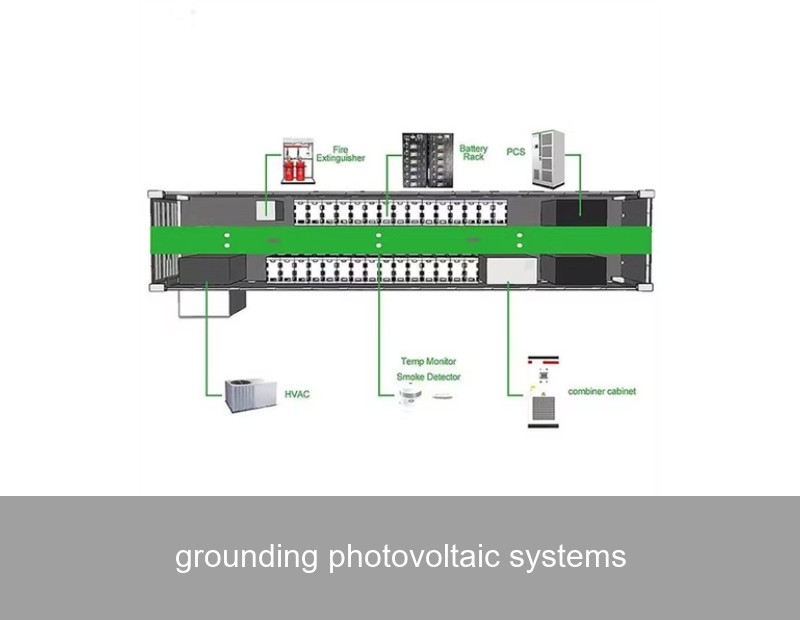
You've made the smart decision to go solar. The panels are sleek, the energy savings projections are exciting, and the environmental benefits are clear. But there's a critical, often overlooked component that stands between your dream installation and a safe, reliable, long-term investment: grounding photovoltaic systems. Proper grounding isn't just a line item on an electrical diagram; it's the fundamental safeguard that protects your equipment, your property, and most importantly, the people around it from electrical hazards. Let's demystify why grounding is non-negotiable for any solar PV installation, whether on your home or a commercial facility.
Table of Contents
- What is Grounding in a PV System?
- Why Grounding Matters: More Than Just Compliance
- Key Components of a Grounded PV System
- Common Grounding Mistakes and How to Avoid Them
- Case Study: Grounding in Action for a German Industrial Rooftop
- The Highjoule Approach: Integrating Safety into Smart Energy Storage
- Frequently Asked Questions on PV Grounding
What is Grounding in a PV System?
In simple terms, grounding (or earthing) creates a safe, intentional path for electricity to follow in the event of a fault, such as a damaged wire or internal component failure. Imagine a lightning strike or a power surge. Without a proper ground, that massive, unwanted electrical energy has nowhere to go but into your system's metal framework, potentially causing fires, electrocution, or catastrophic equipment failure. A grounding system provides a low-resistance conduit directly into the earth, safely dissipating that dangerous energy.
A photovoltaic system has two main grounding concerns: equipment grounding and system grounding. Equipment grounding connects all exposed metal parts (panel frames, racking, inverter chassis, conduit) together and to the ground, ensuring they never become electrically "hot." System grounding refers to connecting one of the current-carrying conductors (like the negative DC terminal in some systems) to ground, stabilizing the system's voltage to earth potential.
Why Grounding Matters: More Than Just Compliance
While adhering to local electrical codes like the NFPA 70 National Electrical Code (NEC) in the US or IEC 60364 standards in Europe is mandatory, the benefits of meticulous grounding extend far beyond passing an inspection.
- Personnel Safety: This is paramount. Proper grounding prevents shock hazards for installers, maintenance crews, firefighters, and even homeowners.
- Fire Prevention: Fault currents that aren't safely grounded can generate intense heat at points of failure, igniting surrounding materials.
- Equipment Protection: Surges from lightning or grid fluctuations can fry sensitive electronics in inverters and monitoring systems. A good grounding scheme is the first line of defense.
- Performance Stability: Grounding reduces electrical "noise" and prevents stray voltages that can interfere with sensitive monitoring and communication equipment, ensuring you get accurate data on your system's output.
- System Longevity: By mitigating corrosion (through proper grounding techniques that control electrochemical reactions) and protecting against surge damage, grounding directly contributes to your PV system's operational lifespan.
Key Components of a Grounded PV System
Building a robust grounding system requires specific components working in unison:
| Component | Purpose | Best Practice Insight |
|---|---|---|
| Grounding Electrode System | The physical connection to the earth (ground rods, plates, Ufer grounds). | Resistance to ground must be measured and often needs to be below 25 ohms (per NEC). In rocky or dry soil, multiple rods or specialized treatments may be required. |
| Equipment Grounding Conductors (EGC) | Bare copper or green-insulated wires that bond all metal parts. | They must be sized appropriately for the potential fault current (refer to NEC Table 250.122). Using undersized wires is a common and dangerous error. |
| Bonding Jumpers & Lugs | Create reliable electrical connections between metallic components. | Use listed, corrosion-resistant lugs and exothermic welding or irreversible compression connectors for permanent, high-integrity bonds. Avoid simple mechanical clamps in critical paths. |
| Surge Protective Devices (SPDs) | Divert voltage spikes to ground before they reach equipment. | Install SPDs at both the DC array combiner box and the AC service entrance. They are a critical supplement to, not a replacement for, proper grounding. |
Common Grounding Mistakes and How to Avoid Them
Even seasoned installers can stumble. Here are frequent pitfalls:
- Relying on the Racking for Conduction: Assuming aluminum racking sections will maintain a continuous ground path is risky. Oxidation and loose connections break the path. Always install a dedicated, solid copper EGC that runs the entire length of the array and bonds each panel frame.
- Inadequate Ground Rod Installation: Driving a single 8-foot rod into dry soil rarely meets code. Always test resistance and drive a second rod if needed, spaced at least twice the rod's length from the first.
- Ignoring DC & AC Grounding Separation: In systems with multiple inverters or battery storage, DC and AC grounding points must be properly coordinated to avoid ground loops, which can cause corrosion and interference.
- Forgetting About Maintenance: Grounding connections can corrode over time. A periodic inspection (every 1-3 years) of connections and a ground resistance test should be part of your system's maintenance plan.
Case Study: Grounding in Action for a German Industrial Rooftop
Let's look at a real-world scenario. A large automotive parts manufacturer in Bavaria, Germany, installed a 850 kWp rooftop PV system in 2021. The region experiences frequent summer thunderstorms. The initial design used a simplified grounding approach, bonding the panel frames through the racking system without a dedicated EGC run.
The Phenomenon: In July 2022, a nearby lightning strike induced a surge on the building's electrical system. The PV system's inverter faulted and shut down.
The Data & Damage: Post-event investigation revealed:
- The inverter's DC input module was destroyed (€15,000 replacement cost).
- Monitoring data showed a transient voltage spike exceeding 6 kV on the DC lines.
- Critical production downtime: 5 days waiting for a new inverter and technician.
The Root Cause & Solution: An electrical audit found the grounding path through the racking had high impedance due to painted connection points. The surge protective devices (SPDs) at the combiner box could not divert all the energy effectively because the grounding path was inadequate. The remediation involved:
- Installing a continuous 70mm² bare copper EGC along all array rows.
- Applying exothermic welds for all bonds to panel frames and racking.
- Upgrading to Type 1+2 SPDs at both the DC combiner and main AC distribution board.
- Adding a dedicated ground ring around the building connected to multiple deep-driven ground rods, achieving a measured resistance of 8 ohms.

Image Source: Wikimedia Commons (Example of industrial PV system protection)
The Highjoule Approach: Integrating Safety into Smart Energy Storage
At Highjoule, we view safety as the non-negotiable foundation of any energy solution. When you integrate a Highjoule battery energy storage system (BESS) with your photovoltaic installation, grounding is engineered holistically from day one. Our systems are designed to seamlessly interface with your PV array's grounding scheme, whether it's a residential Highjoule HomePower system or a large-scale Industrial Cube solution.
Our power conversion systems (PCS) and inverters come with integrated, high-capacity surge protection and clearly labeled grounding points that simplify code-compliant installation. For microgrid and commercial applications, our engineering team performs detailed system studies, including ground fault current analysis, to ensure the entire interconnected system—PV, storage, and backup generators—operates safely under all conditions. We don't just provide hardware; we provide a completely integrated safety philosophy where proper grounding is a core principle, not an afterthought.
Frequently Asked Questions on PV Grounding
Do I need a separate ground rod for my solar panel system?
Generally, no. All grounding electrodes (rods, building steel, etc.) must be bonded together to form a single grounding electrode system for the entire premises. Adding a separate, isolated ground rod for the solar array can create dangerous voltage differences. Always connect the PV system ground to the main service ground point.
How does grounding differ for roof-mounted vs. ground-mounted arrays?
The principles are identical. However, ground-mounted systems often have a more straightforward connection to the earth electrode. Roof-mounted systems require careful routing of the grounding conductor to bond all components back to the main ground. Both must account for lightning strike zones; ground mounts in open fields may require additional air terminals (lightning rods).
What role does grounding play when I have a battery backup system?
It becomes even more critical. Battery systems introduce additional DC and AC interconnection points. A flaw in grounding can lead to persistent "ghost" loads draining the batteries or create shock hazards during maintenance. Highjoule's systems include comprehensive isolation monitoring and ground fault detection specifically for these scenarios, ensuring safety whether the grid is up or down.
As you plan or maintain your journey toward energy independence, the question isn't just "are my panels grounded?" but rather, "is my entire energy ecosystem designed with an uncompromising, integrated approach to safety and performance?"
 Inquiry
 Online Chat