


The Photovoltaic Combiner Box: The Unsung Hero of Your Solar Array's Safety and Performance
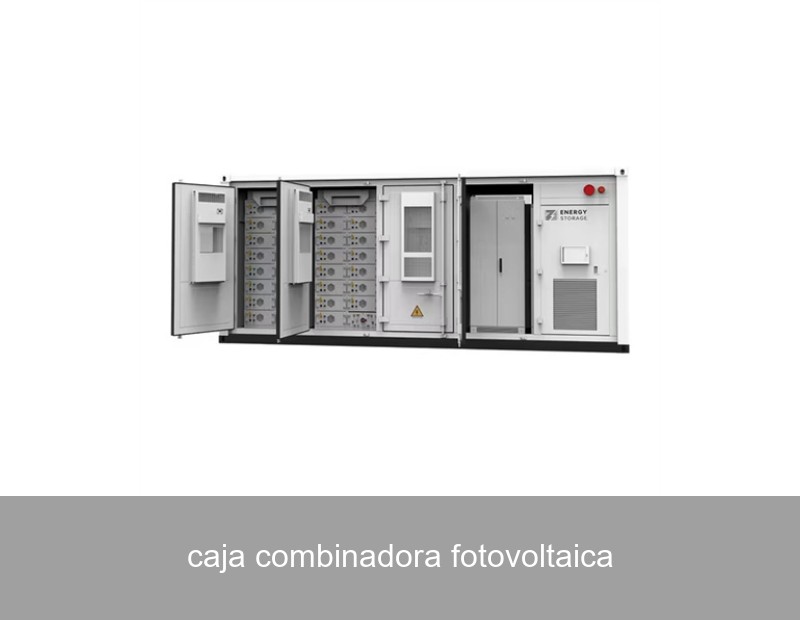
When you picture a solar installation, sleek panels and perhaps a large battery likely come to mind. But there's a critical, often overlooked component working diligently behind the scenes: the caja combinadora fotovoltaica, or photovoltaic (PV) combiner box. This unassuming enclosure is the central nervous system of your solar array, where the electrical currents from multiple panel strings converge. Its primary job? To protect your investment, optimize performance, and provide a single, manageable output to your inverter. Let's delve into why this component is indispensable for any safe and efficient solar energy system, whether on a residential rooftop or a sprawling industrial farm.
Table of Contents
What is a PV Combiner Box? Simplifying Complexity
Imagine a scenario: a commercial rooftop with 200 solar panels. Running individual cables from each panel to a distant inverter is impractical, costly, and a potential fault nightmare. This is where the photovoltaic combiner box comes in. It acts as a centralized junction point. Groups of panels are wired into series "strings," and each string feeds its combined DC output into the combiner box. Inside, these multiple inputs are paralleled into a single set of output terminals, which then connect via heavier cabling to the inverter.

Image Source: Electrical Construction & Maintenance (EC&M) Magazine - illustrating a typical combiner box function.
For companies like Highjoule, which designs integrated energy storage and solar solutions, the combiner box is a foundational element. It's the first point of system consolidation and protection, ensuring that the DC power harvested by our clients' panels is clean, safe, and ready for conversion or storage in our advanced Highjoule BESS (Battery Energy Storage Systems).
Inside the Box: Key Components & Functions
A quality combiner box is more than just a weatherproof enclosure with terminals. It's a carefully engineered safety device. Here’s what you’ll typically find inside:
- String Fuses or Circuit Breakers: Each input string is protected by an overcurrent device. If a fault occurs in one string (e.g., a short circuit), its fuse blows or breaker trips, isolating the problem without taking the entire array offline.
- Surge Protection Devices (SPDs): Solar arrays, especially in open areas, are vulnerable to lightning-induced surges and voltage spikes from the grid. SPDs shunt this dangerous excess energy to ground, protecting sensitive inverter electronics.
- Disconnect Means: A main DC disconnect switch or breaker allows technicians to safely isolate the combiner box output for maintenance, a critical safety requirement (often referred to as a "DC Isolator").
- Monitoring Capabilities (Advanced Boxes): Modern combiner boxes, like those integrated into Highjoule's smart energy management platforms, may include string-level monitoring. This means you can measure the current and voltage of each individual string, pinpointing underperforming panels or faults instantly via a digital interface.
The Critical Nexus: How a Combiner Box Enhances Safety and Performance
The role of the combiner box is a perfect blend of safety engineering and performance optimization. Neglecting it can have serious consequences.
The Safety Imperative
DC electricity from solar panels doesn't have a natural zero-crossing point like AC, making arcs harder to extinguish and faults potentially more dangerous. A properly specified combiner box mitigates these risks:
- Fire Prevention: By isolating faulty strings, it prevents overheating in cables that could lead to fire.
- Equipment Protection: Surge protection saves inverters and downstream equipment from costly damage.
- Personnel Safety: The main disconnect ensures safe working conditions for installers and first responders.
According to a 2021 report by the National Renewable Energy Laboratory (NREL), although PV system fires are rare, DC arc faults are a noted risk factor, underscoring the importance of proper overcurrent and fault protection at the combining stage.
Performance and O&M Advantages
Beyond safety, a smart combiner box is a powerful diagnostic tool. Consider this: a 5% drop in output across a large array could be one faulty panel, a dirty string, or a wiring issue. Without string-level monitoring, finding the problem is a time-consuming, manual process.
With a monitored combiner box, an operator can see on a dashboard that String 7 is producing 15% less current than its peers. This immediately directs maintenance to a specific section of the array, slashing troubleshooting time and maximizing energy yield. This granular data is a key feature of Highjoule's integrated monitoring systems, which provide clients with unparalleled visibility into both their solar generation and battery storage performance.
Case Study: Precision in a Spanish Solar Farm
Let's look at a real-world application in southern Spain, a region with high solar irradiance but also experiencing dust storms and significant temperature swings.
Project: A 2 MWp ground-mounted solar farm.
Challenge: The operator was experiencing unexplained yield losses of ~3% annually. Manual inspections of 4,000+ panels were costly and failed to identify consistent patterns.
Solution: The farm was retrofitted with advanced combiner boxes featuring per-string monitoring. The data immediately revealed that losses were not uniform. Specific strings showed intermittent dips correlated with early morning hours and others with wind events.
Insight & Resolution: The morning dips were traced to partial shading from a newly grown tree line, leading to a managed vegetation plan. The wind-correlated faults were identified as loose connections in specific combiners, exacerbated by thermal cycling and vibration. These were tightened and secured.
Outcome: Within one quarter, the farm recovered over 2% of its lost yield, representing a significant financial return. More importantly, it established a predictive maintenance model, preventing future losses and enhancing safety by addressing loose connections—a known arc fault risk.

Image Source: Solar Power World Online - depicting combiner box maintenance in a utility-scale setting.
Choosing the Right Combiner Box for Your Project
Not all combiner boxes are created equal. Selection depends on scale, environment, and intelligence needs.
| Project Type | Key Considerations | Highjoule's Approach |
|---|---|---|
| Residential / Small Commercial | Compact size, basic surge protection, cost-effectiveness, aesthetic integration. | We source and specify robust, UL/CE-certified boxes with essential protection, ensuring seamless integration with our residential battery systems like the Highjoule HomePower series. |
| Large Commercial & Industrial (C&I) | High number of inputs, robust SPD ratings, remote monitoring capability, serviceability. | Our C&I solutions often incorporate smart combiners with IoT sensors, feeding data directly into the Highjoule EnerLogic AI Platform for holistic site energy management and fault prediction. |
| Utility-Scale & Microgrids | Extreme durability, highest safety standards, comprehensive monitoring, and often custom configurations. | For these mission-critical applications, Highjoule partners with leading combiner manufacturers to design custom solutions that meet stringent grid codes and provide the data granularity needed for stable microgrid operation alongside our large-scale BESS. |
The Future: Beyond the Box - Integrated Energy Management
The evolution of the caja combinadora fotovoltaica is moving from a passive protective device to an active, intelligent node in the energy system. Future trends include:
- DC-Coupled Storage Integration: Combiner boxes with built-in DC optimizers or charge controllers can directly feed a battery storage system like Highjoule's BESS, increasing round-trip efficiency.
- Advanced Diagnostics with AI: Using historical string-level data, AI algorithms can predict panel degradation or connector failure before it impacts production.
- Enhanced Safety Protocols: Integration with rapid shutdown devices that can de-energize DC cables at the module level, going beyond national electrical code requirements for maximum safety.
The humble combiner box is becoming a strategic data acquisition point. As a systems provider, Highjoule views it as a critical link in the chain—ensuring that the valuable DC power generated is not only harvested but also meticulously guarded and intelligently managed on its journey to becoming usable AC power or stored energy.
Ready to Optimize Your Solar Array's Heart?
Whether you're planning a new installation or seeking to improve the reliability and output of an existing one, the choice of protection and monitoring at the combiner level is a decision that resonates for the system's entire 25+ year lifespan. What hidden insights might your solar array's performance data be trying to tell you?
 Inquiry
 Online Chat