


Growatt 5kW Off-Grid ESS: Your Complete Guide to Energy Independence
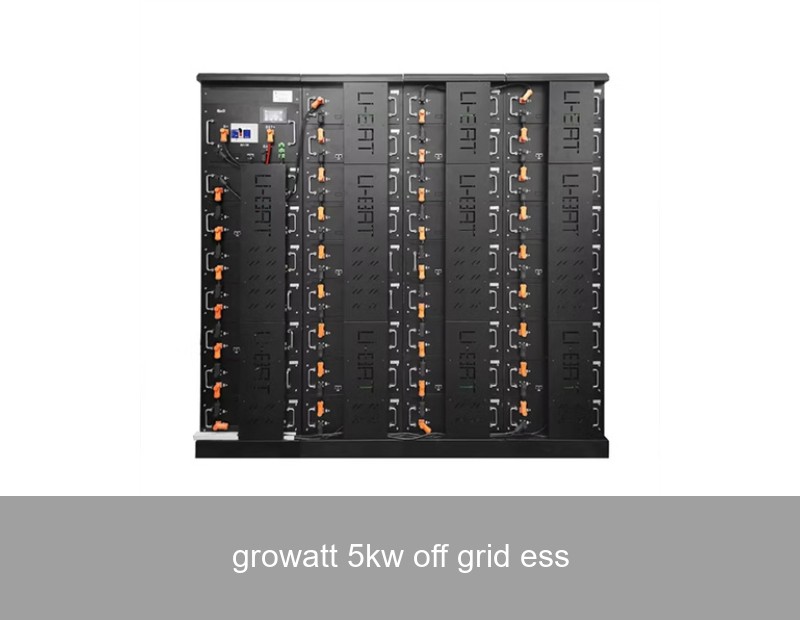
Have you ever looked at your electricity bill and dreamed of a simpler, self-sufficient power solution? For homeowners and small business operators across Europe and the US, the appeal of off-grid energy storage is stronger than ever. It's not just about backup power; it's about taking definitive control of your energy destiny. In this landscape, systems like the Growatt 5kW off-grid ESS have become popular gateways to energy autonomy. But what does it truly take to build a reliable, efficient, and future-proof off-grid system? Let's explore the journey from a basic battery setup to a fully intelligent energy ecosystem.
Table of Contents
- The Off-Grid Dream: More Than Just a Battery
- Decoding the 5kW Off-Grid ESS: Power, Components, and Reality
- Real-World Performance: A Case Study from Rural Spain
- Beyond the Inverter: The Critical Role of System Integration
- Highjoule's Holistic Approach to Off-Grid Solutions
- Is a 5kW Off-Grid System Right for You? Key Questions to Ask
The Off-Grid Dream: More Than Just a Battery
The vision is clear: a home powered entirely by the sun, immune to grid outages and rising tariffs. The phenomenon of energy self-consumption is accelerating, driven by both economic incentives and a growing desire for sustainability. However, the data reveals a common pitfall. A study by the National Renewable Energy Laboratory (NREL) highlights that system design flaws—not component failures—are a leading cause of underperformance in off-grid installations. An off-grid system is a delicate ballet between energy generation (solar panels), storage (batteries), management (the inverter/charger), and consumption (your loads). The Growatt 5kW off-grid inverter is a capable conductor for this ballet, but the performance of the entire ensemble depends on expert design and superior components, especially the battery system.

Image: A successful off-grid setup requires harmonious integration of all components. Credit: Unsplash
Decoding the 5kW Off-Grid ESS: Power, Components, and Reality
Let's break down what a "Growatt 5kW off-grid ESS" typically entails. The "5kW" refers primarily to the inverter's continuous power output—the amount of load it can handle at any given moment. This is sufficient to power essential household circuits, including refrigerators, lights, computers, and even some well pumps or smaller air conditioning units, though not all simultaneously.
The core components usually include:
- Inverter/Charger (e.g., Growatt SPF 5000 ES): The brain and heart. It converts DC battery power to AC for your home and converts AC from a generator or grid (if in a backup configuration) to DC to charge the batteries.
- Battery Bank: The fuel tank. This is where your solar energy is stored. The capacity (measured in kWh) determines how long you can run without sun.
- Solar Charge Controller (often MPPT): The optimizer. It ensures solar panels charge the batteries at the most efficient voltage.
- Solar Photovoltaic (PV) Array: The energy harvester.
A crucial insight is that the inverter's brand is just one part of the equation. The system's longevity and reliability are overwhelmingly determined by the battery technology and the system integration logic. This is where partnering with a seasoned provider makes all the difference.
Battery Technology: The Make-or-Break Component
While many entry-level systems pair a 5kW inverter with traditional lead-acid batteries, the industry has decisively shifted towards Lithium Iron Phosphate (LFP) technology. Here's why:
| Feature | Traditional Lead-Acid | Modern LFP (e.g., Highjoule H-LFP Series) |
|---|---|---|
| Cycle Life | ~500-1000 cycles | 6,000+ cycles (to 80% capacity) |
| Depth of Discharge (DoD) | ~50% recommended | >90% usable |
| Space & Weight | Bulky, heavy | Compact, lightweight |
| Maintenance | Regular required | Virtually none |
| Efficiency | ~80% | >98% |
As you can see, an LFP battery bank effectively delivers over twice the usable energy over its lifetime compared to lead-acid, justifying its higher upfront cost. This is a critical consideration for a true off-grid setup where reliability is non-negotiable.
Real-World Performance: A Case Study from Rural Spain
Let's move from theory to practice. Consider a case study from Andalusia, Spain, where a family homestead sought complete independence from an unreliable rural grid.
- Challenge: Provide 24/7 power for a 3-bedroom home, including a small irrigation pump for an olive grove.
- Initial Proposal: A standard 5kW off-grid inverter paired with 20kWh of lead-acid batteries.
- Problem Encountered: Within 18 months, the battery capacity degraded significantly. The 50% DoD limit meant only 10kWh was usable, leading to frequent generator use during cloudy winter periods. Maintenance was constant.
- Highjoule Solution Implemented: The system was redesigned around a high-efficiency inverter platform and integrated with a Highjoule H-LFP 15kWh modular battery system. The intelligent Battery Management System (BMS) communicates seamlessly with the inverter for optimal charging and health monitoring.
- Outcome & Data: Post-retrofit, the usable storage jumped to over 13.5kWh (90% DoD). Generator runtime decreased by over 80%. The system's round-trip efficiency (solar in to usable AC out) increased from ~74% to over 94%, meaning almost all captured solar energy is utilized. The homeowner now has a predictable, maintenance-free power supply with a clear 10+ year lifespan for the storage component.

Image: Reliable off-grid power supports both home and livelihood in remote areas. Credit: Unsplash
Beyond the Inverter: The Critical Role of System Integration
This case study underscores a vital insight: the value of an off-grid system is not in isolated components, but in their intelligent integration. A high-quality inverter like a Growatt unit is a solid foundation, but its potential is unlocked only when paired with superior batteries and a master-level system design. This involves:
- Precise Load Profiling: Understanding not just your total daily kWh consumption, but your peak power demands and when they occur.
- Climate-Adaptive Design: Accounting for seasonal solar irradiance (e.g., short winter days in Germany vs. sunny but hot summers in Texas) and temperature effects on battery performance.
- Scalability: Designing a system that allows for easy expansion of PV or storage capacity as needs evolve.
- Remote Monitoring & Management: The ability to check system status, performance, and receive alerts from your smartphone is no longer a luxury—it's essential for peace of mind.
Highjoule's Holistic Approach to Off-Grid Solutions
At Highjoule, with nearly two decades of experience as a global advanced energy storage provider, we view every project through this lens of holistic integration. While we offer compatible solutions for various inverter brands, our strength lies in delivering the core intelligence and longevity of the system.
For homeowners considering a 5kW off-grid ESS, our H-LFP Series residential battery systems provide the perfect technological partner. They are engineered for seamless communication with leading hybrid and off-grid inverters, ensuring not just compatibility but optimized performance. Our modular design means you can start with, say, a 10kWh bank and effortlessly add more modules later. Furthermore, our Highjoule Energy Management Platform provides the dashboard for your personal energy microgrid, offering insights, control, and proactive diagnostics that transform a simple backup system into a smart, strategic asset.
We go beyond supplying hardware. Our technical expertise supports system integrators and installers across Europe and the US with design validation, commissioning protocols, and ongoing technical support, ensuring that the vision of energy independence becomes a durable, reliable reality.
Is a 5kW Off-Grid System Right for You? Key Questions to Ask
Embarking on an off-grid journey is exciting, but it requires careful planning. Before you decide on any specific component, ask yourself and potential suppliers these critical questions:
- What is my detailed load profile, including the starting surge of my largest motor (like a well pump)?
- How many days of "autonomy" (cloudy days without sun) do I need to plan for in my location? (Data from PVGIS can help).
- Is the battery system truly designed for the daily deep-cycle use of off-grid living, and what is its warranted capacity after 10 years?
- How does the system's software manage battery health, prioritize loads, and integrate a backup generator if needed?
- Can the system be easily expanded in the future?
The path to energy independence is a significant investment. Are you ready to design a system where every component, from the inverter to the battery chemistry, is purposefully selected and intelligently integrated to serve your specific needs for the next decade and beyond?
 Inquiry
 Online Chat