


The Hazelwood Battery Energy Storage System: Powering a Resilient Energy Future
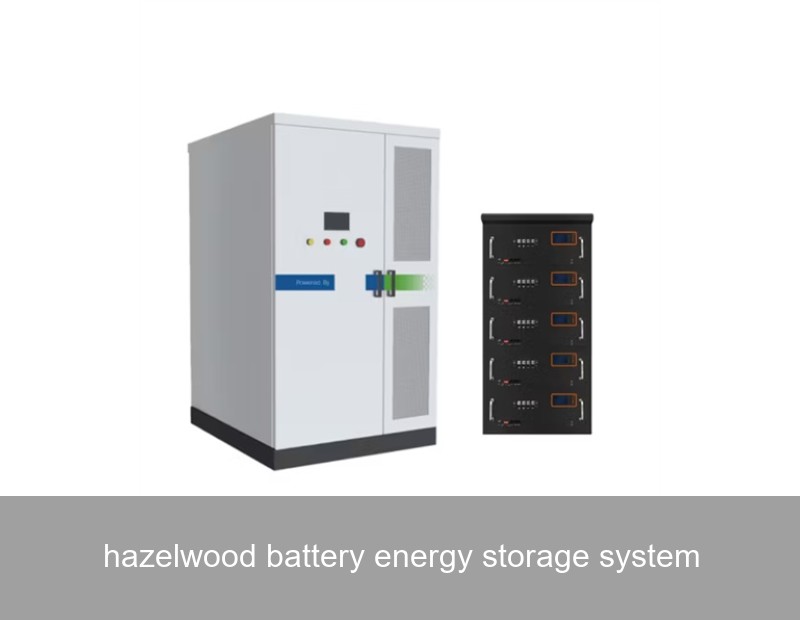
Imagine a massive, silent sentinel standing on the grounds of a former coal power station, not as a monument to the past, but as a dynamic guardian of the future grid. This is the reality of the Hazelwood Battery Energy Storage System (BESS) in Victoria, Australia. While geographically outside our core markets, this project is a global beacon, perfectly illustrating the transformative power of large-scale battery storage in stabilizing grids with high renewable penetration—a challenge directly relevant to energy markets across Europe and the United States. As we witness a surge in wind and solar, the question isn't just how to generate clean power, but how to store and dispatch it reliably. The Hazelwood battery energy storage system provides a compelling answer, showcasing the technology that companies like Highjoule are deploying worldwide to ensure our energy transition is both sustainable and secure.
The Modern Grid Stability Challenge
The energy landscape is undergoing a seismic shift. Coal and gas plants, traditionally the bedrock of grid stability, are being phased out, while variable renewable sources like solar and wind are taking center stage. This creates a paradox: we have more clean energy than ever, but the grid faces new vulnerabilities. The sun doesn't always shine, and the wind doesn't always blow, leading to potential mismatches between supply and demand that can cause frequency fluctuations or even blackouts.
This isn't a theoretical problem. In 2022, the North American Electric Reliability Corporation (NERC) warned that portions of the U.S. and Canada face increased risk of energy shortfalls during extreme weather. Similarly, European grid operators are actively managing the intermittency of renewables. The solution lies not in building more fossil-fuel peaker plants, but in deploying agile, grid-scale batteries. These systems act as a shock absorber and a rapid-response power source, filling gaps in milliseconds to keep the grid's frequency stable—a service known as Frequency Control Ancillary Services (FCAS).

Image Source: Unsplash - A solar farm, representing the variable renewable generation that requires storage for stabilization.
The Hazelwood Case Study: From Coal Ash to Clean Power
The Hazelwood battery energy storage system is a masterclass in energy transition. Built on the site of the decommissioned Hazelwood coal-fired power station, it symbolizes a direct evolution from old to new. Operational since 2022, it's one of the largest battery projects in the Southern Hemisphere.
Let's look at the data that makes this project a cornerstone example:
- Capacity & Power: 150 MW / 150 MWh (with potential for expansion to 200 MW).
- Core Function: Providing FCAS to the National Electricity Market (NEM), effectively acting as a "shock absorber" for the grid.
- Response Time: It can go from zero to full power in under one second, a feat impossible for traditional thermal generation.
- Market Impact: In its first year of operation, analysts noted it significantly helped cap FCAS prices in Victoria, saving consumers money and demonstrating how storage increases market competition and efficiency.
The project's success lies in its strategic location and precise engineering. By connecting to critical grid infrastructure, it can inject or absorb power exactly where and when it's needed most, mitigating the risks associated with the region's renewable-heavy generation mix. This model is directly applicable to regions in Europe, like Germany or the Iberian Peninsula, and areas in the U.S. like California or Texas, where renewable penetration is high and grid stability is paramount.
The Technology Behind the Success
Projects like Hazelwood rely on advanced Lithium-Ion Battery Energy Storage Systems (BESS). But not all BESS are created equal. The system's intelligence—its Battery Management System (BMS) and Energy Management System (EMS)—is what turns raw battery cells into a grid asset. This is where Highjoule's expertise becomes critical.
At Highjoule, we design and deploy smart BESS solutions that embody the principles proven at Hazelwood. Our GridMax Utility series, for example, is engineered for large-scale applications. It integrates high-efficiency, liquid-cooled battery racks with our proprietary Neuron OS platform. This AI-driven operating system doesn't just store energy; it continuously analyzes grid conditions, market prices, and asset health to optimize every charge and discharge cycle for maximum financial return and grid support.
For commercial and industrial (C&I) clients, who face similar challenges with demand charges and backup power, our PowerStack C&I solutions bring this utility-grade intelligence to a smaller scale. Whether it's a manufacturing plant in Germany or a data center in Ohio, our systems ensure resilience and cost savings.
| Service | Description | Benefit |
|---|---|---|
| Frequency Regulation (FCAS) | Instantaneous injection/absorption of power to maintain grid frequency at 50/60 Hz. | Prevents blackouts, enables more renewables. |
| Renewable Firming | Storing excess solar/wind energy and releasing it when generation drops. | Transforms intermittent power into a reliable, dispatchable resource. |
| Peak Shaving | Discharging during periods of high electricity demand and price. | Reduces wholesale market costs and defers costly grid upgrades. |
| Black Start Capability | Providing power to restart generators after a total grid outage. | Critical for enhancing overall grid resilience and recovery. |
Beyond Hazelwood: Key Applications of Utility-Scale BESS
The Hazelwood battery energy storage system is a specific application (primarily FCAS) of a versatile technology. The lessons learned there are shaping projects globally. Here’s how large-scale storage is being deployed:
- Microgrid Stabilization: On islands or remote communities, a BESS paired with diesel generators and renewables can drastically cut fuel use and emissions. Highjoule's integrated microgrid controllers make this seamless.
- Transmission & Distribution Deferral: Instead of spending millions on new power lines, utilities can place a BESS at a grid constraint point, relieving congestion. The U.S. Department of Energy highlights this as a key value stream.
- Renewable+Storage Hybrid Plants: The future is integrated. New solar or wind farms are increasingly being built with co-located storage from day one, much like Highjoule's SolarSync packaged solutions, to deliver smooth, predictable power output.

Image Source: Unsplash - An engineer inspecting a large-scale battery storage system, representing the technology's industrial application.
The Future of Energy Storage and Your Role
The journey from Hazelwood's coal legacy to its battery-powered future is a powerful metaphor for the global energy transition. As battery costs continue to fall and software intelligence rises, systems like these will become the default backbone of a clean grid. The International Energy Agency (IEA) states in its Energy Storage report that to meet net-zero goals, the world needs to add close to 600 GW of grid-scale battery storage by 2030.
For a utility planner in Europe, a city manager in the U.S., or a large industrial energy consumer, the question is no longer if battery storage is needed, but how to implement it most effectively. It's about choosing a partner with proven technology, deep grid expertise, and a focus on long-term system health and profitability.
Highjoule was founded in 2005 on the belief that intelligent storage is the key to a sustainable energy future. From residential units to utility-scale projects, we provide the hardware and the brain—the battery racks and the AI-driven software—to make storage a reliable, revenue-generating asset. The Hazelwood battery energy storage system shows us what's possible. The next landmark project could be in your region.
What specific grid stability or energy cost challenge is your community or business facing that a smart, scalable storage solution could solve?
 Inquiry
 Online Chat