


Understanding and Maximizing Your Planta Eléctrica de Paneles Solares
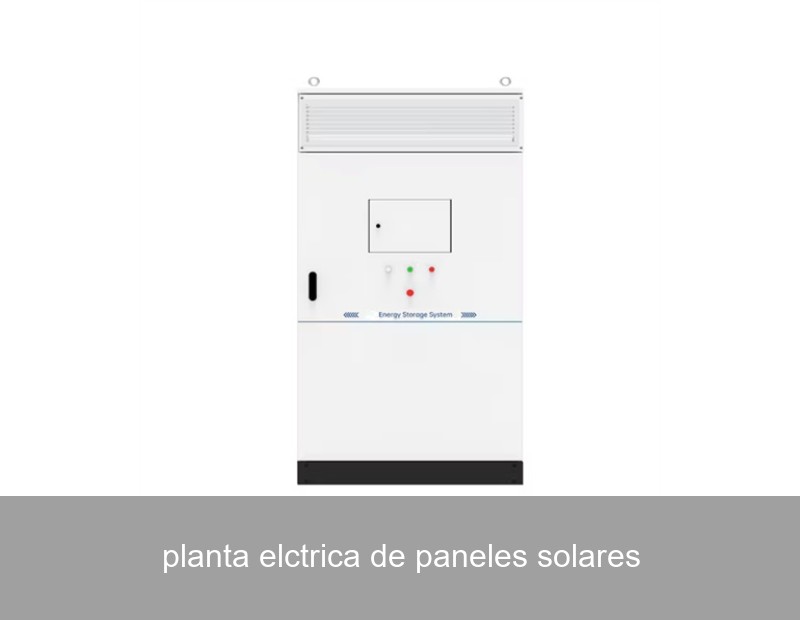
You've likely heard the term "planta eléctrica de paneles solares" or solar panel power plant. Traditionally, this might conjure images of vast solar farms in sun-drenched deserts. But today, this concept has evolved dramatically. For businesses, communities, and even forward-thinking homeowners, a modern planta eléctrica isn't just about panels; it's an intelligent, self-sufficient energy ecosystem. It's a personal power station that captures, stores, and manages solar energy to provide reliable, clean electricity exactly when and where you need it. This shift from simple generation to comprehensive energy independence is revolutionizing how we power our world.
Table of Contents
- The Phenomenon: From Simple Generation to Intelligent Energy Hubs
- The Data: Why Storage is the Game-Changer
- Case Study: A Spanish Agri-Business Powers Through the Night
- The Core Insight: It's About Control, Not Just Kilowatts
- Highjoule's Role: Engineering Your Intelligent Energy Ecosystem
- Key Components of a Modern Solar Power Plant
- Future Trends: The Grid of the Future is Decentralized
The Phenomenon: From Simple Generation to Intelligent Energy Hubs
For years, a solar installation was primarily a one-way system: panels on the roof, an inverter, and energy sent to the grid or used immediately. Its performance was at the mercy of the weather and the grid. The sun sets, production stops. A grid outage? Your panels shut down for safety. This limitation meant you weren't truly independent. The modern planta eléctrica de paneles solares solves this by integrating a critical brain and heart: smart energy management and advanced battery storage. This transforms a passive generator into an active, resilient power asset.

Credit: Photo by American Public Power Association on Unsplash. A modern energy system integrates generation and storage.
The Data: Why Storage is the Game-Changer
Let's talk numbers. According to the U.S. Department of Energy, adding storage to a solar system can increase the value of solar-generated electricity by aligning supply with peak demand periods. In Europe, with its volatile energy prices, the economics are even more compelling. Consider this:
- Self-Consumption Rate: A typical solar-only system might achieve 30-50% self-consumption (using your own solar power directly). With storage, this can jump to 70-90% or more.
- Payback Period: While dependent on local incentives and energy costs, integrated solar-plus-storage systems in commercial applications often see payback periods of 5-8 years, thanks to demand charge reduction and backup power value.
- Grid Stress: A study by Lawrence Berkeley National Laboratory highlighted that distributed storage can defer costly grid infrastructure upgrades, a benefit for entire communities.
The data is clear: the synergy between solar panels and battery storage creates a whole that is greater than the sum of its parts.
Case Study: A Spanish Agri-Business Powers Through the Night
Let's look at a real-world example from southern Spain. "Finca Verde," a medium-sized greenhouse operation specializing in year-round tomatoes, faced two major challenges: exorbitant nighttime electricity costs for climate control and unreliable grid power that risked spoiling entire crops.
Their old planta eléctrica de paneles solares only helped during the day. Their solution was to upgrade to an integrated system featuring a 250 kW solar array coupled with a 500 kWh Highjoule H2-Cube commercial battery energy storage system (BESS).
| Metric | Before Upgrade | After Upgrade |
|---|---|---|
| Energy Self-Sufficiency | ~35% (daytime only) | >85% (24/7) |
| Monthly Energy Cost | €8,200 | €2,100 |
| Grid Dependency During Peak Hours | 100% | <10% |
| Backup Power for Critical Loads | None (diesel generator only) | 18+ hours |
The Highjoule H2-Cube, managed by our proprietary Neuron OS energy management platform, intelligently stores excess solar energy from the afternoon sun. It then discharges it throughout the night to power ventilation, heating, and irrigation systems. During a brief grid outage last winter, the system seamlessly took over, preventing an estimated €40,000 in crop loss. This is a planta eléctrica in its truest, most powerful form.
The Core Insight: It's About Control, Not Just Kilowatts
The fundamental shift here is in mindset. We're moving from buying energy as a commodity to owning and controlling your energy production and consumption as a strategic asset. This control manifests in three key ways:
- Financial Control: You lock in energy costs, shield yourself from price spikes, and can even participate in grid services programs (where available).
- Operational Control: You ensure business continuity with clean, silent backup power that activates in milliseconds, unlike noisy, polluting diesel generators.
- Sustainability Control: You maximize the use of your self-generated clean energy, dramatically reducing your carbon footprint and meeting ESG (Environmental, Social, and Governance) goals.
Highjoule's Role: Engineering Your Intelligent Energy Ecosystem
Since 2005, Highjoule has been at the forefront of this evolution. We don't just sell components; we engineer tailored, intelligent energy ecosystems. Our approach starts with understanding your unique load profile, energy goals, and physical site. We then design a system that optimally pairs high-efficiency solar generation with our robust, UL-certified battery storage solutions.
For residential clients, our HomePower series offers scalable, all-in-one units that integrate seamlessly with existing or new solar arrays. For commercial and industrial (C&I) applications, our modular H2-Cube and containerized MegaJoule systems provide the power and capacity needed for factories, data centers, and microgrids. All are governed by our Neuron OS, an AI-driven platform that continuously learns and optimizes energy flows for maximum economy and reliability.

Credit: Photo by ThisisEngineering RAEng on Unsplash. Intelligent control is key to a modern energy system.
Key Components of a Modern Solar Power Plant
To build your own effective planta eléctrica de paneles solares, ensure these core elements are part of the design:
- High-Efficiency Photovoltaic (PV) Panels: The primary energy harvesters. Quality and warranty matter.
- Advanced Inverter/Charger: The translator, converting DC from panels and batteries to AC for your building, and vice-versa for charging.
- Lithium-Ion Battery Bank (BESS): The energy reservoir. Look for safety features, cycle life, and a reputable manufacturer like Highjoule.
- Energy Management System (EMS): The brain. It makes real-time decisions on when to charge, discharge, import, or export energy.
- System Monitoring & Control: Your dashboard to the entire operation, often accessible via smartphone app.
Future Trends: The Grid of the Future is Decentralized
We are moving towards a future where millions of these intelligent, decentralized plantas eléctricas will interconnect, forming a resilient and flexible energy network. This concept, often called a "virtual power plant" (VPP), allows aggregated home and business systems to support the main grid during times of peak demand. By choosing a smart, connected system from a provider like Highjoule, you're not just investing in your own independence; you're becoming a participant in the future of energy stability for your community.
The journey to true energy independence is an exciting one. It begins with redefining what a planta eléctrica de paneles solares can be. Is your current energy system just a cost center, or is it ready to become a controlled, valuable asset for your home or business?
 Inquiry
 Online Chat