


Finding the Right Heavy Duty Battery Suppliers for Your Industrial Energy Needs
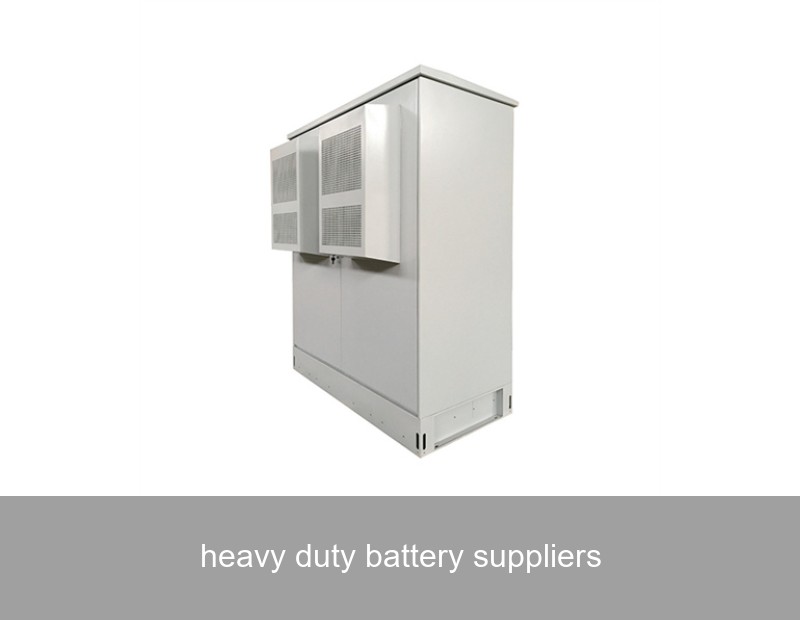
Imagine a bustling manufacturing plant. The production lines are humming, the machinery is in constant motion, and the demand for reliable, uninterrupted power is non-negotiable. Now, imagine the lights flicker, or worse, a critical process grinds to a halt due to a power quality issue or grid outage. The cost? Astronomical. This scenario is precisely why businesses across Europe and the US are urgently seeking robust, long-term energy resilience. The answer increasingly lies in advanced battery energy storage systems (BESS), and finding the right heavy duty battery suppliers becomes a mission-critical business decision. It's not just about buying batteries; it's about investing in a strategic asset that ensures operational continuity, manages energy costs, and supports sustainability goals. Companies like Highjoule, a global leader in advanced energy storage since 2005, have evolved from simply supplying hardware to becoming partners in designing intelligent, efficient, and sustainable power solutions for commercial, industrial, and microgrid applications.
Table of Contents
- The Power Problem: More Than Just Backup
- What Makes a Battery "Heavy Duty"? Key Specifications
- Beyond the Cell: The System Integration Imperative
- Case Study: Powering a German Automotive Parts Manufacturer
- Choosing Your Supplier: A Framework for Decision-Making
- The Highjoule Approach: Intelligence Built-In
- The Future of Heavy-Duty Storage
The Power Problem: More Than Just Backup
For industrial and commercial operators, the electrical grid is the lifeblood. Yet, this lifeline is under strain. We're seeing more frequent extreme weather events, an ageing grid infrastructure, and significant volatility in energy prices, particularly in European markets. The phenomenon is clear: reliance on the grid alone is a growing financial and operational risk. Let's look at the data. According to a report by the U.S. Department of Energy, power outages cost the U.S. economy an estimated $150 billion annually. In the EU, industrial electricity prices have seen dramatic fluctuations, pushing businesses to seek control over their energy destiny.
The traditional response—diesel generators—is increasingly seen as a costly, polluting, and noisy stopgap. This is where modern heavy-duty battery storage steps in. It's a transformative technology that shifts the conversation from mere backup to active energy management. A sophisticated BESS can perform peak shaving (reducing demand charges), provide frequency regulation, store excess solar energy, and create a seamless bridge during grid failures—all while emitting zero local emissions.

Image: A modern industrial site integrating solar and battery storage. Source: Unsplash
What Makes a Battery "Heavy Duty"? Key Specifications
Not all batteries are created equal. The term "heavy duty" in the context of heavy duty battery suppliers refers to systems engineered for demanding, daily cycling and long-duration performance. When evaluating suppliers, focus on these core technical pillars:
- Cycle Life & Depth of Discharge (DoD): This is paramount. A heavy-duty industrial battery should withstand thousands of deep charge/discharge cycles with minimal degradation. Look for suppliers who guarantee a high cycle life (e.g., 6,000+ cycles) at 80-90% DoD.
- Energy Density & Footprint: Industrial space is valuable. Advanced lithium-ion chemistries, like Lithium Iron Phosphate (LFP), offer superior energy density in a safer, more stable package, allowing for more storage capacity in a smaller footprint.
- Power Rating & Scalability: Can the system deliver the burst of power (in MW) needed to start large motors? Can it be easily scaled from a few hundred kWh to multiple MWh as your needs grow? Modular design is a key feature of forward-thinking suppliers.
- Thermal Management & Safety: A robust, proactive thermal management system (liquid cooling is often industry-standard for heavy-duty apps) is non-negotiable for safety, performance, and longevity. Certifications like UL 9540 and IEC 62619 are mandatory checkmarks.
| Feature | Standard Commercial Battery | Heavy-Duty Industrial Battery |
|---|---|---|
| Typical Cycle Life | 3,000 - 4,000 cycles | 6,000 - 10,000+ cycles |
| Operating Temperature Range | Narrower range | Wider range with active cooling/heating |
| Primary Use Case | Backup, basic load shifting | Daily peak shaving, microgrid formation, frequency services |
| System Integration | Often a standalone component | Designed for seamless integration with PV, generators, and grid controls |
Beyond the Cell: The System Integration Imperative
Here's a crucial insight: the battery cells are just one part of the story. The true value—and potential point of failure—lies in the system integration. The best heavy duty battery suppliers don't just sell you a container of batteries; they provide a fully integrated power solution. This includes:
- Power Conversion Systems (PCS): The sophisticated inverters that manage AC/DC conversion and grid interaction.
- Energy Management System (EMS): The "brain" of the operation. This software platform is what turns raw storage into an intelligent asset. It should be capable of automated control, real-time monitoring, and optimizing for multiple value streams (e.g., minimizing demand charges today, participating in a grid service program tomorrow).
- Structural & Safety Systems: The enclosure, fire suppression, and climate control that ensure safe, reliable operation for decades.
Choosing a supplier that masters the integration of all these components is essential for a system that is reliable, efficient, and future-proof.
Case Study: Powering a German Automotive Parts Manufacturer
Let's ground this discussion with a real-world example from our target market. A major automotive parts supplier in Bavaria, Germany, faced a dual challenge: skyrocketing electricity costs (with high demand charges) and a corporate mandate to reduce carbon emissions by 30% within five years.
The Solution: Highjoule partnered with the manufacturer to design and deploy a 2.4 MWh / 1.2 MW integrated battery storage system. The system was directly coupled with their existing 1.5 MW rooftop solar array. Our intelligent EMS was programmed with a primary focus on peak shaving and solar self-consumption optimization.
The Data-Driven Outcome: Within the first year of operation:
- Demand Charge Reduction: The system consistently shaved peak loads by over 25%, leading to an annual savings of €180,000 on demand charges alone.
- Increased Solar Utilization: On-site consumption of solar PV increased from 35% to over 70%, dramatically reducing purchased grid energy.
- ROI & Sustainability: The project achieved a simple payback period of under 5 years. Furthermore, it reduced the facility's grid-related CO2 emissions by an estimated 450 tonnes annually.
This case illustrates how the right technology partner transforms a heavy-duty battery system from a cost into a revenue-protecting, sustainable asset.
The Highjoule Approach: Intelligence Built-In
At Highjoule, our philosophy is that hardware excellence must be matched by digital intelligence. Our HiveMind™ EMS platform is what sets our solutions apart for industrial clients. Think of it as an autopilot for your energy assets. It doesn't just react; it predicts and optimizes. Using weather forecasts, production schedules, and real-time grid conditions, HiveMind™ automatically decides the most economical and efficient way to charge or discharge the battery. Whether you're aiming for peak shaving, time-of-use arbitrage, or providing grid services, the system executes the strategy seamlessly.
Our product lines, like the Fortis Series for large-scale commercial/industrial sites and the Nexus Platform for microgrids, are built on this principle of integrated intelligence. They come pre-configured with industry-best safety systems and are designed for easy scalability, ensuring your investment grows with your business.

Image: Advanced control and monitoring of an industrial battery storage system. Source: Unsplash
Choosing Your Supplier: A Framework for Decision-Making
So, how do you select the right partner among the many heavy duty battery suppliers? Ask these questions:
- Do you provide a full, integrated system or just battery racks? (Look for full integration.)
- What is the projected degradation and guaranteed performance over 10 years? (Demand clear warranties and performance guarantees.)
- Can your Energy Management System optimize for multiple, changing value streams? (Flexibility is key to future-proofing.)
- What is your track record with projects of similar scale and complexity in my region? (Ask for references and case studies.)
- What is the long-term service and support model? (Remote monitoring, preventative maintenance, and local technical support are critical.)
The Future of Heavy-Duty Storage
The landscape is evolving rapidly. We're moving towards even longer-duration storage (8+ hours), the integration of artificial intelligence for predictive energy trading, and the use of more sustainable battery chemistries. The role of the supplier is evolving from equipment vendor to long-term energy partner. As industries worldwide commit to net-zero goals, the heavy-duty BESS becomes the enabling platform for a resilient, renewable-powered future.
Is your organization ready to transform its energy profile from a volatile cost center into a controlled, strategic asset? What would achieving 100% renewable power during your daytime operations do for your sustainability targets and brand reputation?
 Inquiry
 Online Chat