


Unlocking Grid Resilience: The Strategic Power of a High Voltage Battery Bank
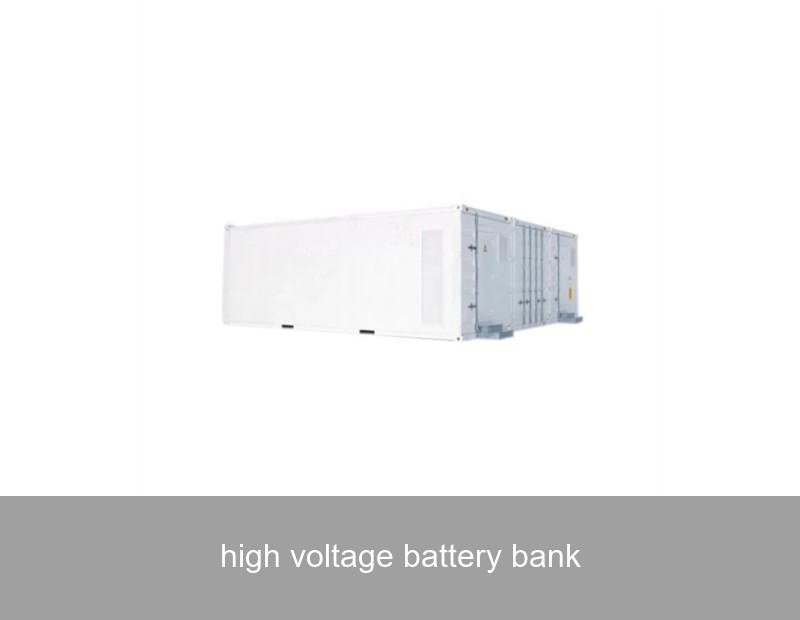
As the world accelerates its transition to renewable energy, a critical challenge emerges: how do we keep the lights on when the sun doesn't shine and the wind doesn't blow? The answer is increasingly found in advanced energy storage, and at the forefront of this solution is the high voltage battery bank. Unlike standard battery systems, a high-voltage architecture operates at levels typically above 400V, offering a transformative leap in efficiency, power, and scalability for commercial, industrial, and utility-scale applications. For facility managers, energy developers, and communities striving for energy independence, understanding this technology is key to building a resilient and cost-effective power infrastructure. Companies like Highjoule, a global leader in advanced energy storage since 2005, are pioneering these intelligent systems to deliver sustainable power solutions precisely where they are needed most.
Table of Contents
- What is a High Voltage Battery Bank?
- Why High Voltage? The Efficiency & Economic Advantage
- A Real-World Case: Stabilizing a German Industrial Park
- The Highjoule Approach: Intelligent Systems for Complex Needs
- The Future Horizon: Beyond Simple Backup
- Is Your Energy Strategy Ready for High Voltage?
What Exactly is a High Voltage Battery Bank?
Let's break it down. A high voltage battery bank is an energy storage system (ESS) where the battery modules are connected in series to achieve a direct current (DC) system voltage of 600V, 800V, or even 1500V. Think of it like plumbing: transmitting energy at higher voltage is like using a wider pipe. It allows for the same amount of power (watts) to flow with significantly lower current (amps).
This fundamental shift from traditional low-voltage (48V, 400V) systems brings a cascade of benefits. Primarily, it reduces electrical losses as heat during both charging and discharging. For large-scale applications—from a manufacturing plant to a solar farm—these losses add up quickly, impacting the bottom line and sustainability goals. A high-voltage design is inherently more compatible with the inverters and transformers used in grid-tied and industrial settings, simplifying system design and reducing balance-of-system costs.

Image: A modern high-voltage battery energy storage system installation. Source: Unsplash
Why High Voltage Matters: The Unmatched Efficiency & Economic Advantage
The move to high voltage isn't just a technical nuance; it's a strategic business decision. Here’s the data-driven perspective.
Phenomenon: The "Fiscal Leak" of Low-Voltage Systems
In a large, low-voltage battery system, high currents are required to deliver substantial power. These high currents generate excess heat (I²R losses), demanding more robust and expensive cooling systems. They also necessitate thicker, heavier, and more costly copper cabling and switchgear.
Data & Comparison
| System Parameter | Traditional Low-Voltage (400V) System | Modern High-Voltage (800V+) System |
|---|---|---|
| System Efficiency (Round-Trip) | ~88-92% | ~95-97%+ |
| Cable & BOS Costs | Higher (thicker cables, larger conduits) | Up to 30% lower |
| Footprint & Scalability | Larger for equivalent power | More compact, easier to scale |
| Primary Application Fit | Residential, small commercial | Large C&I, Microgrids, Utility-scale |
That 3-9% efficiency gain is monumental. For a 1 MW/2 MWh system operating daily, it can translate to tens of thousands of additional kilowatt-hours delivered annually—energy that is no longer wasted as heat but is instead used to power operations or sold back to the grid. The National Renewable Energy Laboratory (NREL) has consistently highlighted system voltage as a key lever for reducing Levelized Cost of Storage (LCOS).
A Real-World Case: Stabilizing a German Industrial Park
Let's move from theory to practice. In 2022, a major automotive parts supplier in Bavaria faced a dual challenge: volatile energy prices and a need for ultra-reliable power for precision machinery. Their on-site solar PV system was substantial but intermittent.
The Solution: A 1.2 MW / 2.4 MWh high voltage battery bank was integrated with their existing infrastructure. The system was specifically configured for:
- Peak Shaving: Automatically discharging during daily price peaks, cutting grid draw by 40% during those hours.
- Solar Self-Consumption Optimization: Storing excess midday solar generation for use in the evening, increasing self-consumption from 35% to over 80%.
- Frequency Regulation: Providing fast-responding frequency containment reserve (FCR) to the German grid, creating a new revenue stream.
The Data-Driven Outcome (12-month period):
- €145,000 saved in energy costs via arbitrage and peak shaving.
- €28,000 in revenue from grid services.
- Carbon footprint reduced by 720 metric tons of CO2 equivalent.
- Project payback period: Under 5 years.
This case, documented in part by the Fraunhofer Institute for Solar Energy Systems, exemplifies the multi-faceted value proposition of a modern high-voltage storage system. It's not just a battery; it's an intelligent grid asset.
The Highjoule Approach: Intelligent Systems for Complex Needs
At Highjoule, we've spent nearly two decades refining the art and science of advanced storage. Our HVS Series (High Voltage Stack) is engineered from the ground up for the demands of the European and North American markets. We understand that a high voltage battery bank is a critical infrastructure investment, and our systems are built to deliver reliability, safety, and smart returns.
What sets the Highjoule HVS apart?
- Cell-to-Pack Innovation: Our proprietary architecture maximizes energy density and thermal management, ensuring longevity even in demanding charge/discharge cycles.
- AI-Powered Energy Management System (EMS): The true brain of the operation. Our EMS doesn't just react; it forecasts. By integrating weather data, utility rate schedules, and on-site load patterns, it autonomously optimizes for the highest economic return—whether that's maximizing self-consumption, participating in demand response programs, or providing grid services.
- Unmatched Safety & Compliance: Built with multi-layered protection (cell, module, rack, system level), our systems exceed UL 9540, IEC 62619, and other regional safety standards. We provide comprehensive monitoring and remote diagnostics for peace of mind.

Image: An intelligent Energy Management System dashboard for monitoring and optimization. Source: Unsplash
From commercial buildings and industrial plants to community microgrids, Highjoule provides tailored solutions. Our services extend beyond hardware to include feasibility studies, system design, financing support, and ongoing performance management, ensuring our clients' energy storage assets perform optimally for their entire lifecycle.
The Future Horizon: Beyond Simple Backup
The role of the high voltage battery bank is rapidly evolving. It is becoming the cornerstone of the virtual power plant (VPP), where hundreds of distributed systems are aggregated to act as a single, flexible power plant for the grid. In markets like California and Texas in the U.S., or across the EU, this capability is crucial for integrating ever-higher shares of wind and solar.
Furthermore, as electric vehicle fleets expand, depot charging presents a massive grid challenge. A high-voltage battery bank on-site can manage this demand, preventing costly grid upgrades and enabling fast, simultaneous charging of multiple vehicles using locally stored, low-cost renewable energy.
The International Energy Agency (IEA) underscores that grid-scale storage is indispensable for net-zero transitions, with high-voltage technologies playing a pivotal role in cost reduction and performance.
Is Your Energy Strategy Ready for High Voltage?
The evidence is clear. A high voltage battery bank is no longer a niche technology but a mature, financially sound solution for anyone serious about energy resilience, cost control, and sustainability. The question isn't whether this technology is relevant, but how it can be specifically configured to meet your unique load profile, energy tariffs, and operational goals.
What specific energy challenge—be it demand charges, renewable curtailment, or backup power needs—could a high-voltage system solve for your business or community in the next 18 months?
 Inquiry
 Online Chat