


Deye Hybrid Inverter 12kW: The Heart of a Modern, Resilient Energy System
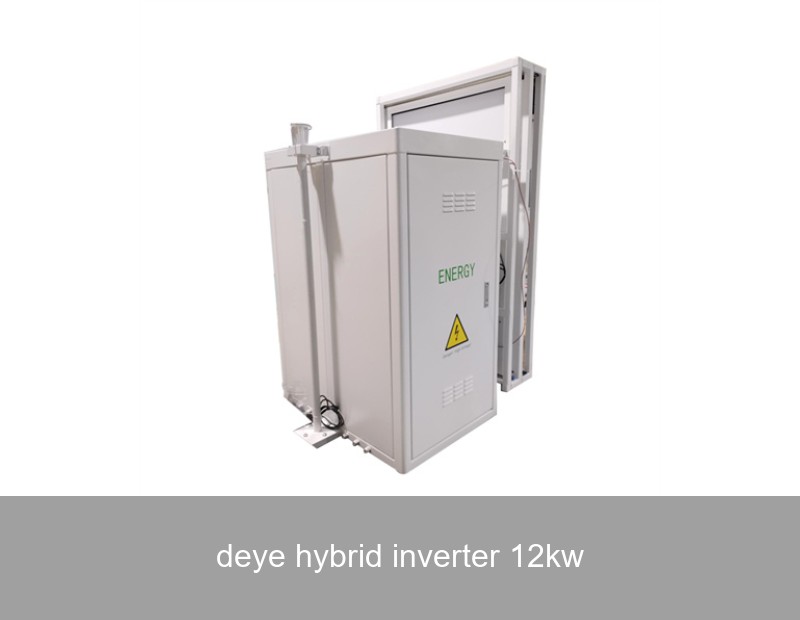
Have you ever watched your electricity bill climb with a sense of helplessness, or worried about power disruptions during a storm? You're not alone. Across homes in Europe and the US, a quiet energy revolution is underway, moving power generation and control from distant grids directly into the hands of homeowners and businesses. At the center of this shift is a critical piece of technology: the hybrid inverter. And when it comes to robust, intelligent systems for larger homes and small commercial setups, the Deye hybrid inverter 12kW model stands out as a powerhouse of capability. But what exactly makes it such a pivotal component, and how does it transform sunlight and batteries into reliable, independent power? Let's explore how this technology, paired with expert integration from companies like Highjoule, is redefining energy independence.
Table of Contents
- What is a Hybrid Inverter & Why the 12kW Rating Matters
- Deye 12kW Deep Dive: Key Features for Peak Performance
- Beyond the Box: System Design & Professional Integration
- Highjoule's Role: Your Partner in Advanced Energy Solutions
- Is Your Home Ready for This Level of Energy Intelligence?
What is a Hybrid Inverter & Why the 12kW Rating Matters
First, let's demystify the term. A standard solar inverter has one job: convert the direct current (DC) electricity from your solar panels into the alternating current (AC) your home appliances use. A hybrid inverter does all that and more. It's a multi-talented manager for your personal energy ecosystem, seamlessly connecting solar panels, battery storage, the utility grid, and your home's main electrical panel.
Think of it as the brain and central nervous system of your power setup. Its key intelligence lies in deciding, in real-time, the most efficient and economical flow of energy. Should solar power directly run the fridge? Should excess energy charge the batteries for use at night, or be sold back to the grid? The hybrid inverter makes these calls instantly.
So, why focus on a 12kW model? The wattage rating primarily refers to its power output capacity. A 12kW hybrid inverter is designed to handle significant electrical loads, making it an ideal choice for:
- Larger Residential Properties: Homes with high energy consumption, electric vehicle chargers, large heating/cooling systems, or pools.
- Small-to-Medium Businesses (SMBs): Offices, workshops, or farms looking to reduce operational costs and ensure uptime.
- Systems Designed for Full Backup: Homes that aim to maintain most, if not all, electrical functions during a grid outage.
Choosing a unit like the Deye 12kW means investing in ample capacity for both today's needs and tomorrow's expansions, such as adding more solar panels or a second battery stack.

Image Source: Unsplash - A modern home equipped for sustainable energy, a perfect candidate for a 12kW hybrid system.
Deye 12kW Deep Dive: Key Features for Peak Performance
The Deye brand has earned a strong reputation in the renewable energy sector for reliability and technological innovation. Their 12kW hybrid inverter model (often referring to series like the SUN-12K-SG04LP3) packs features that address the core desires of energy-conscious consumers: maximizing self-use, ensuring resilience, and providing granular control.
Let's break down some of its standout capabilities:
- High Dual MPPT Efficiency: It features multiple Maximum Power Point Trackers (MPPTs). This means you can connect solar panel arrays facing different directions (e.g., east and west roofs) without losing efficiency, capturing more sunlight throughout the day. Robust Grid Support & Off-Grid Functionality: It complies with strict grid codes in Europe and North America (like VDE-AR-N 4105 in Germany or UL 1741 SA in the US), meaning it can safely feed energy back to the grid. Crucially, its transition to off-grid mode during a blackout is nearly instantaneous, keeping your lights on without a flicker.
- Advanced Battery Flexibility: It supports a wide range of battery voltages and chemistries, including popular lithium-ion options like LFP (LiFePO4). This future-proofs your investment against battery technology evolution.
- Smart Energy Management: Through user-friendly monitoring apps, you can track production, consumption, and battery status in real-time, and set preferences (like "charge batteries to 100% by 6 PM" to prepare for peak evening rates).
| Time of Day | Solar Production | Home Consumption | Inverter Action | Battery Status |
|---|---|---|---|---|
| Morning (6-10 AM) | Moderate | High (Breakfast, Appliances) | Direct solar power to home, grid supplements deficit | Charging begins if surplus |
| Midday (10 AM - 3 PM) | Peak | Low (Occupants away) | Powers home, charges battery to full, exports excess to grid | Charging to 100% |
| Evening (6-10 PM) | None | Peak (Cooking, Lighting, HVAC) | Draws power from battery bank, minimizes grid import | Discharging |
| Night (10 PM - 6 AM) | None | Low (Baseload) | Draws from battery until set minimum, then uses grid | Low state of charge |
Real-World Impact: A Case Study from Bavaria
Data and specs are one thing, but real-world performance is what truly matters. Consider the Müller family home in Bavaria, Germany—a region known for its proactive adoption of renewables but also subject to grid constraints.
The Challenge: A 250 sqm home with a heat pump, electric sauna, and growing family saw annual electricity costs exceeding €4,500. Their existing 8kW solar system was sending most of its midday production to the grid at low feed-in tariffs, while they bought expensive power in the evening.
The Solution: A system integrator installed a Deye 12kW hybrid inverter, coupled with an existing 8kWp solar array expanded to 12kWp, and a new 20kWh lithium iron phosphate (LFP) battery. The system was configured for maximal self-consumption.
The Results (12-month period):
- Grid Independence: Self-consumption rate jumped from 35% to over 85%.
- Financial Savings: Annual electricity bill reduced by approximately €3,200, projecting a full return on investment in under 7 years.
- Resilience: The system provided full backup during two prolonged winter grid outages, keeping the heat pump and all essentials running seamlessly.
This case, documented in regional energy reports, highlights how the right inverter technology unlocks the full financial and practical potential of solar and storage. For deeper insights into Germany's energy transition, you can review reports from the Agora Energiewende think tank.
Beyond the Box: System Design & Professional Integration
A critical insight we at Highjoule emphasize is that an inverter, no matter how advanced, is only as good as the system it's part of. The Deye hybrid inverter 12kW is a superb engine, but it needs a correctly sized chassis, wheels, and a skilled driver. This is where professional design and integration become non-negotiable.
Key design considerations include:
- Load Analysis & Sizing: Accurately calculating your home's peak and average loads to ensure the 12kW capacity is neither overkill nor insufficient.
- Component Compatibility: Ensuring seamless communication between the inverter, battery management system (BMS), and monitoring platform.
- Electrical Safety & Code Compliance: Adhering to all local electrical codes (NEC in the US, IEC in Europe) for wiring, protection devices, and grid interconnection.
- Thermal Management: Installing the inverter in a well-ventilated space to maintain efficiency and longevity.
Highjoule's Role: Your Partner in Advanced Energy Solutions
Since 2005, Highjoule has been at the forefront of the global energy storage revolution. We understand that providing a component is just the beginning. Our mission is to deliver intelligent, efficient, and sustainable power solutions that are tailored to the unique demands of commercial, industrial, residential, and microgrid applications.
When you choose Highjoule for a system built around a robust inverter like the Deye 12kW, you're not just buying hardware. You're gaining a partner who provides:
- Expert System Design & Engineering: Our technical team analyzes your energy profile, site conditions, and goals to design an optimized, balanced system.
- High-Quality, Integrated Product Suite: We offer compatible high-efficiency solar panels, scalable battery storage solutions (like our HJ-PowerStack series), and the necessary balance-of-system components, all validated to work seamlessly together.
- Professional Installation & Commissioning: Through our network of certified installers in Europe and the US, we ensure your system is installed safely, correctly, and to the highest performance standards.
- Ongoing Monitoring & Support: Our proprietary monitoring platform, HJ-Insight, gives you full visibility and control over your energy, while our support team ensures long-term peace of mind.
For a deeper dive into the technology behind modern inverters and grid interaction, the National Renewable Energy Laboratory (NREL) offers excellent technical resources.

Image Source: Unsplash - Professional monitoring and management are key to system success.
Is Your Home Ready for This Level of Energy Intelligence?
The journey towards energy independence isn't just about saving money—it's about taking control, increasing resilience, and making a tangible contribution to a sustainable grid. The Deye hybrid inverter 12kW represents a powerful tool to make that leap, especially for energy-intensive properties.
But the most important step is the first one: assessment. What does your current energy consumption look like? What are your primary goals—lowering bills, achieving backup power, or both? How might your needs evolve with an electric vehicle or a home expansion?
We invite you to start that conversation. What's the one electrical load in your home you'd most want to secure against an outage, and how could reimagining your home's energy core make that a reality?
 Inquiry
 Online Chat