


Unlocking Grid Resilience: A Deep Dive into the Highest Energy Storage Cabinet Capacity
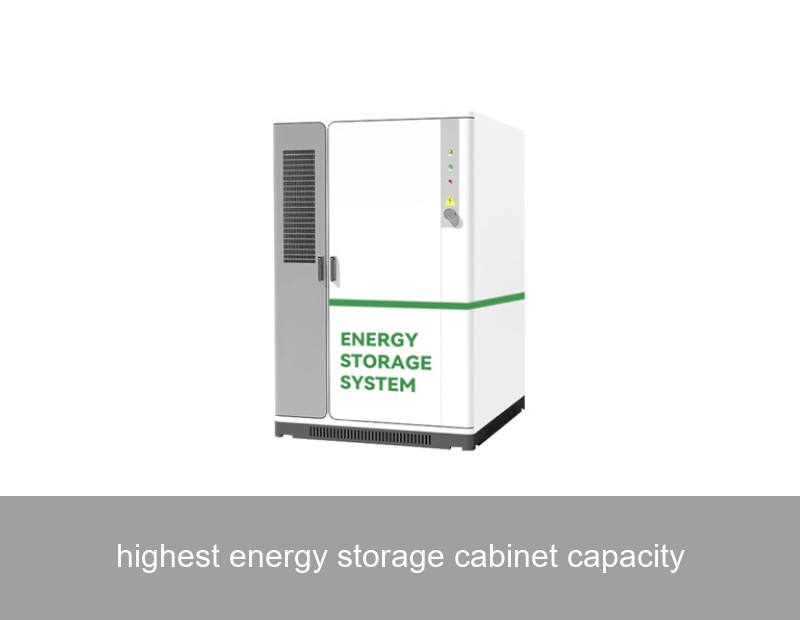
Imagine a world where a single industrial facility can store enough clean energy to power a small town through the night or weather a prolonged grid outage. This is no longer a futuristic dream, but a tangible reality made possible by today's highest energy storage cabinet capacity solutions. For facility managers, energy directors, and developers across Europe and the U.S., understanding this technological frontier is key to achieving true energy independence, cost stability, and sustainability goals. In this article, we'll explore what drives the pursuit of extreme capacity, the real-world benefits it delivers, and how innovators like Highjoule are shaping this critical landscape.
Table of Contents
- The Capacity Race: Why Density and Scale Matter
- Anatomy of a High-Capacity Cabinet: More Than Just Big Batteries
- Real-World Impact: A Case Study from Bavaria
- Beyond the Battery: The Intelligence Behind High Capacity
- The Highjoule Solution: Engineering for the Extreme
- Future Trends: Where is Maximum Capacity Heading?
The Capacity Race: Why Density and Scale Matter
The push for the highest energy storage cabinet capacity isn't about setting arbitrary records. It's a direct response to pressing market needs. As renewable penetration soars—with solar and wind now accounting for over 22% of electricity generation in the U.S. and 44% in the EU—the grid faces a dual challenge: intermittency and congestion. High-capacity, containerized energy storage acts as a massive buffer, smoothing out supply fluctuations and deferring costly grid infrastructure upgrades.
For commercial and industrial (C&I) users, the equation is equally compelling. Higher capacity per cabinet translates directly to:
- Reduced Footprint: Store more megawatt-hours (MWh) in less space, a critical factor for urban facilities or sites with limited real estate.
- Lower Balance-of-System (BOS) Costs: Fewer cabinets mean fewer interconnections, less cabling, and simplified thermal management, driving down overall system cost.
- Enhanced Viability for Large-Scale Applications: From multi-hour industrial load-shifting to full black-start capability for microgrids, high-capacity units are the foundational building blocks.

Image: Modern industrial-scale energy storage installations require maximizing capacity within a compact footprint. (Source: Unsplash, representative image)
Anatomy of a High-Capacity Cabinet: More Than Just Big Batteries
So, what constitutes a high-capacity cabinet? It's a sophisticated integration of several advanced technologies:
- Cell Chemistry: The shift from traditional LFP (Lithium Iron Phosphate) to advanced chemistries like NMC (Nickel Manganese Cobalt) or LFP derivatives with silicon anodes allows for greater energy density within the same physical cell volume.
- Module and Pack Design: Innovative cooling strategies (like direct liquid cooling) and compact, robust module design allow more cells to be packed safely into a single enclosure without compromising thermal safety or cycle life.
- Cabinet-Level Integration: This is where engineering excellence shines. The cabinet must house not just the battery packs, but also integrated power conversion systems (PCS), advanced battery management systems (BMS), and fire suppression—all optimized for space and efficiency.
For example, while a standard industrial cabinet a few years ago might have offered 500 kWh, today's leaders are pushing beyond 1.5 MWh per single, standalone cabinet unit.
Real-World Impact: A Case Study from Bavaria
Let's ground this in reality. A major automotive manufacturing plant in Bavaria, Germany, faced volatile energy prices and stringent CO2 reduction targets. Their goal: use their vast rooftop solar array to cover night-shift operations and provide backup power for critical assembly lines.
The Challenge: Limited on-site space adjacent to the main substation. They needed maximum storage capacity within a 30-meter by 10-meter area.
The Solution: A turnkey system featuring high-capacity storage cabinets, each with a unit capacity of over 1.4 MWh. This high density meant the entire required 8.5 MWh system fit into just six cabinet units, leaving room for future expansion.
The Results (18 Months Post-Installation):
| Metric | Performance |
|---|---|
| Solar Self-Consumption Increase | From 35% to over 80% |
| Peak Demand Charge Reduction | 28% annually |
| Backup Power for Critical Load | Full 4-hour coverage achieved |
| Space Utilization | 40% less area vs. standard cabinet design |
This case underscores that the pursuit of the highest energy storage cabinet capacity is fundamentally about delivering superior economic and operational outcomes in constrained environments.
Beyond the Battery: The Intelligence Behind High Capacity
Packing immense energy into a cabinet is only half the battle. Safely and profitably managing that energy is the other. This is where software and system intelligence become non-negotiable. A high-capacity cabinet is not a "dumb box" of batteries; it's a smart asset.
- Predictive Analytics: Algorithms forecast energy production and consumption, determining the optimal times to charge from cheap grid power or solar, and discharge during peak rates or outages.
- Advanced Safety Protocols: At this scale, a multi-layered BMS and thermal runaway detection systems are paramount, providing cell-level monitoring and intervention.
- Grid Services Readiness: In markets like the U.S. (CAISO, ERCOT) and Europe, these large-scale systems can be aggregated to provide frequency regulation, helping stabilize the grid and create an additional revenue stream for the owner.
The Highjoule Solution: Engineering for the Extreme
At Highjoule, our mission since 2005 has been to push the boundaries of what's possible in energy storage. We understand that our clients need more than just a product; they need a reliable, high-performance power resilience partner. Our flagship product line, the H-Series Megapack Cabinet, is engineered from the ground up to set the benchmark for the highest energy storage cabinet capacity in its class.
What makes the H-Series distinct?
- Unmatched Density: Leveraging our proprietary cell-to-cabinet architecture and direct cooling technology, the H-Series delivers up to 1.6 MWh per single, self-contained cabinet—one of the highest volumetric densities available for commercial deployment.
- Built-In Intelligence: Every cabinet is governed by our Aurora OS, an AI-driven energy management platform. It doesn't just store energy; it optimizes its value across multiple streams: self-consumption, demand charge management, and grid services participation.
- Modular & Scalable Design: Start with a single cabinet for a pilot project and scale seamlessly to a multi-megawatt-hour microgrid. The consistent, high-capacity module simplifies design and expansion.
- Proactive Safety Ecosystem: Our multi-tiered Guardian BMS includes gas and heat detection at the sub-module level, coupled with an integrated fire suppression system, ensuring the highest safety standards for dense energy storage.

Image: Expert service and monitoring are crucial for maintaining the performance and safety of high-capacity storage systems. (Source: Unsplash, representative image)
For a large data center in Texas or a manufacturing plant in Poland, Highjoule's high-capacity solutions provide the foundation for a resilient, cost-effective, and sustainable energy strategy.
Future Trends: Where is Maximum Capacity Heading?
The evolution is far from over. Research into solid-state batteries promises another leap in energy density and safety. Furthermore, the integration of storage with on-site hydrogen production (power-to-X) is emerging as a frontier for long-duration storage, where ultra-high-capacity cabinets will play a crucial role as the primary charging source.
However, the next decade will also focus on sustainability of the cabinets themselves. At Highjoule, our R&D pipeline is actively working on next-generation designs that prioritize not only raw capacity but also circular economy principles—using easier-to-recycle materials and designing for second-life applications.
As you evaluate your organization's path to energy resilience, consider this: Is your current storage strategy maximizing the potential of every square meter of your facility? What could you achieve if your energy storage footprint was halved while its capacity doubled?
 Inquiry
 Online Chat