


Solar PV Disconnect Switch: The Unsung Guardian of Your Renewable Energy System
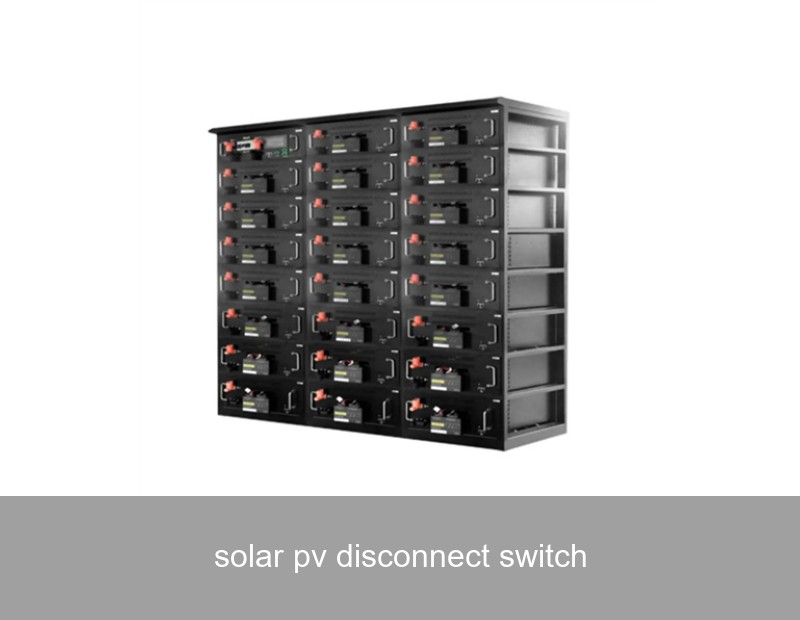
You've invested in solar panels, chosen a high-efficiency inverter, and are eagerly watching your energy meter spin backwards. But there's a critical, often overlooked component silently ensuring this entire system operates safely and reliably: the solar PV disconnect switch. Think of it not just as a switch, but as the essential guardian of your photovoltaic (PV) installation. Whether you're a homeowner in California, a factory manager in Germany, or a municipality planning a microgrid, understanding this device is key to a resilient and safe energy future.
Table of Contents
What is a Solar PV Disconnect Switch?
At its core, a solar PV disconnect switch is a manually operated safety device that physically breaks the electrical connection in your solar array. Its primary job is to isolate the DC current flowing from your solar panels or the AC current from your inverter, allowing for the safe maintenance, servicing, or emergency shutdown of the system. It's a mandatory requirement under electrical codes like the National Electrical Code (NEC) in the US and similar standards across Europe, for a very good reason: safety.
Why is a PV Disconnect So Critically Important?
Let's paint a picture. Solar panels generate electricity whenever sunlight hits them—this is a fundamental, non-negotiable phenomenon. Even during a grid outage, a fire, or when you simply need an electrician to service your inverter, those panels on your roof can be live, producing potentially lethal amounts of DC voltage (often exceeding 600V in commercial systems).
Here’s where data underscores the risk: A typical residential string inverter system can operate at DC voltages up to 600V, with currents reaching 10-15 amps per string. In commercial installations, voltages can soar to 1000V or even 1500V. Without a proper disconnect, this creates an "always-on" circuit that firefighters cannot safely de-energize, posing a severe arc flash hazard. The disconnect switch is the first and most crucial line of defense, providing a visible, lockable break in the circuit.
The Key Safety Functions
- Emergency Shutdown: Allows first responders to quickly and safely isolate the PV system.
- Safe Maintenance: Enables technicians to work on inverters or downstream equipment without risk of electric shock.
- System Isolation: Used to disconnect parts of the system for troubleshooting or upgrades.
- Code Compliance: Meets national and local electrical safety regulations.
Types and Choices: AC vs. DC Disconnects
Not all disconnect switches are created equal. The type you need depends on its location in your solar power system's circuit.
| Type | Location | Function | Key Consideration |
|---|---|---|---|
| DC Disconnect | Between solar panels and the inverter. | Isolates the high-voltage DC from the PV array. | Must be rated for high DC voltage and have arc-quenching capabilities designed for DC current, which is harder to interrupt than AC. |
| AC Disconnect | Between the inverter and the main electrical panel/grid. | Isolates the inverter's AC output. | Typically a standard AC safety switch, but must be rated for the inverter's max AC output current. |
| Integrated or Rapid Shutdown (RSD) Disconnects | At the module or string level. | Rapidly reduces voltage in conductors down to a safe level (per NEC 690.12). | Often part of a module-level power electronics (MLPE) system like microinverters or DC optimizers. |
Installation and Best Practices
Proper installation is as important as the device itself. A disconnect switch mounted in a hard-to-reach location or without clear labeling defeats its purpose. Best practices dictate:
- Accessible & Labeled: It must be easily accessible for emergency personnel and clearly marked as a solar system disconnect.
- Lockable Tag-Out: The handle should accept a lockout/tagout (LOTO) lock to prevent accidental re-energization during maintenance.
- Weatherproof Enclosure: For outdoor installations, a proper NEMA-rated enclosure is essential to withstand rain, dust, and temperature extremes.
- Correct Rating: It must have a voltage and current rating exceeding the maximum system parameters with a sufficient safety margin.

Image: A correctly installed, clearly labeled DC disconnect switch is vital for safety and compliance.
A Real-World Case: Safety in Action
Let's look at a scenario from Southern Europe. A large commercial warehouse in Italy with a 500 kW rooftop PV system experienced a minor electrical fire in its main distribution panel. The fire department arrived promptly. Thanks to a clearly marked, easily accessible solar PV disconnect switch bank installed next to the main service entrance—as per local regulations and the system design by Highjoule's engineering partners—firefighters were able to immediately isolate the entire solar array and the inverter output.
The result? They could safely proceed to extinguish the fire without the added danger of live solar-generated power feeding into the compromised circuits. The downtime for the warehouse was minimized, and the PV system itself was protected from potential damage. This incident underscores that a disconnect isn't just a "check-box" component; it's an active safety asset that protects both property and lives. Data from the Solar Fire Safety Foundation highlights that clear disconnection protocols significantly reduce risks for first responders.
Beyond the Basics: Integration with Modern Energy Storage
The role of disconnection becomes even more nuanced and critical when we integrate battery energy storage systems (BESS). A modern solar-plus-storage setup isn't just feeding the grid; it can form an intentional island, or microgrid, providing backup power during an outage. This is where companies like Highjoule redefine system architecture.
Highjoule's intelligent storage solutions, such as the Highjoule HPS Series for commercial & industrial applications, incorporate advanced, automated disconnect and switching logic within their power conversion systems (PCS). These systems don't just have manual disconnects; they feature automated, contactor-based isolation that can:
- Seamlessly island from the grid during a fault or outage.
- Safely manage the connection between solar PV, battery storage, and critical loads.
- Provide granular, software-controlled disconnection for individual system branches, enhancing both safety and operational flexibility.
In essence, the humble disconnect switch evolves into a smart, networked protection point within Highjoule's integrated energy management platform. For residential customers using Highjoule's Home Energy Hub, this means the system automatically and safely manages all energy flows during a blackout, ensuring your lights stay on without endangering utility workers repairing the grid.
Choosing the Right Protection for Your System
So, how do you ensure your solar or storage investment has the right guardian? It starts with design. Whether you're planning a new installation or auditing an existing one, consider these questions:
- Are my disconnect switches easily identifiable and accessible to emergency services?
- Do they have the correct voltage and current ratings for both today's output and potential future expansion?
- Is my system, especially if it includes storage, designed with automated, safe islanding capabilities?
This is where partnering with an experienced provider makes all the difference. Highjoule doesn't just supply advanced battery systems; we offer end-to-end smart power solutions that consider safety, compliance, and operational intelligence from the ground up. Our design philosophy ensures that every critical safety component, from the main PV disconnect switch to the internal contactors in our battery cabinets, is selected and integrated to meet the highest global standards.
Your solar panels are the heart of your renewable energy system, and the inverter is its brain. But what piece of the puzzle are you ensuring acts as the reliable, vigilant guardian? When was the last time you verified the accessibility and condition of your system's disconnect switches?
 Inquiry
 Online Chat