


Your Home Assistant: How a Solar Energy Storage System (ESS) Can Transform Your Energy Independence
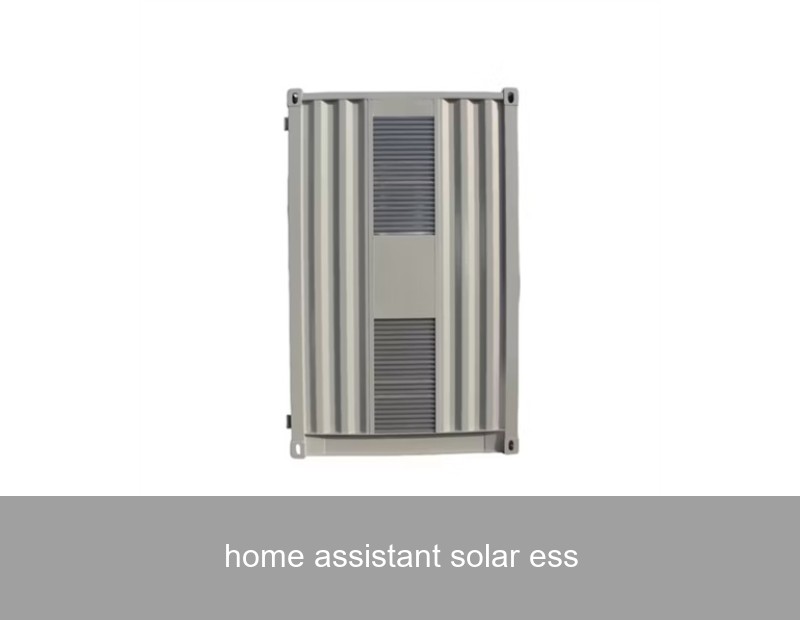
Have you ever looked at your electricity bill on a sunny day and thought, "My roof is covered in solar panels, so why am I still paying so much?" You're not alone. This common frustration highlights a key gap in many home solar setups: without a way to store that abundant daytime energy, a significant portion simply flows back to the grid, often for minimal credit, leaving you reliant on the utility when the sun goes down. This is where the concept of a home assistant solar ESS comes into play. Think of it not just as a battery, but as an intelligent energy manager for your household. It's the brains and the brawn that work alongside your solar panels, storing excess generation for later use, optimizing your consumption, and fundamentally shifting your relationship with energy. For over 18 years, Highjoule has been at the forefront of this transformation, designing smart, integrated storage solutions that empower homeowners across Europe and the US to take true control of their power.
Table of Contents
- The Problem: Solar Power's "Use It or Lose It" Dilemma
- The Solution: The Smart Home Assistant Solar ESS
- How It Works: More Than Just a Battery Box
- The Real Impact: A Case Study from California
- The Highjoule Approach: Intelligent Integration for Peak Performance
- Is a Home Assistant Solar ESS Right for You?
The Problem: Solar Power's "Use It or Lose It" Dilemma
The phenomenon is straightforward. Solar panels produce the most electricity in the middle of the day, precisely when many households are empty—parents are at work, kids are at school. Your home's energy demand, however, peaks in the early morning and especially in the evening. This creates a fundamental mismatch.
Let's look at the data. According to the U.S. Department of Energy, residential electricity consumption typically forms a "duck curve," with a deep midday dip in net load (thanks to solar) and a steep ramp-up in the evening. Without storage, utilities must rely on fast-responding, often fossil-fuel-powered "peaker plants" to meet this evening demand. For you, the homeowner, this means:
- Low Export Tariffs: The credit you receive for sending excess solar to the grid (feed-in tariff or net metering) is often far lower than the retail price you pay to buy it back.
- Grid Dependency: You remain vulnerable to power outages and constantly fluctuating energy prices.
- Underutilized Assets: You're not maximizing the financial return on your solar investment.

This mismatch isn't just a personal financial issue; it's a grid-wide challenge. As solar penetration increases, managing this evening ramp becomes more critical for overall grid stability.
The Solution: The Smart Home Assistant Solar ESS
Enter the modern Solar Energy Storage System (ESS). This technology solves the core problem by acting as your personal energy reservoir. But the true magic happens when this storage is paired with intelligent software—the "home assistant" component. A home assistant solar ESS doesn't just store energy; it learns, predicts, and automates your home's energy flow based on your habits, weather forecasts, and electricity rate schedules.
Its primary functions are elegantly simple:
- Energy Time-Shifting: Capture surplus solar energy produced at noon and save it for your 7 PM dinner preparation, TV time, and dishwasher cycle.
- Backup Power: Provide seamless, automatic power during grid outages, keeping your lights, fridge, and essential circuits running.
- Load Management: Intelligently decide when to draw from the battery, when to use solar directly, and when to pull a tiny amount from the grid, all to minimize costs.
How It Works: More Than Just a Battery Box
So, what's inside this intelligent system? Let's break it down:
| Component | Role | The "Assistant" Analogy |
|---|---|---|
| Lithium-Ion Battery Bank | The energy reservoir. Stores DC electricity from your solar panels. | The pantry - where you store your groceries. |
| Hybrid Inverter/Charger | The heart and translator. Converts DC from solar/battery to AC for home use, and AC from grid to DC for charging. | The chef - prepares the ingredients (energy) for consumption. |
| Energy Management System (EMS) | The brain. Software that monitors production, consumption, weather, and tariffs to optimize decisions. | The smart home manager - makes the schedule and tells the chef what to cook and when. |
| Monitoring & App Interface | The communication channel. Provides real-time data and control via your smartphone. | The control panel and notifications - shows you what's happening and lets you adjust settings. |
The EMS is what elevates a basic ESS to a true home assistant. For instance, if it knows a storm is coming tomorrow (via weather API), it might proactively ensure the battery is 100% charged by evening to prepare for a potential outage. Or, if you're on a time-of-use rate plan, it will strictly avoid using grid power during expensive peak periods.
The Real Impact: A Case Study from California
Abstract benefits are one thing, but real-world data tells the compelling story. Consider the Johnson family in Sacramento, California, a region with high electricity rates and frequent Public Safety Power Shutoffs (PSPS) due to wildfire risk.
- 8.5 kW solar array installed in 2020.
- Faced ~$220 monthly electric bills in summer, despite solar, due to high evening usage and low net metering credits.
- Experienced 4 grid outages totaling 50 hours in one year, disrupting work and life.
The Solution: In early 2023, they installed a 13.5 kWh integrated home assistant solar ESS. The system was specifically programmed for California's NEM 3.0 policy and their time-of-use plan (peak rates: 4 PM - 9 PM).
- Bill Savings: Average monthly electricity cost reduced to ~$35, primarily for grid connection fees. Their calculated annual savings exceeded $2,200.
- Self-Consumption: Increased from ~40% to over 80%, meaning they used the vast majority of the solar energy they produced.
- Reliability: Experienced 5 grid outages. The home maintained power seamlessly in each instance, with the system alerting them via the app.
- ROI: Factoring in state (SGIP) and federal (ITC) incentives, they projected a full payback period of under 6 years.

This case mirrors the experience of many homeowners in markets like Germany, Italy, and Texas, where energy prices and reliability concerns drive the adoption of smart storage. The International Energy Agency notes that behind-the-meter battery storage is one of the fastest-growing segments in the power sector, precisely for these reasons.
The Highjoule Approach: Intelligent Integration for Peak Performance
At Highjoule, we've spent nearly two decades refining the concept of the intelligent home assistant solar ESS. We understand that a superior system lies in the seamless integration of hardware and software. Our flagship residential product line, the Highjoule H-Series, is engineered with this philosophy.
What sets the H-Series apart as a true home energy assistant?
- Adaptive Learning AI: Our Energy Management OS doesn't just follow static rules. It analyzes months of your home's energy patterns, learns your "energy personality," and refines its daily strategy to maximize savings and comfort.
- Grid-Service Ready: In certain markets, with your consent, your H-System can participate in utility Virtual Power Plant (VPP) programs. This means your battery can help stabilize the community grid during extreme demand, and you get paid for the service. It turns your ESS from a cost-saver into a potential revenue generator.
- Modular & Scalable Design: Start with a base configuration and easily add more battery modules as your needs evolve—whether you buy an electric vehicle or add a heat pump.
- Professional Integration & Support: Highjoule works with a certified network of installers across Europe and North America. We ensure your system is perfectly sized, correctly configured for local regulations and incentives, and supported by a robust warranty and monitoring service.
Our systems are designed to be the central nervous system for your home's energy, integrating not just with solar, but potentially with EV chargers, smart thermostats, and other loads, creating a holistic, efficient, and resilient energy ecosystem.
Is a Home Assistant Solar ESS Right for You?
The journey to energy independence is exciting, but it's natural to have questions. The suitability of a system like this often hinges on a few key factors: your current electricity rates and tariff structure, the frequency of power outages in your area, the size and orientation of your existing solar array, and available local incentives.
As the Solar Energy Industries Association highlights, pairing storage with solar is becoming the new standard for a reason—it simply makes the solar investment work harder and smarter.
So, we leave you with this to ponder: If your home could make its own intelligent decisions about energy, optimizing for cost, comfort, and resilience 24/7, what would you want it to prioritize first? Is it eliminating those frustrating peak-time charges, ensuring your family's safety during a storm, or simply knowing you're maximizing your contribution to a cleaner grid?
 Inquiry
 Online Chat