


Solar Batteries and BESS: Your Complete Guide to Smarter Energy Storage
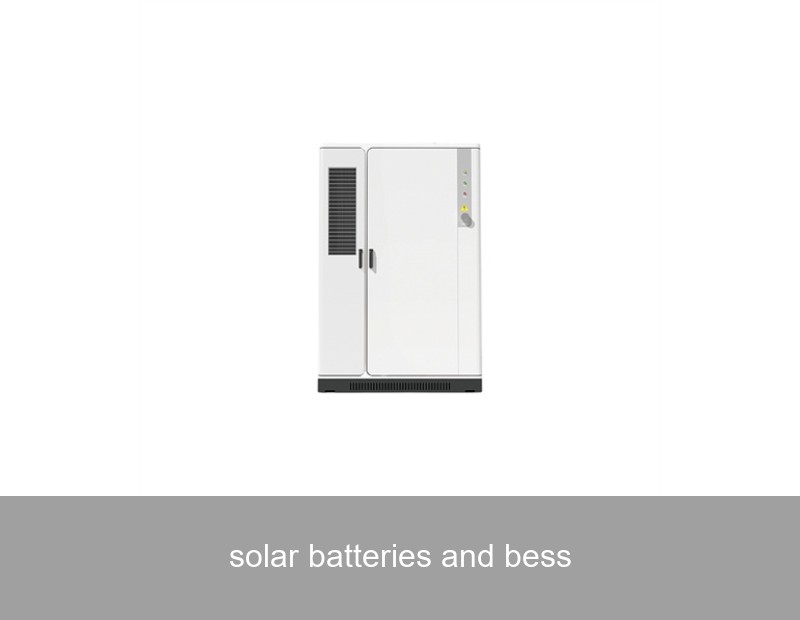
Have you ever looked at your solar panels on a bright, sunny day and wondered, "Where is all that extra energy going?" If you're in Europe or the US, you're not alone. Millions of homeowners and businesses are generating clean power, only to see much of it fed back into the grid for minimal return. This is where solar batteries and BESS (Battery Energy Storage Systems) come in, transforming how we capture, store, and use renewable energy. They are no longer a luxury but a cornerstone of modern energy independence, turning your solar array into a personal power station. As a global leader, Highjoule has been at the forefront of this revolution since 2005, designing intelligent storage solutions that make energy resilience accessible for homes, businesses, and communities.
Table of Contents
- What Are Solar Batteries and BESS?
- Why the Surge in Demand? The Data Behind the Boom
- Key Benefits: Beyond Just Backup Power
- Choosing the Right System: A Technical Perspective
- Real-World Impact: A Case Study from California
- The Future of Storage: What's Next for BESS?
- Is Your Energy Truly Working for You?
What Are Solar Batteries and BESS?
Let's break down the terminology. A solar battery typically refers to a residential-scale system, often a single unit or a small cluster, designed to store excess energy from rooftop solar panels. Think of it as a high-tech energy savings account for your home.
A Battery Energy Storage System (BESS) is the broader, more sophisticated category. It encompasses larger, scalable systems that integrate batteries, a sophisticated management system (BMS), power conversion (inverter/charger), and thermal controls. BESS can be deployed for commercial and industrial (C&I) facilities, utility-scale projects, and microgrids. The core principle is the same: store electricity when it's cheap or abundant (from solar, wind, or the grid) and discharge it when it's needed most.
Highjoule's expertise spans this entire spectrum. Our Residential Energy Hub provides seamless solar battery storage for homes, while our modular Commercial & Industrial BESS and Containerized Megawatt-scale solutions empower businesses and utilities to take control of their energy costs and reliability.

Image Source: Unsplash - A typical residential solar plus storage setup.
Why the Surge in Demand? The Data Behind the Boom
The shift towards solar batteries and BESS isn't just a trend; it's a direct response to tangible market and environmental pressures.
- Changing Incentives: In markets like Germany, the UK, and across the US, feed-in tariffs are being phased out or reduced. The new economic model, like net billing in California, incentivizes self-consumption. Storing your solar energy for use in the evening is now far more valuable than selling it at low rates.
- Grid Instability & Rising Costs: Extreme weather events and aging infrastructure are causing more frequent outages. The U.S. Energy Information Administration notes increasing electricity prices and volatility. A BESS provides a critical buffer against both blackouts and price spikes.
- Policy Support: Legislation like the U.S. Inflation Reduction Act (IRA) and various EU Green Deal initiatives offer substantial tax credits and grants for energy storage installations, dramatically improving ROI.
The numbers speak for themselves. Global energy storage deployments are projected to multiply exponentially this decade, moving from gigawatt-hours to terawatt-hours of capacity. This isn't just about going green; it's about achieving economic and operational resilience.
Key Benefits: Beyond Just Backup Power
While emergency backup is a key driver, the advantages of integrating solar batteries with a BESS are multifaceted:
| Benefit | Residential Application | Commercial/Industrial Application |
|---|---|---|
| Maximized Self-Consumption | Use 70-80%+ of your solar generation, slashing grid imports. | Offset peak demand charges, which can constitute up to 50% of a commercial electricity bill. |
| Enhanced Energy Security | Keep lights on during outages for hours or days. | Ensure critical operations continue, protecting data, inventory, and productivity. |
| Financial Returns | Reduce payback period on solar investment, increase home value. | Participate in grid services (frequency regulation, demand response) for new revenue streams. |
| Grid Support & Sustainability | Contribute to a more stable, decentralized grid. | Meet corporate sustainability (ESG) goals and reduce carbon footprint dramatically. |
Highjoule's systems are engineered with these benefits in mind. Our AI-powered energy management platform automatically optimizes for your specific goals—whether that's maximizing savings, ensuring backup, or participating in utility programs—all from an intuitive smartphone app or web portal.
Choosing the Right System: A Technical Perspective
Not all storage is created equal. Here are the key factors our experts at Highjoule consider when designing a system:
- Chemistry: Lithium Iron Phosphate (LFP) is now the dominant choice for most applications due to its superior safety, longer lifespan (10,000+ cycles), and stability compared to older NMC chemistries. All Highjoule systems utilize LFP technology.
- Power (kW) vs. Energy (kWh): Power determines how many appliances you can run at once (e.g., an AC unit + refrigerator). Energy capacity defines how long you can run them. A proper BESS is sized for both.
- Scalability: Can you start with a smaller system and add more batteries later? Highjoule's modular design allows for easy, cost-effective expansion as your needs grow.
- Integration & Smart Features: The system must seamlessly communicate with your solar inverters, the grid, and your home/business loads. Look for features like whole-home backup, time-based control, and storm watch modes.
Real-World Impact: A Case Study from California
Let's move from theory to practice. A mid-sized winery in Napa Valley, California, faced a critical challenge: high peak demand charges from energy-intensive refrigeration and irrigation, coupled with unreliable grid power during wildfire season.
The Solution: Highjoule deployed a 500 kWh / 250 kW containerized BESS, integrated with their existing 300 kW solar array. The system was programmed for peak shaving and provided seamless backup for critical fermentation control systems.
The Results (12-month period):
- Demand Charge Reduction: 40% decrease in peak demand, translating to over $45,000 in annual savings.
- Self-Consumption: Increased solar usage on-site from 35% to over 90%.
- Reliability: Successfully rode through 8 grid outages without interrupting operations, protecting a vintage worth millions.
- ROI: Project payback period of under 5 years, factoring in IRA tax credits.
This case, documented in part with data from the California Public Utilities Commission self-generation incentive program, exemplifies how a tailored BESS solves multiple problems simultaneously.

Image Source: Unsplash - A containerized BESS unit at a commercial facility.
The Future of Storage: What's Next for BESS?
The innovation curve is steep. We're moving towards virtual power plants (VPPs), where thousands of distributed Highjoule systems can be aggregated to act as a single, grid-stabilizing power plant. Second-life EV batteries are finding new purposes in stationary storage. Furthermore, advancements in software and AI, like those in Highjoule's platform, are making systems increasingly autonomous and profitable.
As noted by research from the National Renewable Energy Laboratory (NREL), the continued decline in battery costs and rise in capabilities will make solar-plus-storage the default choice for new energy projects across Europe and North America.
Is Your Energy Truly Working for You?
The journey from being a passive consumer to an active energy manager begins with a question. Are you ready to stop watching your valuable solar energy flow away and start harnessing its full potential for savings, security, and sustainability? The technology is proven, the economics are compelling, and the need for resilience has never been clearer.
What would uninterrupted power or a 30% reduction in your energy costs mean for your home or business this year?
 Inquiry
 Online Chat