


The Homemade Solar Panel System: A Realistic Guide to Energy Independence
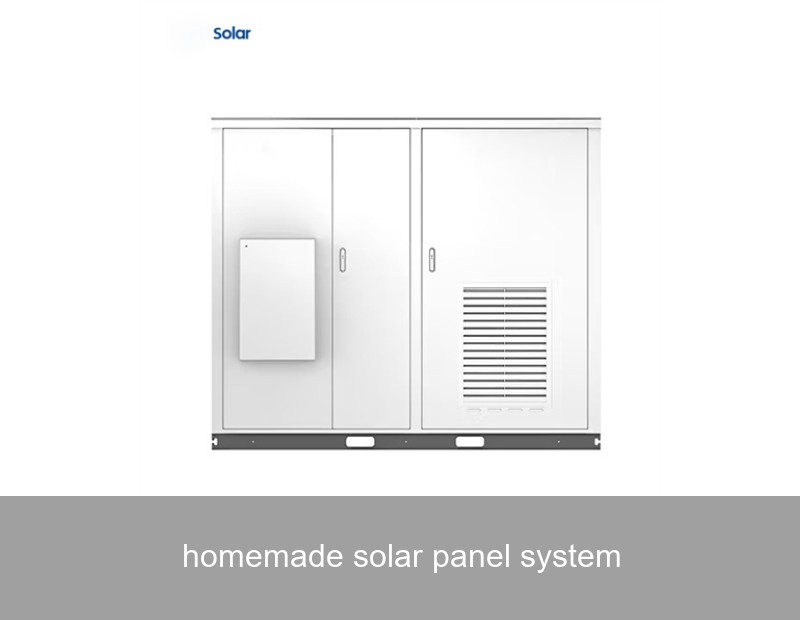
Table of Contents
- The DIY Appeal: Why the Homemade Solar Dream is So Strong
- The Reality Check: It's More Than Just Panels on a Roof
- Safety and Performance: The Hidden Risks of a True "Homemade" System
- The Smart Hybrid Path: DIY Planning, Professional Power
- Case Study: From DIY Concept to High-Performance Reality in California
- Where Highjoule Fits In: Your Partner in Reliable, Intelligent Storage
- Your Next Step Towards True Energy Independence
Across backyards in Texas and rooftops in Germany, a powerful idea is taking root: the homemade solar panel system. The vision is compelling—taking control of your electricity, cutting ties with rising utility rates, and building something tangible for a sustainable future. But what does it truly take to move from a collection of parts to a safe, efficient, and reliable home energy system? Let's demystify the journey from concept to kilowatt-hour.
The DIY Appeal: Why the Homemade Solar Dream is So Strong
The allure is undeniable. A quick search reveals countless videos and forums dedicated to self-built solar arrays. The drivers are clear:
- Cost Savings: The perceived avoidance of high installation markups.
- Empowerment: The deep satisfaction of understanding and building your own power source.
- Customization: The freedom to design a system that fits your unique roof layout or off-grid shed.
And the data suggests this isn't just a niche hobby. The U.S. Energy Information Administration notes that small-scale solar (like residential) is the fastest-growing electricity source in many regions, with a significant portion of homeowners exploring their options thoroughly before purchase.
The Reality Check: It's More Than Just Panels on a Roof
Here’s the crucial insight: a homemade solar panel system is a misnomer. You can source the components yourself, but the system itself is a complex integration of electrical engineering. Think of it not as a single appliance, but as a miniature, grid-interactive power plant on your property.
The core components extend far beyond the panels you might assemble:
| Component | Critical Function | DIY Challenge Level |
|---|---|---|
| Solar Panels (Modules) | Convert sunlight to DC electricity. | Low (Mounting & wiring is straightforward) |
| Inverter(s) | Converts DC to usable AC power for your home; the system's brain. | High (Requires precise grid-synchronization) |
| Racking & Mounting | Securely attaches panels to your roof, ensuring decades of wind/snow resilience. | Medium (Structural integrity is paramount) |
| Energy Storage (Battery) | Stores excess energy for use at night or during outages. | Very High (High-voltage, complex battery management needed) |
| Electrical Integration & Safety | Includes disconnects, conduit, and integration with your home's main panel. | Very High (Life-safety and fire risk if done incorrectly) |
Safety and Performance: The Hidden Risks of a True "Homemade" System
This is where the conversation gets serious. A fully DIY approach encounters three monumental hurdles:
- Utility Interconnection: Your local utility will require permits, rigorous inspections, and proof that your system's inverter is certified to anti-islanding and safety standards (like UL 1741 in the U.S.). They will not connect an uncertified, homemade inverter.
- Insurance & Liability: A homeowner's insurance policy may be voided by an unpermitted, professionally uninstalled electrical system. In the event of a fire, the liability could be devastating.
- Long-Term Performance: Will your homemade MPPT charge controller optimize harvest as well as a commercial unit? Does your battery management system balance cells correctly to prevent premature failure? These are solved problems in professional equipment.

So, does this mean the dream is dead? Absolutely not. It simply evolves into a smarter, hybrid approach.
The Smart Hybrid Path: DIY Planning, Professional Power
The most successful path to energy independence blends your passion and research with certified technology and professional installation for the critical components. You become the project architect and manager.
- DIY the Knowledge & Design: Use tools like NREL's PVWatts Calculator to model your system's production. Research panel types (mono vs. poly), optimal tilt, and shading analysis. This knowledge empowers you to make informed decisions.
- Source Components Selectively: You can legally purchase certified panels, racking, and even inverters from distributors. This gives you control over equipment quality and cost.
- Partner with Professionals for Integration: Hire a licensed electrician or a specialized installer for the high-voltage connections, inverter setup, grid interconnection, and—most critically—the battery storage system installation. This ensures safety, compliance, and warranty validity.
Case Study: From DIY Concept to High-Performance Reality in California
Consider the real-world example of the Schmidt family in Sacramento, California. Their goal was a robust homemade solar panel system to achieve near-total grid independence and backup power for wildfire-related outages.
- Their "DIY" Phase: For 6 months, they researched panel efficiency, studied their energy usage via utility bills, and designed a 12kW ground-mount array layout for their property, avoiding oak tree shade.
- The Professional Partnership: They sourced high-efficiency panels themselves but partnered with a local NABCEP-certified installer. The critical decision was the storage system. They needed something that could handle their 40kWh daily load, integrate seamlessly, and provide reliable backup.
- The Highjoule Solution: The installer recommended and installed a Highjoule HJ-Stack Commercial & Residential (C&R) Series battery storage system. Its modular design allowed perfect scaling to their needs, and its built-in advanced energy management system (EMS) could intelligently prioritize loads during an outage.
- The Result: The system went live in 2023. In its first year, it generated 16.8 MWh of electricity, covering 92% of their annual consumption. During a planned 2-day utility outage, the Highjoule system automatically switched to island mode, powering their essential loads (refrigeration, well pump, lighting, and internet) seamlessly. The family achieved their independence goal, but with the peace of mind that comes from a professionally integrated, UL-certified storage core.
Where Highjoule Fits In: Your Partner in Reliable, Intelligent Storage
This is where a company like Highjoule becomes the cornerstone of a successful hybrid project. For nearly two decades, Highjoule has been a global leader in advanced energy storage, focusing on making sophisticated technology safe, manageable, and efficient for end-users.
When you're building your homemade solar panel system, integrating a Highjoule battery solution means you're not just adding a battery; you're adding an intelligent energy hub. Our Residential Energy Storage Systems are designed with the savvy homeowner and professional installer in mind:
- Plug-and-Play Integration: Highjoule systems come pre-assembled and tested with integrated safety disconnects and communication protocols, simplifying the final, critical installation step for your electrician.
- Scalable Architecture: Start with a base unit and add more battery modules as your needs or budget grow, just like the Schmidt family did.
- Highjoule Energy OS: Our intuitive monitoring platform gives you the data and control you craved from the DIY dream. Track production, consumption, and storage in real-time, and set intelligent modes for self-consumption, backup priority, or time-of-use optimization.

In essence, Highjoule handles the most complex, risk-prone part of your system—storing and managing DC energy safely—freeing you to focus on the design and production aspects you enjoy.
Your Next Step Towards True Energy Independence
So, where does your journey go from here? The dream of a homemade solar panel system is alive and well, but its most successful form is a collaborative one. Embrace the role of energy project manager. Dive deep into the design and economics. Then, partner with certified professionals for the electrical heart of the system, and choose a storage partner like Highjoule that offers the intelligence, safety, and scalability your independent energy future requires.
What's the first, most critical component you will design your system around—your peak power needs, your essential loads during an outage, or maximizing every possible kilowatt-hour from your roof?
 Inquiry
 Online Chat