


Household Solar Batteries: The Key to Unlocking True Energy Independence
Have you ever watched your solar panels generate a surplus of clean energy on a sunny afternoon, only to draw power from the grid (and pay for it) that same evening? It's a common frustration for solar homeowners. This is where household solar batteries come in, transforming how we produce, store, and consume energy at home. They are no longer a futuristic concept but a practical cornerstone of the modern, resilient, and efficient household. For over 18 years, Highjoule has been at the forefront of this revolution, engineering advanced energy storage systems that empower homeowners across Europe and the U.S. to maximize their solar investment and take decisive control of their energy future.
Table of Contents
The Phenomenon: Solar Power's Missing Piece
Solar panels are brilliant at capturing sunlight, but sunlight is intermittent. This creates a fundamental mismatch: generation peaks during the day, while household demand often peaks in the early morning and evening. Without a battery, excess solar energy is typically fed back to the utility grid, often for a modest feed-in tariff. Later, when the sun sets, the home must purchase electricity from the grid at a much higher retail rate. This cycle leaves significant value and potential untapped.
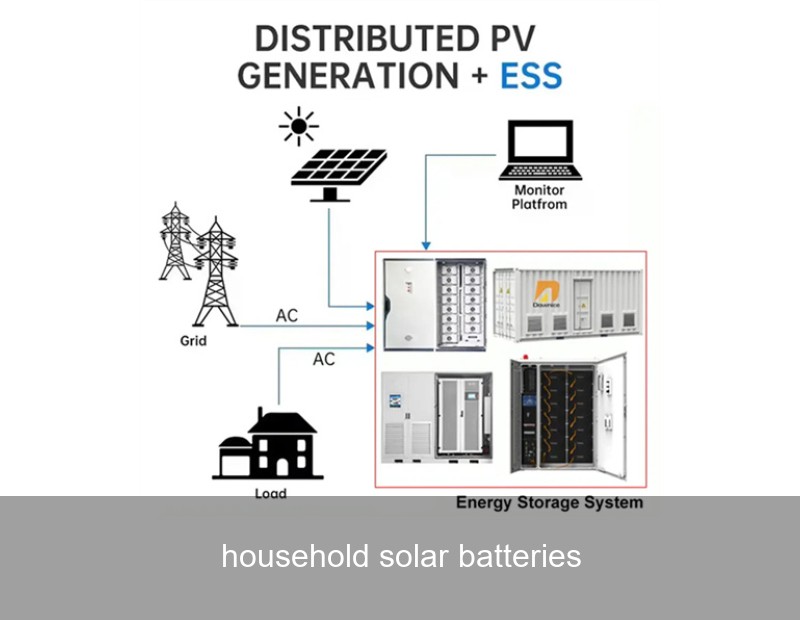
A household solar battery acts as a personal energy reservoir. It stores the surplus electricity your panels produce, holding it securely until you need it most. This simple shift in logic—from "use it or sell it" to "capture it and keep it"—fundamentally changes your home's energy economics and resilience.

Image: A modern home equipped with solar and battery storage. Source: Unsplash
The Data: Why Storage is Now Non-Negotiable
The economic and practical case for pairing solar with storage has never been stronger. Let's look at the key drivers:
- Rising Electricity Costs: In the U.S., the average retail electricity price has increased by over 30% in the last decade (U.S. Energy Information Administration). In Europe, the 2022-2023 energy crisis saw prices in some markets quadruple, highlighting the vulnerability of grid-dependent homes.
- Declining Feed-in Tariffs (FiTs): Many governments are phasing out generous subsidies for solar exports, making it less profitable to send power back to the grid.
- Increasing Grid Instability: Extreme weather events are leading to more frequent and prolonged power outages. A 2023 report noted a steady rise in major U.S. power outages over the past 20 years.
- Technology Advancement & Cost Decline: The cost of lithium-ion battery packs has fallen by nearly 90% since 2010, making storage systems more accessible.
| Benefit | Impact | Typical Outcome |
|---|---|---|
| Increased Self-Consumption | Use more of your own solar energy | Reduce grid electricity purchases by 60-80%* |
| Backup Power | Maintain power during outages | Keep essential loads running for hours or days |
| Bill Management | Avoid peak time-of-use rates | Flatten your energy cost curve |
| Grid Support & Incentives | Participate in utility programs | Earn credits or payments for grid services |
*Outcome varies based on system sizing, location, and energy use patterns.
Case Study: A Real-World Example from Bavaria
Let's move from theory to a tangible example. The Schmidt family, living in a detached home in Bavaria, Germany, installed a 10 kWp solar array in 2018. While pleased with their reduced bills, they were still exporting over 50% of their summer production and buying power in winter. In early 2023, they decided to install a Highjoule ResiPro 10 battery system with a usable capacity of 13.8 kWh.
The Results After One Year:
- Self-Consumption Rate: Increased from 48% to 92%.
- Grid Independence: Their annual net electricity purchase from the grid dropped from 2,800 kWh to just 410 kWh.
- Financial Impact: Combined with Germany's high retail electricity prices (~€0.35/kWh), the system is projected to pay for itself in under 8 years. This calculation includes the available state funding for storage.
- Resilience: During a regional grid fault that lasted 9 hours, their home's essential circuits—including refrigeration, lighting, and internet—operated seamlessly on battery power.
"The system works so intuitively," Mr. Schmidt noted. "We barely think about energy anymore. The Highjoule app shows us we're powered by our own sun, even at night, which is an incredible feeling."
Expert Insights: Choosing the Right Battery System
Not all household solar batteries are created equal. As a technology leader, Highjoule advises homeowners to look beyond just kilowatt-hours (kWh) and consider these critical factors:
1. Battery Chemistry & Longevity
Most modern systems use Lithium Iron Phosphate (LFP) chemistry. It's a safer, more stable, and longer-lasting option than older NMC chemistries. Look for a clear warranty on both capacity retention (e.g., 70% after 10 years) and cycle life (e.g., 6,000 to 10,000 cycles).
2. System Integration & Intelligence
A battery is more than a tank; it's the brain of your energy system. A sophisticated energy management system (EMS) is crucial. It should intelligently decide when to store, when to discharge, and when to export based on weather forecasts, your consumption patterns, and real-time electricity rates.

Image: A modern, wall-mounted home battery system. Source: Unsplash
3. Scalability and Future-Proofing
Your energy needs may evolve. Can you easily add more battery modules later? Is the system software-upgradable to participate in new grid service programs? A modular design protects your investment.
4. Installation & Service
Professional installation by certified technicians is non-negotiable for safety and performance. Choose a provider with a strong network of local installers and a responsive service organization.
The Highjoule Solution: Engineered for Performance and Peace of Mind
At Highjoule, we've distilled nearly two decades of grid-scale and commercial storage expertise into our residential product line. Our systems are designed to meet the rigorous demands of the European and North American markets.
Our flagship product for homes, the Highjoule ResiPro Series, embodies our core principles:
- Uncompromising Safety: Built with UL9540-certified LFP cells, integrated thermal runaway prevention, and a robust, self-contained enclosure.
- Advanced Intelligence: Our HarmonyOS™ energy management platform uses predictive algorithms to optimize your energy flow 24/7, learning your habits to maximize savings automatically.
- Seamless Integration: The ResiPro works harmoniously with both new and existing solar installations from all major inverter brands, making the upgrade process straightforward.
- Proven Reliability: Backed by one of the industry's strongest warranties and supported by our global network of energy partners. We don't just sell hardware; we deliver a long-term energy partnership.
For homeowners looking to start their journey, our compact ResiCore unit offers an accessible entry point, while our scalable ResiPro systems can be tailored to power everything from a large family home to a full-energy-independent property with an electric vehicle.
Your Energy Future: A Question for You
The transition to a decentralized, resilient energy system is underway. Household solar batteries are the enabling technology, turning every home into a personal power station. The question is no longer if storage makes sense, but when it makes the most sense for you.
What is the one energy concern—be it the next power outage, your next utility bill, or simply the desire for greater self-sufficiency—that would make you consider taking the next step towards true energy independence today?
 Inquiry
 Online Chat