


The Essential Guide to Choosing the Right Battery for a 2kW Solar System
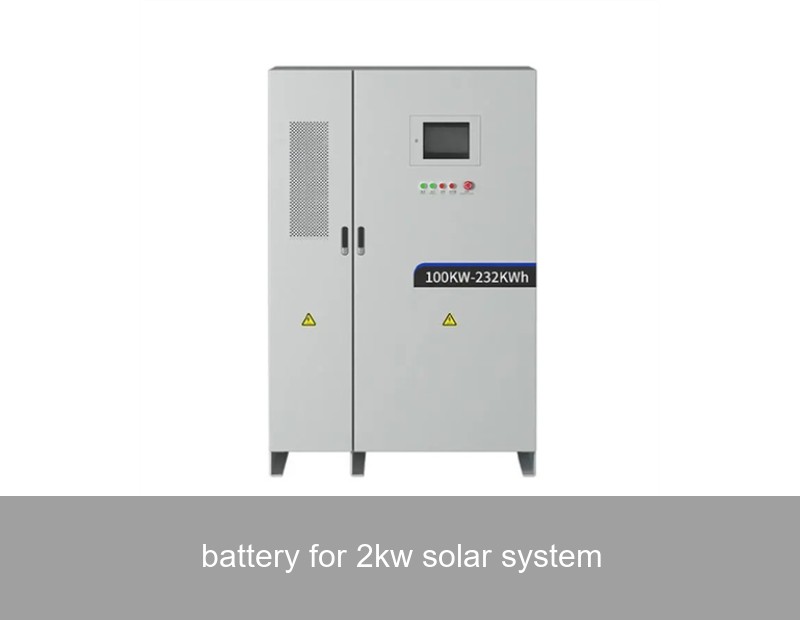
So, you've made a smart move. You've installed a 2kW solar system on your roof, and you're enjoying watching your meter spin slower on sunny days. But have you ever found yourself asking, "Where does all this extra sunshine go when I'm at work?" or felt a twinge of frustration as you draw power from the grid in the evening, despite a brilliantly sunny afternoon? You're experiencing the classic solar paradox: your panels produce the most when you need it the least. The solution? Pairing your array with the perfect battery for a 2kW solar system. This isn't just an add-on; it's the key to unlocking true energy independence, resilience, and maximizing the return on your green investment. Let's dive into how the right storage solution transforms your solar power from a daytime contributor to a 24/7 energy asset.
Why a Battery for Your 2kW Solar System is a Game-Changer
A 2kW solar system is a popular choice for many homes, particularly in Europe and the US. It's often sufficient to cover a significant portion of a household's daytime base load. But without storage, studies suggest the average homeowner only directly consumes 30-50% of the solar energy they produce. The rest is exported to the grid, often for a feed-in tariff that's lower than the retail price you pay for electricity.
Adding a battery changes the economics and utility entirely. Think of it as your personal energy savings account. Your solar panels make the deposit during the day, and you make a withdrawal whenever you need it—during peak evening rates, during a brief grid outage, or on a cloudy day. For a 2kW system, the goal isn't necessarily to go 100% off-grid (though it can get you close for some households!), but to dramatically increase your self-consumption rate. We're talking about boosting that 30-50% figure to 70%, 80%, or even higher. This directly shields you from rising electricity prices and makes your home more resilient.

Image: A modern home energy setup with solar and storage. Credit: Unsplash
Sizing It Right: Finding the Perfect Battery for a 2kW Solar System
Sizing your battery bank is a balancing act. Go too small, and you'll still rely heavily on the grid. Go too large, and you're overspending on capacity you may never use. For a typical 2kW solar array, we focus on two key metrics: power (kW) and energy (kWh).
- Power (kW): This is how much electricity the battery can deliver at once. A 2kW solar system's output fluctuates, but your battery's inverter should be rated to handle the peak output and typical household loads. A 3-5kW inverter is often a suitable match.
- Energy (kWh): This is the total storage capacity—how long the battery can power your home. For a 2kW system, a battery between 5kWh and 10kWh is usually the sweet spot.
Why this range? Let's break it down with some simple math. A well-located 2kW system might produce 8-12 kWh on a good day. A 5kWh battery can capture a large portion of that surplus. A 10kWh battery can potentially store nearly all of it, providing backup power for essential circuits (lights, fridge, router) for 10+ hours during an outage. Your ideal size depends on your daily consumption patterns, backup needs, and goals.
| Time of Day | Solar Production | Household Demand | Battery Action (with 5kWh system) | Grid Interaction |
|---|---|---|---|---|
| 6 AM - 9 AM | Low to Medium | High (Morning routine) | Discharging to supplement | Minimal import |
| 10 AM - 4 PM | High Peak | Low (Home empty) | Charging from surplus | Export surplus after battery full |
| 6 PM - 10 PM | None | High (Evening peak) | Discharging to cover peak | No import if battery suffices |
| Overnight | None | Low (Baseload) | Discharging for baseload | Import if battery depleted |
Key Technical Considerations
When selecting your battery for a 2kW solar system, technology matters. Lithium-ion phosphate (LFP) batteries are now the industry standard for home storage, and for good reason. They offer superior cycle life (often 6,000+ cycles), enhanced safety due to stable chemistry, and excellent depth of discharge (DoD). You can reliably use 90-100% of their rated capacity without significant degradation. Other critical factors include:
- Round-Trip Efficiency: How much energy you get out vs. what you put in. Look for figures above 90%. High efficiency means less wasted sunshine.
- Scalability: Can you add more modules later if your needs change? A modular design offers future-proofing.
- Management System: A smart Battery Management System (BMS) and energy management software are the brains of the operation, optimizing charge/discharge cycles and protecting the hardware.
Real-World Results: A Case Study from Germany
Let's move from theory to practice. Consider the Müller household in Bavaria, Germany. In 2021, they had a 2.2kWp PV system installed. Despite good production, their grid dependency after sunset remained high. In early 2023, they integrated a 7.2kWh LFP battery system with a 4.6kW hybrid inverter.
The results, monitored over one year, were compelling:
- Self-Consumption Rate: Increased from 38% to 82%.
- Grid Independence: Achieved 74% annual energy autonomy (covering nearly three-quarters of their total consumption with their own solar+storage).
- Financial Impact: Reduced their annual electricity bill by approximately €680, projecting a battery payback period of under 8 years, well within the battery's warranty period. This aligns with broader findings on storage economics, as noted by research from sources like the National Renewable Energy Lab (NREL).
This case perfectly illustrates the transformative impact of correctly sized storage. The system wasn't oversized; it was optimized to capture their daily solar surplus, turning it into tangible evening savings.

Image: A modern, wall-mounted home battery storage unit. Credit: Unsplash
The Highjoule Advantage: Smart Storage for Your Home
At Highjoule, with nearly two decades of experience since 2005, we've designed our residential storage solutions with precisely these scenarios in mind. We understand that the ideal battery for a 2kW solar system must be more than just a box of cells; it must be an intelligent, integrated, and reliable partner in your energy ecosystem.
Our HomePower Stack series is engineered for versatility and performance. For a typical 2kW solar setup, the modular HomePower Stack 5 (5kWh) or HomePower Stack 10 (10kWh) units are ideal starting points. They feature:
- Ultra-Safe LFP Chemistry: Providing peace of mind and a long service life.
- High Round-Trip Efficiency (96%): Maximizing every kilowatt-hour your panels produce.
- Seamless Integration: Compatible with both new and existing solar installations, thanks to our universal hybrid inverters.
- Highjoule Energy OS: Our proprietary software learns your consumption patterns and can be configured to optimize for self-consumption, time-of-use savings, or backup preparedness. It even allows for future integration with EV charging.
We don't just sell hardware; we provide a complete power solution. Our services include remote system monitoring, proactive performance alerts, and a comprehensive warranty backed by our global expertise in commercial, industrial, and microgrid storage. This depth of experience ensures the technology in your home is robust, proven, and built to last.
Your Next Step Towards Energy Independence
The journey from a solar-powered home to an energy-independent home is defined by the storage you choose. Your 2kW solar array has the potential to do so much more for you. What specific energy goal is most important for your household—is it slashing your next quarterly bill, ensuring your lights never go out during a storm, or simply maximizing your personal use of the clean energy you create?
 Inquiry
 Online Chat