


How Much Does a 15kW Accumulator Cost? A Complete Guide for 2024
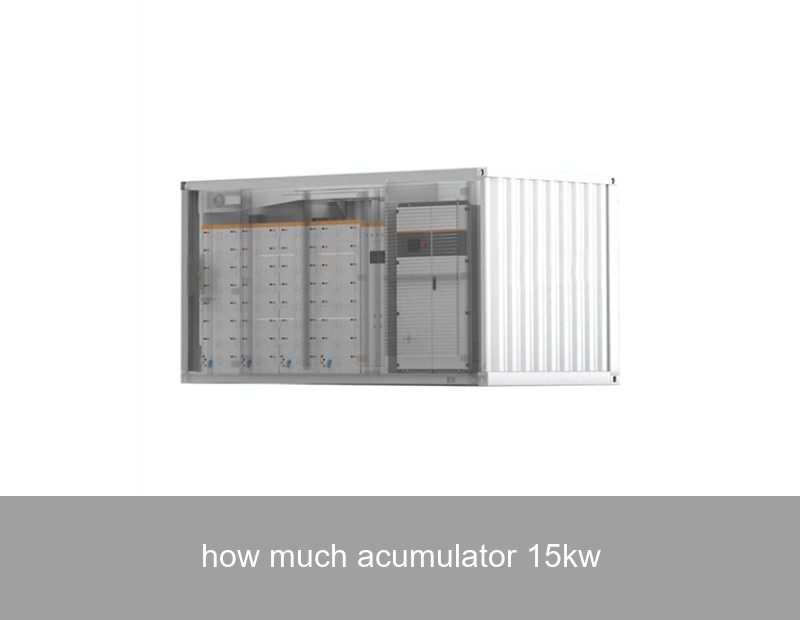
If you're exploring energy independence for your home or business, you've likely asked: "How much does a 15kW accumulator (battery) system cost?" It's a crucial question, but the answer isn't just a single number. The price tag of a 15kW battery storage system is influenced by a fascinating mix of technology, market trends, and your specific energy goals. As a product technology expert at Highjoule, I've seen the industry evolve from niche curiosity to a mainstream power solution. Let's unpack the real cost factors and value behind a 15kW system, moving beyond the sticker price to understand its long-term role in a resilient, efficient energy setup.
Table of Contents
- The Crucial Difference: kW vs. kWh in Battery Storage
- Breaking Down the Cost of a 15kW Accumulator System
- Market Data & Trends: What's Driving Prices?
- A Real-World Case: The German Bakery's 15kW Solution
- The Highjoule Approach: Intelligent Storage for Real Needs
- Making Your Decision: Key Questions to Ask
The Crucial Difference: kW vs. kWh in Battery Storage
First, a critical clarification. When you ask about a "15kW accumulator," you're likely referring to its power rating (kW). This tells you how much electricity the battery can deliver at one instant—think of it as the width of a pipe. A 15kW system can power multiple heavy appliances simultaneously. However, the energy capacity (kWh) is equally vital. This is the total amount of energy stored—the volume of water in the tank. A system might be 15kW and have, for example, a 30kWh capacity. This combination determines how long it can sustain that 15kW output.
For a residential or commercial user, a 15kW power rating is substantial. It can handle peak loads, supporting essentials like refrigeration, HVAC, machinery, or an entire home's circuit during an outage. The cost is intrinsically tied to both the power and the capacity you select.
Why System Design Matters More Than a Component Price
At Highjoule, we emphasize that you're not just buying a battery box. You're investing in an integrated energy system. The "accumulator" is the heart, but it needs a compatible inverter, sophisticated energy management software, safety systems, and professional installation. This holistic design ensures efficiency, longevity, and safety, which all factor into the overall value proposition.
Breaking Down the Cost of a 15kW Accumulator System
So, let's get to the numbers. In the European and U.S. markets in 2024, a fully installed, high-quality 15kW-class battery storage system typically ranges between $15,000 and $30,000+. This wide range isn't arbitrary; it's defined by component quality and system scope.
| Cost Component | Description | Estimated Contribution |
|---|---|---|
| Battery Modules & Hardware | The core cells, BMS (Battery Management System), and enclosure. Chemistry (e.g., LFP) is key. | 40-50% |
| Hybrid Inverter/PCU | The brain that converts DC to AC, manages grid/solar/battery flow. Must match power rating. | 20-30% |
| Professional Installation & Electrical Work | Labor, permitting, grid connection fees, and necessary electrical upgrades. | 15-25% |
| Energy Management System (EMS) | Intelligent software for optimization, monitoring, and control (like Highjoule's SynergyOS). | 5-10% |
Consider this: a premium product like the Highjoule H-Series Commercial Stack is designed for this 10kW-20kW power range. Its modular architecture allows you to start with the power you need (15kW) and independently scale capacity later. This future-proofing can affect upfront cost but provides significant long-term savings.
Market Data & Trends: What's Driving Prices?
The market is dynamic. While supply chain pressures have eased, two countervailing forces are at play: falling battery cell prices and rising demand for intelligent features. According to BloombergNEF, lithium-ion battery pack prices fell 14% in 2023, continuing a long-term trend (BloombergNEF, 2023). However, customers now seek more than just storage; they want grid services, AI-driven optimization, and storm resilience.
Incentives dramatically alter the net cost. The U.S. Investment Tax Credit (ITC) now covers 30% of installed storage costs, even without solar. Similarly, many European countries offer grants or tax benefits. A $25,000 system might have a net cost of $17,500 post-ITC, fundamentally changing its ROI calculation.

Image: Professional installation is a key cost and value factor. (Credit: Unsplash)
A Real-World Case: The German Bakery's 15kW Solution
Let's make this concrete. A family-run bakery in Bavaria, Germany, faced high peak-demand charges and unreliable grid power affecting their ovens and chillers. Their goal was peak shaving and backup power.
- Solution: A 15kW / 45kWh Highjoule H-Series system, integrated with their existing solar PV.
- Cost: Approximately €28,000 installed before incentives.
- Outcome: The system cuts 90% of their peak demand from the grid. During a 4-hour outage, it kept all critical operations running. Combined with a German federal grant (KfW), the payback period is projected at under 7 years. The owner noted, "It's not just a battery; it's like having a silent, automated shift manager for our electricity."
This case shows the value beyond cost: business continuity, demand charge reduction, and leveraging renewables.
The Highjoule Approach: Intelligent Storage for Real Needs
At Highjoule, we view a 15kW system as a pivotal node in a smarter energy network. Our technology focuses on three pillars that influence total cost of ownership:
- Adaptive Chemistry: We use Lithium Iron Phosphate (LFP) chemistry for its safety, longevity (over 6,000 cycles), and stability, which reduces long-term replacement risk.
- Modular Scalability: Start with 15kW of power. As your needs grow—say, adding an EV fleet—you can increase capacity without replacing the entire power conversion system.
- Grid-Interactive Intelligence: Our SynergyOS platform can, where allowed, enable revenue streams like frequency response, turning your storage asset from a cost center into a potential income generator.
For a homeowner with a large property or a small business, this means your "accumulator" is a dynamic asset. It manages time-of-use rates automatically, provides seamless backup, and maximizes self-consumption of solar energy.

Image: Integrated solar and storage for homes and businesses. (Credit: Unsplash)
Making Your Decision: Key Questions to Ask
Instead of fixating only on "how much," shift the conversation to value. When consulting with an installer or a provider like Highjoule, consider these questions:
- What is the total usable energy capacity (kWh) paired with the 15kW power?
- Does the quoted price include a compatible hybrid inverter, installation, and commissioning?
- What is the expected cycle life and degradation profile (warranty details)?
- How does the system's software optimize for my specific utility rates and consumption patterns?
- What local incentives apply, and can you help with the paperwork?
The landscape of energy storage is exciting. With innovations in software and battery tech, the system you buy today is more capable and intelligent than ever. The right 15kW solution isn't the cheapest one; it's the one that seamlessly integrates into your life or business, delivering reliability and savings for decades.
Your Next Step
Given that your energy profile is as unique as your fingerprint, what specific challenge—be it unpredictable bills, frequent outages, or a desire to maximize your solar investment—is driving you to consider a 15kW battery storage system today?
 Inquiry
 Online Chat