


Powering Your Future: The Complete Guide to a Solar System for Single Family Home
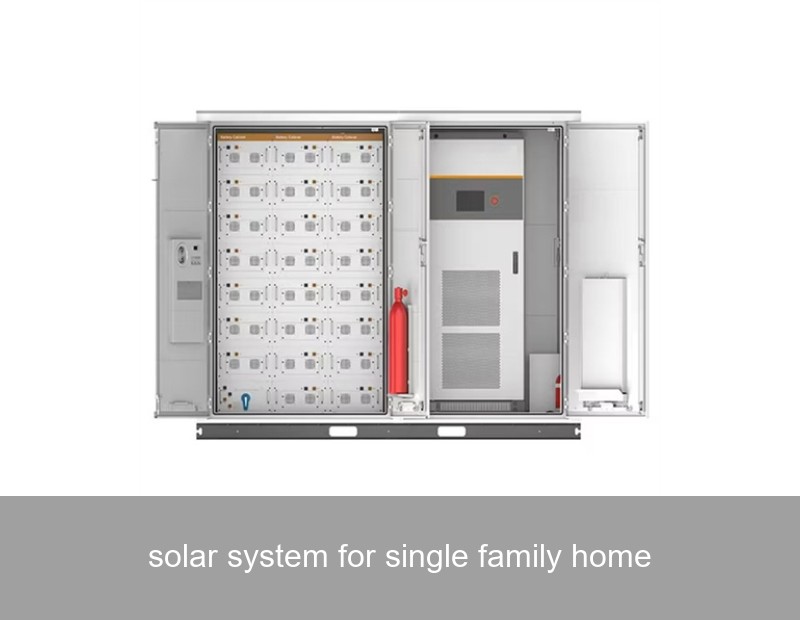
Imagine a future where your home not only shelters your family but also powers its life—quietly, cleanly, and independently. For homeowners in Europe and the US, this is no longer a distant dream. The shift towards residential solar energy is accelerating, driven by a desire for energy autonomy, rising electricity costs, and growing climate consciousness. But a truly effective solar system for single family home is more than just panels on the roof. It's an intelligent ecosystem designed to maximize self-consumption, provide resilience, and turn your home into a personal power station. This guide will illuminate the path from understanding the core phenomenon to making an empowered decision for your home.
Table of Contents
- The Phenomenon: Homes Becoming Power Producers
- The Data: Why Solar + Storage is the New Standard
- A Case Study: The Smith Family's Journey to Energy Independence
- Key Components of a Modern Home Solar System
- The Highjoule Solution: Intelligent Energy Management
- Making the Decision: Is It Right for Your Home?
The Phenomenon: Homes Becoming Power Producers
Gone are the days when electricity flowed one way: from the grid to your outlet. Today, technology has enabled a two-way street. A modern solar system for single family home allows you to generate, store, and manage your own electricity. This is particularly relevant in regions like California, Texas, or across Europe, where grid volatility and extreme weather events have made energy resilience a top priority for families. The phenomenon isn't just about saving money (though that's a significant part); it's about taking control of a fundamental aspect of modern life.

Image Source: Unsplash - A modern home equipped with solar panels.
The Data: Why Solar + Storage is the New Standard
Let's talk numbers. While solar panels alone can reduce your grid dependency, pairing them with a battery storage system unlocks the full potential. According to the U.S. Department of Energy, the average residential solar panel system pays for itself in 5-10 years. But consider this: most solar energy is produced in the middle of the day when homes are often empty. Without storage, up to 60% of that clean energy may be exported back to the grid at low rates, only for you to buy expensive power back in the evening.
A battery changes this equation dramatically. Data from the Solar Energy Industries Association (SEIA) shows that the attachment rate of storage with new residential solar systems in the U.S. has surged from under 10% to over 30% in just a few years. In Germany, favorable regulations for self-consumption have made solar-plus-storage systems the default choice for new installations. The logic is clear: storage increases self-consumption from ~30-40% to over 70-80%, maximizing your investment and protection.
Financial & Resilience Benefits at a Glance
| System Type | Typical Self-Consumption | Grid Independence During Outage | Key Benefit |
|---|---|---|---|
| Solar Panels Only | 30-40% | None (Grid-tied systems shut off) | Reduces daytime electricity bills |
| Solar + Battery Storage | 70-80%+ | Hours to Days (Depending on size & usage) | Bill savings + Backup power + Energy control |
A Case Study: The Smith Family's Journey to Energy Independence
Let's make this real. Meet the Smiths, a family of four living in a 2,200 sq. ft. home in Austin, Texas. In 2022, facing unpredictable summer grid strains and rising rates, they installed a 10 kW solar array. They were happy with lower bills but frustrated when a brief storm caused a blackout, spoiling food and disrupting work.
In 2023, they upgraded their system by integrating a Highjoule HES-Home 12 battery storage unit (12 kWh capacity). The results after one year were transformative:
- Energy Self-Sufficiency: Their grid electricity consumption dropped by 92% annually.
- Financial Impact: Their monthly electricity bill averaged just the minimal grid connection fee, saving them over $2,200 in the first year alone.
- Resilience Tested: During three subsequent grid outages totaling 14 hours, their home's essential loads—refrigeration, lighting, internet, and HVAC fans—ran seamlessly on battery power.
- Peace of Mind: The Highjoule EnergyHub monitoring app gave them real-time insight and control, allowing them to optimize usage patterns.
"It's not just about the savings," Mrs. Smith noted. "It's the security of knowing our home has its own reliable power source, rain or shine."
Key Components of a Modern Home Solar System
Understanding the pieces of the puzzle helps you make an informed choice. A comprehensive solar system for single family home consists of:
- Solar Photovoltaic (PV) Panels: Capture sunlight and convert it to direct current (DC) electricity. Modern high-efficiency panels produce more power in limited roof space.
- Inverter(s): The brain of the power side. Converts DC electricity from the panels into usable alternating current (AC) for your home. Hybrid inverters can also manage battery charging.
- Battery Energy Storage System (BESS): The heart of resilience. Stores excess solar energy for use at night or during outages. Lithium-ion phosphate (LFP) batteries, like those used by Highjoule, are known for safety, longevity, and stable performance.
- Energy Management System (EMS): The true intelligence. This software platform monitors energy production, consumption, and storage, making automatic decisions to optimize efficiency and cost.
- Balance of System (BoS): Mounting, wiring, switches, and safety equipment that tie everything together securely.
The Highjoule Solution: Intelligent Energy Management for Your Home
This is where Highjoule's nearly two decades of expertise comes into play. We don't just sell components; we provide integrated, intelligent power solutions. For the single-family home, our Home Energy Ecosystem is designed to be the most reliable and smart partner for your energy needs.
Our flagship product for residences is the Highjoule HES-Home Series battery system. Built with ultra-safe LFP chemistry, it comes in modular capacities (from 10 kWh to 30 kWh expandable) to fit any home's needs. What sets it apart is its seamless integration with our EnergyHub AI Platform.
Think of EnergyHub as your 24/7 home energy conductor. It doesn't just store energy; it learns your family's patterns, forecasts weather and local utility rates (in areas with Time-of-Use pricing), and intelligently dispatches power. For example, it can decide to store extra solar energy instead of selling it cheaply, knowing a cloudy tomorrow is forecasted. Or, it can pre-charge your battery before peak evening rates kick in, maximizing savings automatically.

Image Source: Unsplash - A sleek battery storage unit in a residential setting.
For homeowners, this means you get a system that works tirelessly to optimize your investment. Our systems are designed for the diverse climates and regulations of both the European and North American markets, ensuring compliance, performance, and durability whether you're in Munich or Miami.
Making the Decision: Is It Right for Your Home?
So, how do you start? The journey to a smarter solar system for single family home begins with a few key considerations:
- Your Energy Profile: Analyze your past year's electricity bills. What's your average monthly consumption? When do you use the most power?
- Your Roof's Suitability: Does your roof have adequate, unshaded space facing south (in the Northern Hemisphere)? What is its condition and angle?
- Your Primary Goals: Are you most motivated by bill savings, backup power, reducing carbon footprint, or a combination?
- Local Incentives: Research federal, state, and local incentives. The U.S. Residential Clean Energy Credit and various European subsidies can significantly reduce upfront costs.
The most critical step is partnering with a certified, experienced provider who can conduct a detailed site assessment and energy audit. They should provide a clear proposal outlining system size, projected production, storage capacity, costs, savings, and ROI.
Questions to Ask Your Installer
- Can you provide a detailed performance simulation for my specific address?
- What battery chemistry do you use, and what is its warranted lifespan (in cycles and years)?
- How does the energy management software work to maximize my benefits?
- What does the service and warranty support look like over the system's lifetime?
Your home is your sanctuary. Shouldn't its power be just as secure, clean, and intelligent as the other comforts you provide for your family? What would you do with the savings and security that a self-powered home could bring?
 Inquiry
 Online Chat