


How Much Does a LiFePO4 48V 100Ah 3U Rack Battery Cost? A Complete Value Guide
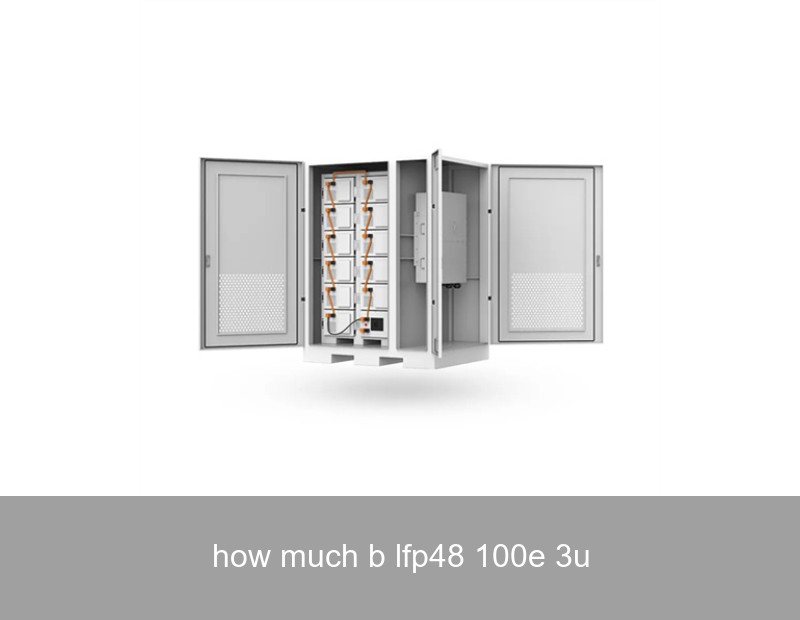
As a product technology expert at Highjoule, I hear one question daily from businesses, installers, and homeowners looking to invest in reliable energy storage: "How much does a LiFePO4 48V 100Ah 3U rack battery cost?" It's a smart, specific question, but the answer is more than just a price tag. The true cost encompasses upfront investment, long-term performance, safety, and the intelligence of the system it powers. In this guide, we'll unpack the factors that determine the price of a commercial-grade 48V 100Ah rack battery and show you how to evaluate its real value for your solar-plus-storage or backup power project.
Table of Contents
- The Price Puzzle: More Than Just a Number
- Key Cost Factors for a 3U Rack Battery
- Beyond the Sticker Price: The Total Cost of Ownership (TCO)
- A Real-World Case: The ROI of a Reliable System
- Highjoule's Approach: Engineering Value into Every 3U Rack
- Your Next Step: How to Frame Your Investment Decision
The Price Puzzle: More Than Just a Number
You've likely seen a wide range of prices online for a "LiFePO4 48V 100Ah 3U" battery. Quotes can vary by 50% or more. Why such disparity? It's because not all rack batteries are created equal. The 3U form factor (a height of 3 "rack units," roughly 5.25 inches) is popular for server rack-style installations, but what's inside and how it's managed makes all the difference. Think of it like purchasing a vehicle: both a compact car and a heavy-duty truck can transport you, but their capabilities, durability, and long-term costs are worlds apart. Your energy storage system is a critical infrastructure investment, not a commodity.
Key Cost Factors for a 3U Rack Battery
Let's break down the components that influence the price of a high-quality 48V 100Ah rack battery.
1. Cell Quality and Chemistry
The heart of the battery is the LiFePO4 (Lithium Iron Phosphate) cell. Prices differ based on:
- Grade A vs. Grade B/C Cells: Grade A cells from reputable manufacturers (like CATL, BYD, or EVE) offer specified capacity, longer cycle life, and consistent performance. Lower-grade cells may have inconsistent capacity, degrade faster, and pose higher long-term risks.
- Energy Density: Advanced cell designs that pack more energy into the same 3U space can command a premium but offer better space efficiency.

Image: High-quality prismatic LiFePO4 cells are the foundation of a reliable rack battery. Source: Unsplash
2. Battery Management System (BMS) Intelligence
This is the brain of the system. A sophisticated BMS is a major cost driver but is non-negotiable for safety and longevity. Key features include:
- Advanced cell balancing and monitoring
- Thermal management controls
- Communication protocols (CAN, RS485, Modbus) for system integration
- Cybersecurity and firmware update capabilities
3. Design, Safety, and Certifications
A robust 3U enclosure with proper cooling, UL 1973 or IEC 62619 certification for stationary storage, and UN38.3 transportation certification add to the manufacturing cost but are essential for insurance, permitting, and peace of mind, especially in the US and European markets.
4. Scalability and Integration Features
Is the battery a standalone unit or designed for seamless parallel expansion? Systems like Highjoule's H-Rack 48V Series are engineered for plug-and-play scalability up to several megawatt-hours. This built-in capability for future growth adds value upfront.
Beyond the Sticker Price: The Total Cost of Ownership (TCO)
When evaluating "how much a LiFePO4 48V 100Ah 3U battery" costs, you must calculate its TCO over a 10-15 year lifespan.
| Cost Factor | Low-Quality Unit | High-Quality Unit (e.g., Highjoule H-Rack) |
|---|---|---|
| Upfront Purchase Price | Lower | Higher |
| Cycle Life (to 80% capacity) | 3,000 - 4,000 cycles | 6,000+ cycles |
| Warranty & Support | 1-3 years, limited | 10 years, comprehensive |
| Efficiency & Energy Loss | Lower round-trip efficiency (~92%) | Higher round-trip efficiency (>96%) |
| Failure Risk & Downtime | Higher | Mitigated by robust design & BMS |
| Effective Cost per Cycle | Significantly Higher | Substantially Lower |
As you can see, a higher initial investment in a technologically advanced system often translates to a lower cost per kilowatt-hour over the system's life. You're not just buying a battery; you're buying years of predictable, low-maintenance performance.
A Real-World Case: The ROI of a Reliable System
Let's look at a project in Southern Germany. A medium-sized dairy farm with a 120kW rooftop solar array needed to increase self-consumption and provide backup for cooling systems. They evaluated two 48V 100Ah 3U rack battery proposals.
- Option A: A low-cost system, priced 35% less upfront.
- Option B: A Highjoule H-Rack 48V-100E-3U system, integrated with their existing inverter.
The farm chose Option B. The key decider was the guaranteed cycle life and the granular monitoring via Highjoule's EnergyOS platform. In the first 18 months, the system achieved 99.8% availability, increased solar self-consumption from 45% to 78%, and saved over €8,500 in peak demand charges. The intelligent BMS also prevented two potential cell imbalance events, avoiding downtime. The project is on track for a full return on investment in under 7 years, with well over a decade of remaining service life. This case underscores that the true "cost" of a battery is intrinsically tied to its reliability and the intelligence of its software. You can explore more on the importance of grid services and storage economics from the Energy Storage News authority.
Highjoule's Approach: Engineering Value into Every 3U Rack
At Highjoule, we engineer our H-Rack 48V-100E-3U batteries to optimize TCO from the ground up. We don't just sell a battery; we provide a complete, intelligent power resilience solution.
- Precision-Engineered Core: We use automotive-grade, UL-listed LiFePO4 cells and a proprietary, adaptive BMS that extends battery life through predictive balancing and thermal modeling.
- Seamless Scalability: Our 3U racks are designed for parallel connection with a single communication cable, allowing you to scale from 5kWh to multi-MWh systems without complex reconfiguration.
- Software-Defined Performance: Every H-Rack is managed by Highjoule's EnergyOS, a platform that enables remote monitoring, fleet management, and performance optimization. This turns your storage asset into a smart, grid-interactive resource.

Image: A professional rack-mounted battery installation for commercial storage. Source: Unsplash
For commercial and industrial applications, this holistic approach—combining superior hardware with intelligent software—is what defines the modern standard for energy storage. It ensures compliance with stringent international standards, a claim backed by resources like the DNV energy transition outlook.
Your Next Step: How to Frame Your Investment Decision
So, when you ask, "How much does a LiFePO4 48V 100Ah 3U rack battery cost?", I encourage you to reframe the question. Instead, ask potential suppliers:
- What is the total cost of ownership over the warranted lifespan?
- Can you provide third-party certification reports for the core cells and the complete pack?
- How does the BMS actively protect my investment and manage cell degradation?
- What software platform is included, and what data/control does it offer?
This shifts the conversation from price to value and performance. At Highjoule, we welcome these questions because our products are built to answer them confidently. Our global team works with you to design a system that meets your specific energy resilience and financial goals, whether for a California microgrid or a German industrial facility.
What specific energy challenge—be it demand charge reduction, backup power assurance, or renewable integration—are you hoping to solve with your 48V battery storage system, and how can we help you calculate its true value for your business?
 Inquiry
 Online Chat