


Unlocking Maximum Power: Your Guide to High-Efficiency MPPT Solar Power for Sale
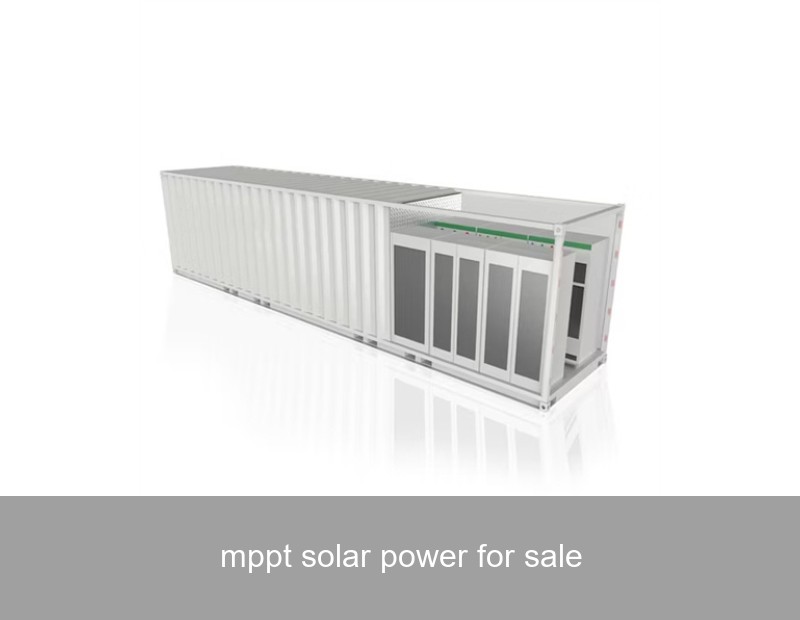
You've made the smart decision to invest in solar energy. The panels are on your roof, soaking up the sun. But here's a question that even many seasoned solar owners ponder: is your system capturing every possible watt that sunshine offers? If you're not using a modern Maximum Power Point Tracking (MPPT) charge controller, the answer is likely "no." As you search for the best MPPT solar power for sale, understanding this critical technology is the key to transforming sunlight into serious savings and sustainability. It’s the unsung hero that can elevate a good solar installation into a truly great one.
What is MPPT and Why is it a Game-Changer?
Think of your solar panels as a sophisticated engine. The power they produce isn't constant; it fluctuates with sunlight intensity, temperature, and the load's demand (like your battery bank). This relationship creates a "power curve," with a specific sweet spot—the Maximum Power Point (MPP)—where the panel operates at its peak efficiency.
An MPPT solar charge controller is, in essence, a smart DC-DC converter. Its sole job is to continuously hunt for and lock onto that sweet spot. It does this by constantly measuring the panel's voltage and current, calculating the power (Volts x Amps), and adjusting its input resistance to draw power at the optimal voltage. It then converts that higher voltage to the appropriate lower voltage needed to charge your batteries, all while transferring the maximum available power. Older PWM (Pulse Width Modulation) controllers simply connect the panel to the battery, forcing the panel to operate at the battery voltage, which is often far from its ideal MPP, especially on cold, sunny days.

Image Source: energy.gov - A solar array's potential is fully realized with advanced MPPT technology.
The Core Benefit: Harvesting More Energy, Every Day
The practical upshot? An MPPT controller can increase the energy harvested from your solar panels by 15% to 30% compared to a PWM controller, according to data from the National Renewable Energy Laboratory (NREL). This isn't a one-time boost; it's a daily advantage. Over a year, this extra energy can mean the difference between just covering your baseline loads and truly achieving energy independence, or significantly reducing your payback period.
MPPT vs. PWM: The Data Behind the Efficiency Gap
Let's make this comparison concrete. Imagine a common scenario: You have a 48V battery bank, but your solar panels have a higher voltage to allow for longer wire runs and better performance in varied conditions.
| Scenario | PWM Controller | MPPT Controller | Energy Gain |
|---|---|---|---|
| Cold, Sunny Day (Panel Vmp: 40V, Battery: 48V) | Forces panel to 48V, away from its 40V optimum. Significant power loss. | Tracks the 40V MPP, converts excess voltage to current. Max power harvested. | MPPT can be up to 30% more efficient. |
| Partial Shading or Cloud Cover | Struggles to adapt, often locking to a non-optimal point. | Rapidly re-scans and finds the new, lower MPP, salvaging available power. | MPPT recovers 10-25% of the power PWM would lose. |
This is why, for any system over a few hundred watts or where panel and battery voltages don't perfectly match, investing in MPPT solar power for sale is a non-negotiable for performance. At Highjoule, this principle is at the core of our integrated energy storage systems. Our H-Series Hybrid Inverters feature advanced, multi-mode MPPT charge controllers that don't just track the maximum point—they do it intelligently, balancing grid input, battery charge, and load demand to optimize for self-consumption and cost savings, not just raw solar harvest.
A Real-World Case: Maximizing ROI in a German Commercial Setup
The theory is compelling, but real-world data tells the true story. Let's look at a project we completed for a medium-sized bakery in Bavaria, Germany.
The Challenge: The bakery had high, consistent energy consumption for ovens and refrigeration. Their existing 50kW solar array with basic inverters was underperforming, especially during the cloudy mornings and winter months, leaving them reliant on the grid during peak tariff hours.
The Highjoule Solution: We integrated two Highjoule H-30 Hybrid Inverters with dual, high-voltage MPPT trackers and paired them with a 100kWh Highjoule Lithium Titanate (LTO) battery system. The MPPT algorithms were specifically tuned for Central Europe's variable irradiance patterns.
The Results (12-Month Period):
- Solar Harvest Increase: The new MPPT controllers increased total energy yield from the existing panels by 22% annually.
- Self-Consumption Rate: Coupled with the battery, the bakery's direct use of solar power jumped from 35% to over 85%.
- Financial Impact: By storing excess midday solar for use during expensive evening peaks, they reduced their grid energy costs by 60%. The system's payback period was cut by an estimated 4 years.
This case demonstrates that the right MPPT solar power for sale isn't just a component; it's the brain of a profitable energy independence strategy. You can explore more about grid services and savings in the EU context via the European Network of Transmission System Operators (ENTSO-E).
Choosing the Right MPPT Solar Power for Sale
Not all MPPT controllers are created equal. As you evaluate options, here are key features to demand:
- Tracking Efficiency: Look for rates above 99.5%. Highjoule's controllers exceed this benchmark.
- Multiple MPPTs: For roofs with different orientations or shading, separate trackers (e.g., 2 or 4 per inverter) prevent the entire array from being dragged down by one underperforming string.
- Wide Voltage Range: Allows for more panel configurations and better performance in low-light conditions.
- Smart Integration: The best MPPT is part of a connected ecosystem. It should communicate seamlessly with your battery management system (BMS) and energy management system (EMS) to make holistic decisions.
This is where Highjoule's holistic approach shines. We don't just sell you a charge controller. We provide a complete, intelligent storage solution where the MPPT, inverter, and battery are co-engineered to work in perfect harmony. Our EnergyOS platform uses AI to take the harvested solar energy and decide in real-time: should it power the home, charge the battery, or sell back to the grid for the best price? The MPPT is the first, critical link in that intelligent chain.

Image Source: solarpowerworldonline.com - Modern energy storage systems integrate MPPT, batteries, and smart management.
The Future of MPPT and Smart Energy Management
The evolution of MPPT is moving beyond simple panel-level optimization. The next frontier is fleet-level optimization for microgrids and virtual power plants (VPPs). Imagine thousands of Highjoule systems across a city, each with its own ultra-efficient MPPT, all coordinated to stabilize the grid, absorb excess renewable energy, and provide community resilience.
Furthermore, research into machine learning-based MPPT algorithms promises even faster adaptation to rapidly changing weather, pushing the boundaries of harvestable energy from the same square foot of solar panels.
Your Next Step
The journey to true energy efficiency starts with asking the right questions. When you evaluate MPPT solar power for sale, are you looking at a standalone component, or is it part of a seamlessly integrated, intelligent system designed to maximize your financial and environmental return for the next 20+ years?
What energy challenge in your home or business could be solved by harvesting 30% more power from the sun you're already capturing?
 Inquiry
 Online Chat