


How Much Battery & Solar Do I Really Need? The Definitive Guide to Sizing Your System
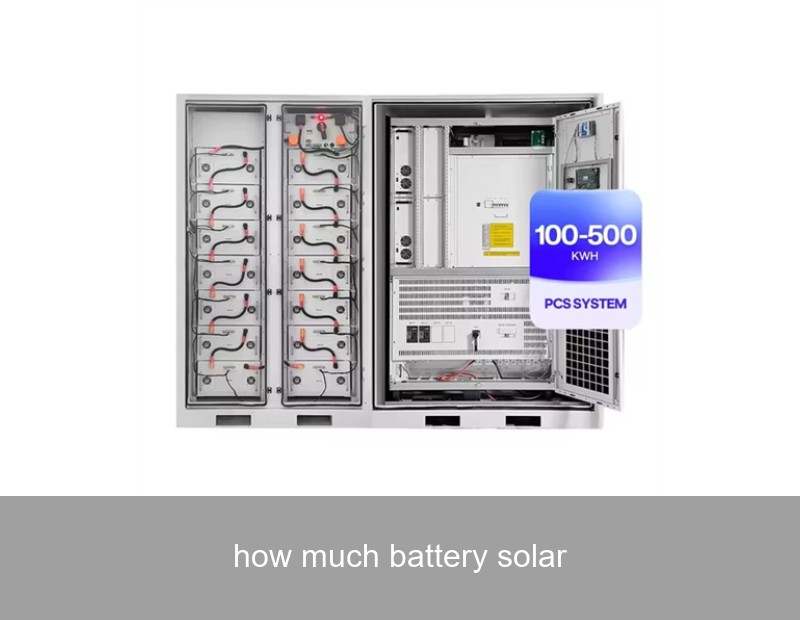
You've seen the headlines about energy prices, felt the pinch on your utility bill, and you're ready for a change. The promise of solar panels and a home battery is compelling: clean, independent, and potentially free power from the sun. But then comes the million-dollar question that stops many in their tracks: "How much battery and solar do I actually need?" It's the crucial first step, and getting it wrong can mean undersized savings or an oversized investment. As a Highjoule product technology expert, I'm here to guide you through this not as a complex engineering puzzle, but as a practical journey toward energy independence.
The Core Question Demystified: It's About Balance
Think of your energy system like a personal farm. Your solar panels are the fields, harvesting sunlight (the crop). Your battery is the silo, storing the excess harvest for later use. The goal isn't to have the biggest fields or the largest silo, but to have them perfectly matched to your family's "appetite" for electricity and the local "growing season" (sunlight hours). Sizing is the art and science of creating this perfect, efficient balance.
Step 1: Sizing Your Solar Array – Capturing the Sun's Potential
Your solar array's size is measured in kilowatts (kW). The key metric here is your annual energy consumption, measured in kilowatt-hours (kWh). You can find this on your past 12 months of utility bills. Let’s break down the factors:
- Your Energy Consumption: A typical U.S. home uses about 10,400 kWh annually (U.S. EIA). A European household might average 3,500 kWh.
- Your Location's Solar Resource: A home in sunny Arizona will generate more per kW installed than one in Seattle. This is measured in "peak sun hours."
- Your Roof's Characteristics: Direction (south-facing is ideal in the Northern Hemisphere), tilt, and shading all play a role.
A simplified formula experts use is: Annual kWh usage ÷ (Peak sun hours per day × 365) = Approximate System Size (kW). For example, a home in California (5.5 peak hours) using 10,000 kWh/year might start with a 5 kW system (10,000 / (5.5*365) ≈ 5).
This is where professional design is critical. At Highjoule, our pre-sales engineering team uses advanced geospatial software to analyze your specific site, providing a precise production estimate so you know exactly what to expect from your solar investment.
Step 2: Sizing Your Battery – Your Personal Energy Reservoir
Now, for the battery. Size is defined by two numbers: Power (kW) and Capacity (kWh). Think of it like a water pump and a tank. Power (kW) is how fast you can draw energy (can it run your air conditioner AND oven at once?). Capacity (kWh) is the total amount of energy stored (how long can it run those appliances?).
To size your battery, you must define your goals:
| Primary Goal | Key Consideration | Typical Sizing Focus |
|---|---|---|
| Backup Power (Outage Protection) | What are your "critical loads" during an outage? (Fridge, lights, modem, furnace fan). | High Power (kW) to start appliances, and enough Capacity (kWh) for desired backup duration (e.g., 10-20 kWh). |
| Maximizing Self-Consumption | Using your solar power at night, not sending it back to the grid. | Match Capacity (kWh) to your typical evening/nighttime usage (e.g., 5-15 kWh). |
| Time-of-Use (TOU) Bill Management | Storing solar/cheap grid power to use during expensive peak rate periods. | Enough Capacity (kWh) to cover usage during the entire peak rate window. |
For most families seeking meaningful backup and bill savings, we see a sweet spot in the 10 kWh to 20 kWh capacity range. Highjoule's HES Series modular battery systems are designed for this flexibility. You can start with a 10 kWh base unit and seamlessly add more modules later as your needs or budget evolve, ensuring your system is never undersized or prematurely oversized.
A Real-World Case Study: The German Bakery
Let's move from theory to practice with a case from Bavaria, Germany. A family-run bakery with high daytime energy use for ovens and refrigeration wanted to cut costs and ensure resilience.
- Challenge: High grid costs (~€0.32/kWh) and sensitive refrigeration loads.
- Solution: A Highjoule integrated system with a 45 kW solar array and a 40 kWh HES-40 battery storage unit.
- Outcome: The system was sized to cover nearly 100% of their daytime base load with solar and shift excess solar to cover evening operations. During a planned grid outage, the battery seamlessly powered all critical refrigeration and lighting for over 8 hours, preventing thousands of euros in spoiled goods. Their annual energy bill was reduced by an estimated 68%.
This example shows that "how much" is driven by specific operational patterns and financial goals, not just square footage.

Beyond Size: The Highjoule Advantage in Smart Energy Management
Sizing the hardware is half the battle. The real magic is in the brain of the system. A perfectly sized system with poor management will underperform. This is where Highjoule's Energy Operating System (EOS) shines.
Our EOS doesn't just react; it learns and forecasts. It analyzes your consumption history, local weather forecasts, and real-time grid conditions (like variable electricity rates) to make intelligent decisions. Should it charge the battery from solar now, or export for a premium tariff? Should it keep a 100% reserve for a forecasted storm? This AI-driven optimization ensures every kilowatt-hour your system produces and stores is used in the most economically optimal way, maximizing your return on investment regardless of the precise kW/kWh numbers. It's the difference between a static battery and a dynamic financial asset.
Common Pitfalls to Avoid
- Oversizing Solar: Without a large battery or favorable net metering, excess solar energy is often sold back to the grid at a low rate, reducing payback.
- Undersizing the Battery: A battery that can't cover your critical loads or peak evening usage fails to meet your core goals.
- Ignoring Future Needs: Are you planning an EV? A heat pump? Your system should have a growth path.
Your Energy Independence Starts Here
The question "how much battery and solar?" is deeply personal. There's no one-size-fits-all answer, but there is a clear methodology: understand your usage, define your goals, and partner with a technology provider that offers both precision hardware and intelligent software. At Highjoule, we've spent nearly two decades refining this process for homeowners and businesses across Europe and North America. We provide the tools—from modular, scalable battery hardware to our sophisticated EOS platform—to build a system that fits your life, not the other way around.
So, let me turn the question back to you: What does energy independence look like for your home or business—is it never worrying about a blackout, breaking free from volatile utility rates, or simply taking a tangible step toward a sustainable future?
 Inquiry
 Online Chat