


How Much Can an Energy Company Save? The Real Numbers Behind Commercial Solar and Storage
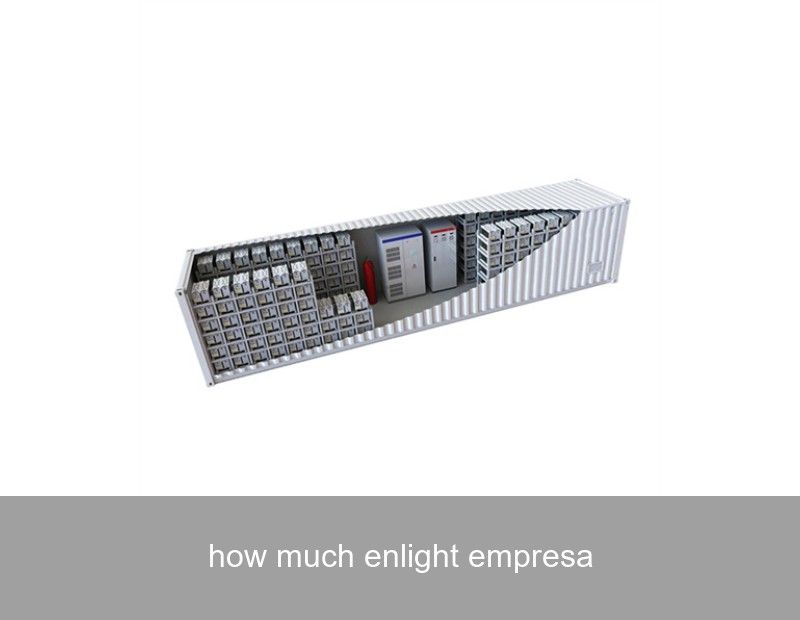
You're a business leader, a facility manager, or a sustainability officer. You see your company's energy bills climbing, hear the talk of energy independence, and wonder: "How much can an energy company *really* save with solar and storage?" It's not just about being green—it's a serious financial calculation. The question isn't "if" but "how much." Let's move beyond the hype and dive into the tangible savings, the hard data, and the strategic advantages that modern energy solutions bring to forward-thinking enterprises across Europe and the US.
Table of Contents
The Phenomenon: Rising Costs & New Opportunities
The landscape of commercial energy is shifting dramatically. Volatile fossil fuel prices, increasing grid demand charges, and a global push for decarbonization are squeezing corporate budgets. Conversely, the cost of solar photovoltaic (PV) panels has plummeted by over 80% in the last decade, and advanced battery energy storage systems (BESS) are becoming the intelligent brain that maximizes every kilowatt-hour generated. The synergy of solar + storage is no longer a niche experiment; it's a mainstream financial tool for energy companies and large consumers alike. The savings are multi-faceted, impacting not just your utility bill's bottom line, but also your operational resilience and brand value.
The Data Breakdown: Where Savings Come From
So, how much can an energy company save? The answer is a sum of several key components. Let's break it down.
1. Direct Energy Cost Reduction (Solar Self-Consumption)
This is the most straightforward saving. By generating your own electricity, you avoid purchasing it from the grid at retail rates. In sun-rich parts of Southern Europe or California, a well-sized commercial solar array can cover 40-60% of a facility's annual consumption. The immediate saving is the per-kWh price you no longer pay.
2. Demand Charge Management (The Storage Superpower)
For commercial and industrial users, a significant portion of the bill isn't just for total energy used (kWh), but for the highest rate of power drawn (kW) in any 15-30 minute period each month—the "peak demand." This charge can constitute 30-70% of the total bill. This is where a smart battery system shines. It discharges during those short peak periods, flattening the demand curve and slashing these punitive charges.

Image Source: Unsplash (Representative graph of energy load)
3. Energy Arbitrage & Grid Services
In markets with time-of-use (TOU) tariffs or dynamic pricing, you can store cheap solar or off-peak grid energy and use it during expensive peak hours. Furthermore, advanced systems can participate in grid-balancing services, generating revenue by providing frequency regulation or capacity reserves. A study by the National Renewable Energy Laboratory (NREL) highlights the growing economic value of stacking these multiple revenue streams.
| Savings Stream | Description | Typical Impact on Bill |
|---|---|---|
| Solar Self-Consumption | Direct displacement of grid electricity | 25-50% reduction in energy (kWh) costs |
| Demand Charge Reduction | Battery discharge during short-term peaks | 15-40% reduction in total bill (via lower kW demand) |
| TOU Arbitrage | Shift usage from high-price to low-price periods | 5-15% additional savings on energy costs |
The Case Study: A European Manufacturing Plant
Let's look at a real-world example. A mid-sized automotive component manufacturer in Northern Italy faced an average monthly electricity bill of €85,000, with nearly 50% attributed to demand charges. Their goals were clear: reduce costs, ensure production continuity during grid instability, and meet corporate sustainability targets.
The Solution & Results: The company partnered with Highjoule to deploy a 2.5 MW solar carport system coupled with a 1.8 MWh Highjoule HPS Series battery storage system. The Highjoule system's intelligent energy management software (EMS) was programmed to prioritize demand charge capping.
- Annual Energy Bill Savings: €412,000 (a 40% reduction).
- Demand Charge Reduction: Slashed peak demand by 35%, accounting for the bulk of savings.
- Self-Consumption Rate: Increased solar usage on-site to over 90%, minimizing grid feed-in.
- ROI Period: The project achieved a simple payback in under 5 years, thanks to combined savings and available regional incentives.
- Resilience: The BESS provides critical backup for key production lines, preventing costly downtime from brief grid outages.
This case underscores that the question "how much can an energy company save?" is answered not by a single percentage, but by a comprehensive strategy targeting all cost components.
The Highjoule Advantage: Intelligent Storage for Maximum ROI
As a global leader since 2005, Highjoule understands that savings are only as good as the system's intelligence and reliability. Our products are engineered to maximize your financial return.
- Highjoule HPS (Commercial & Industrial Series): Our flagship battery systems are built with industry-leading cycle life and safety standards. Their modular design allows for scalable power (kW) and energy (kWh) capacity, perfect for demand charge management and energy arbitrage. Integrated with our Helios EMS, they continuously learn your load patterns and grid tariff structures to optimize dispatch in real-time.
- Highjoule Horizon (For Microgrids & Utilities): For larger-scale applications or energy companies themselves, the Horizon platform provides grid-forming capabilities, enabling true energy independence and the ability to create stable microgrids that can island from the main grid.
- End-to-End Service: Highjoule doesn't just sell hardware. We provide feasibility analysis, system design, financial modeling, installation support, and long-term monitoring. Our team works with you to model "how much you can save" specific to your load profile, location, and local regulations.

Image Source: Unsplash (Representative of a modern BESS installation)
Beyond Savings: Resilience and Reputation
The financial calculus is compelling, but the benefits extend further. In an era of increasing climate-related grid disruptions, the ability to power critical operations during an outage is invaluable. This resilience protects revenue, data, and supply chain integrity. Furthermore, a visible commitment to renewable energy strengthens your brand, aligns with stakeholder expectations (from investors to customers), and future-proofs your operations against carbon taxes and regulations. The International Renewable Energy Agency (IRENA) consistently highlights corporate sourcing of renewables as a key driver of the global energy transition.
Your Next Step: From Question to Quotation
The question "how much can an energy company save?" is the starting point. The answer is unique to your facilities, your energy contracts, and your ambitions. Generic percentages provide direction, but precise modeling delivers a roadmap.
So, what does your facility's specific load profile look like? What are your peak demand charges, and could a Highjoule system be programmed to cut them tomorrow? We invite you to share your latest utility bill with our experts for a confidential, no-obligation savings analysis. Let's translate the general potential into your specific bottom-line impact.
 Inquiry
 Online Chat