


Unlocking Grid Resilience: The Strategic Power of the PV 5000 Energy Storage Cabinet
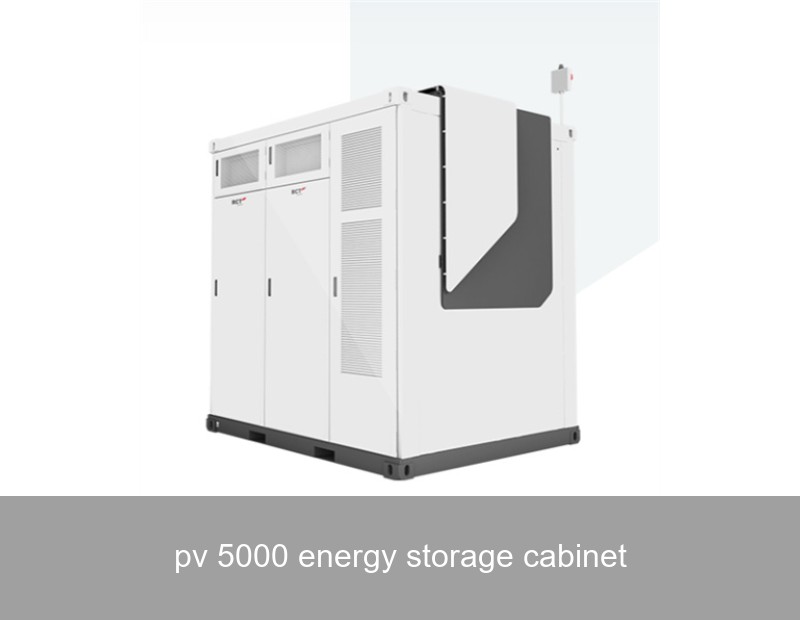
Imagine a world where every kilowatt-hour of solar energy your business generates is available precisely when you need it most—during peak demand charges, grid outages, or after sunset. This isn't a distant future; it's the reality enabled by advanced, containerized battery storage. At the heart of this transformation for commercial and industrial applications is a powerful solution: the PV 5000 energy storage cabinet. This integrated system is more than just batteries in a box; it's the cornerstone for energy independence, cost savings, and a sustainable grid. As global energy volatility rises, understanding this technology becomes crucial for any energy-intensive operation in Europe and the United States.
What is a PV 5000 Energy Storage Cabinet?
Let's demystify the term. A PV 5000 energy storage cabinet typically refers to a large-scale, containerized or cabinet-based Battery Energy Storage System (BESS) designed to integrate seamlessly with a photovoltaic (PV) solar array. The "5000" often denotes a power rating in the kilowatt (kW) or kilovolt-ampere (kVA) range, indicating a system built for substantial commercial, industrial, or community-scale projects. Think of it as a massive, intelligent power bank for your facility. It stores excess solar energy produced during the day and dispatches it on command, providing a reliable and controllable energy source.

These systems are not monolithic. A robust PV 5000 cabinet integrates several core components: high-cycle life lithium-ion battery racks (like LiFePO4 for safety and longevity), a sophisticated thermal management system, power conversion systems (PCS/inverters), and a top-level energy management system (EMS) that acts as the brain, optimizing every charge and discharge cycle for financial and operational benefit.
The Challenge: Intermittency Meets Rising Costs
Here's the universal pain point for businesses investing in solar: the sun doesn't shine on a spreadsheet schedule. A factory's solar panels might peak at 2 PM, but its energy demand—and the associated utility peak demand charges—might surge from 4 PM to 9 PM. This mismatch means you're still buying expensive grid power when you need it most, undermining your solar investment. Furthermore, grid instability and increasing power outages pose direct risks to operational continuity and revenue.
Simply put, without storage, a significant portion of your solar energy's potential value is lost. The phenomenon is clear: renewable generation is variable, and energy costs are increasingly time-sensitive.
What the Data Tells Us: The Business Case for Storage
The logic for adding storage is backed by compelling economics. Let's look at some key data points:
- Demand Charge Reduction: In many U.S. and European markets, demand charges can constitute 30-50% of a commercial electricity bill. A PV 5000 energy storage cabinet can strategically "peak shave," discharging power to flatten your facility's demand spike, leading to direct and substantial savings.
- Energy Arbitrage: With time-of-use (TOU) rates, the cost per kWh can vary by 300% or more between off-peak and peak periods. Storage allows you to buy/store energy when it's cheap (or from your solar panels) and use it when prices are high.
- Grid Services Revenue: In some regions, aggregated storage systems can provide frequency regulation or capacity services to the grid, creating a new revenue stream. The International Renewable Energy Agency (IRENA) highlights the growing value of storage in providing grid flexibility.
| Benefit Stream | Mechanism | Potential Impact |
|---|---|---|
| Electricity Bill Savings | Peak shaving & energy time-shifting | 15-40% reduction in monthly costs |
| Solar Self-Consumption | Increasing on-site use of solar generation | Can raise self-consumption from ~30% to 70%+ |
| Backup Power | Providing critical load support during outages | Avoided downtime losses (varies by industry) |
| Incentives & Rebates | e.g., US Investment Tax Credit (ITC), EU grants | Can reduce upfront system cost by 30-50% |
Case Study: A European Manufacturing Plant's Success
Let's ground this in reality. A mid-sized automotive parts manufacturer in Bavaria, Germany, faced steep energy costs and grid congestion. They had a 1 MW rooftop solar array but were exporting over half their midday production to the grid at low feed-in tariffs, only to purchase expensive power later.
Their solution was the deployment of a containerized PV 5000 energy storage cabinet system, specifically Highjoule's H-Cube 5000i. This system features:
- A scalable 5 MWh capacity (using LiFePO4 chemistry).
- An integrated, AI-driven Energy Management System (EMS) that forecasts load and solar generation.
- Grid-forming capabilities for seamless islanding during outages.
- Energy Cost Reduction: Overall electricity costs decreased by 34%.
- Self-Consumption Rate: Increased from 35% to 82%.
- ROI Timeline: Projected payback period of 4.2 years, enhanced by a local energy transition grant.
- Resilience: The system successfully provided backup power to critical assembly lines during two brief grid disturbances, preventing an estimated €120,000 in production losses.

Highjoule's Expertise: Engineering Intelligent Storage Solutions
Since 2005, Highjoule has been at the forefront of solving these complex energy challenges. We understand that a PV 5000 energy storage cabinet is not a commodity; it's a critical piece of infrastructure. Our approach goes beyond hardware:
- Product Intelligence: Our H-Cube series cabinets, including models like the H-Cube 5000i, are built with multi-layer safety systems, advanced liquid cooling for optimal lifespan, and bidirectional inverters certified for grid interconnection in both North America and Europe.
- System Integration: We don't just sell cabinets. We provide turnkey solutions, ensuring flawless integration with your existing PV infrastructure, switchgear, and building management systems.
- Software & Services: The true value is unlocked by our Highjoule Optima Platform, a cloud-based EMS that continuously optimizes system performance for your specific financial and resilience goals. We offer comprehensive monitoring, maintenance, and performance guarantees.
For a large agricultural cooperative in California or a hospital campus in France, our engineering team tailors the system's operational parameters to maximize value in their specific regulatory and tariff environment.
Key Insights for Your Energy Strategy
Considering a PV 5000 energy storage cabinet? Here are the critical takeaways:
- Storage Transforms Solar from a Capex Project to a Strategic Asset: It moves you from simply reducing kWh consumption to actively managing your entire energy cost profile and risk exposure.
- Design is Everything: Sizing the battery capacity and power correctly for your load profile and goals is more engineering art than simple calculation. Undersizing leaves money on the table; oversizing hurts ROI.
- Look for a Partner, Not Just a Vendor: The long-term health and profitability of your system depend on the quality of the software, support, and warranties behind the steel cabinet.

What's Your Energy Resilience Threshold?
The conversation around energy has shifted from mere cost to encompass control, predictability, and sustainability. A PV 5000 energy storage cabinet represents a decisive step toward that future. As you evaluate your organization's path, ask yourself this: What is the one-hour cost of a power interruption to my operations? And how much could we save if we could decouple our most critical power needs from the volatile grid? Exploring the answers might just be the most strategic energy decision you make this year.
 Inquiry
 Online Chat