


How Much Gabinete Server Power Do You Really Need? A Guide to Energy Consumption
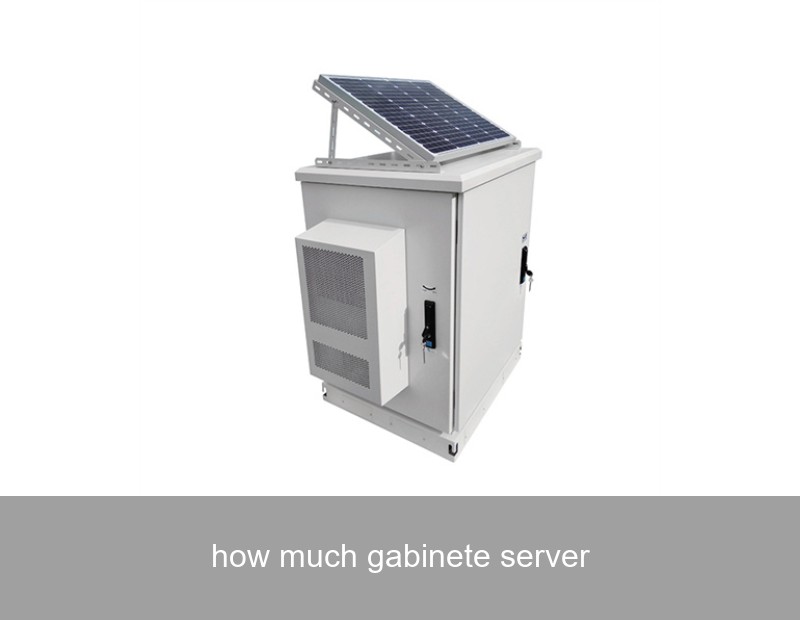
If you're managing IT infrastructure, you've likely asked yourself: how much gabinete server power is required to run my operations efficiently and reliably? It's a critical question that goes beyond just the server's nameplate rating. The true answer lies at the intersection of IT load, cooling demands, and the increasingly vital need for backup power resilience. As energy costs soar and sustainability becomes a boardroom priority, simply plugging servers into the grid is no longer a viable strategy. This is where understanding your precise energy needs and pairing them with intelligent energy storage becomes a game-changer for data centers, server rooms, and edge computing sites across Europe and the US.
Table of Contents
Beyond the Nameplate: The Real Cost of Server Cabinets
When planning for a server cabinet (or "gabinete servidor"), the focus is often on CPU specs and storage. However, the operational backbone is power. A single high-density server cabinet can easily consume between 5kW to 20kW or more. But the "how much" question has three layers:
- IT Equipment Load: The actual power draw of servers, switches, and storage devices, which typically operates at 60-80% of the theoretical maximum.
- Cooling Load: Often the hidden culprit. For every watt consumed by IT gear, an additional 0.5 to 1 watt can be needed for cooling, depending on infrastructure efficiency. This effectively can double your power requirement at the facility level.
- Backup & Power Quality Load: The capacity needed for uninterruptible power supplies (UPS) and backup systems to ensure uptime during grid fluctuations or outages.
This trifecta means your utility power intake needs to be significantly higher than the sum of your servers' nameplate ratings. The financial and operational impact is substantial, driving savvy operators to seek smarter, integrated power solutions.
The Power & Cooling Equation: Calculating Your True Load
Let's break down a practical calculation. Assume you have a cabinet populated with 10 servers, each with a 750W power supply unit (PSU).
| Component | Power Estimate | Notes |
|---|---|---|
| IT Equipment (Actual Draw) | ~6 kW | Assuming 80% utilization of total PSU capacity (10 servers * 750W * 0.8) |
| Cooling Overhead (PUE 1.5) | ~3 kW | Using a Power Usage Effectiveness (PUE) of 1.5, a common figure for modernized data halls. (6kW * 0.5) |
| Total Facility Power per Cabinet | ~9 kW | The real number you must provision for. |
This 9kW demand runs 24/7. In regions like Germany or California, where industrial electricity prices can exceed €0.30/$0.25 per kWh, the annual cost for this single cabinet's energy alone soars above €7,000/$6,000. Furthermore, grid instability and the increasing frequency of extreme weather events make pure grid-dependency a significant business risk.

Image Source: Unsplash. A modern server cabinet with significant power and cooling requirements.
Case Study: A German FinTech's Journey to Resilience and Savings
Let's examine a real-world scenario. A Frankfurt-based financial technology company was expanding its on-premise data processing capabilities. They needed to deploy two new high-performance computing (HPC) cabinets, each with a projected steady-state load of 12kW. Their primary concerns were: mitigating peak demand charges from the utility, ensuring zero-downtime during brief grid disturbances, and reducing their carbon footprint.
The Challenge: The utility's peak demand charges would make the operational cost prohibitive. A traditional diesel generator solution was noisy, slow to respond, and clashed with their corporate sustainability goals.
The Solution: They partnered with Highjoule to integrate a containerized, lithium-ion Battery Energy Storage System (BESS) – the Highjoule HPC Series – directly into their power infrastructure. This system was sized at 100kW / 215kWh, serving a dual purpose:
- Peak Shaving: The BESS automatically discharged during periods of highest grid demand, capping the facility's draw from the utility and slashing demand charges.
- Uninterruptible Power: It provided seamless bridge power for the critical 12-15 seconds until their backup generators synchronized and took full load, eliminating any risk of IT shutdown.
The Data-Driven Outcome: Within the first year of operation:
- A 22% reduction in monthly electricity costs, primarily through demand charge management.
- An estimated 15-ton reduction in CO2 emissions by optimizing generator run-time.
- Achieved 99.99% uptime for the HPC cluster, despite several recorded grid sags in the region.
This case illustrates that the question of "how much gabinete server power" evolves into "how intelligently can I manage and source that power?"
The Intelligent Solution: Integrating BESS with Your IT Load
For businesses in Europe and North America, the modern answer to server cabinet power management is an integrated Battery Energy Storage System (BESS). This is where Highjoule's expertise becomes pivotal. As a leader since 2005, Highjoule designs systems that don't just back up power—they optimize it.
Highjoule's IntelliBESS™ platform for commercial and industrial applications acts as a dynamic power hub. For a server room or edge data center, it can be configured to:
- Provide seamless UPS functionality with zero transfer time, protecting sensitive servers.
- Automate peak shaving based on real-time utility rates and load forecasts, delivering direct ROI.
- Enable renewable integration, allowing you to store excess solar PV generation during the day to power your servers at night, further reducing grid dependence and costs.

Image Source: Unsplash. An engineer monitoring a sophisticated battery energy storage system control panel.
By choosing a modular system like Highjoule's, you scale your storage capacity in line with your server load growth. This means your power infrastructure is as agile and future-proof as your IT infrastructure.
Future-Proofing Your Power Strategy
The landscape of energy is changing rapidly. Regulations like the EU's Energy Efficiency Directive and various US state-level clean energy mandates are pushing businesses toward greener, more efficient operations. Proactively managing your server cabinet power with a smart BESS positions you ahead of these curves.
Consider this: The International Energy Agency (IEA) reports global data center electricity consumption is set to rise significantly. Tools like the EU's electricity price monitoring show volatile and rising costs. In this environment, an intelligent storage system transitions from a capital expense to a strategic asset for financial and operational control.
Highjoule: Your Partner in Sustainable Power Resilience
At Highjoule, we provide more than just batteries. We deliver end-to-end smart, efficient, and sustainable power solutions. From initial energy audit and load profiling to system design, installation, and ongoing monitoring via our cloud-based Highjoule Energy Management System (HEMS), we ensure your investment delivers maximum value. Our systems are designed for the specific reliability standards and grid conditions of European and North American markets, ensuring compliance and performance.
So, as you plan your next server deployment or upgrade, we leave you with this question: Is your current power strategy merely a cost center, or have you transformed it into an intelligent, resilient, and cost-saving asset for your business?
 Inquiry
 Online Chat