


Solar Energy Storage Cabinet Charger: The Complete Guide to Intelligent Power Management
Have you ever looked at your solar panels on a bright, sunny day and wondered, "Is all that fantastic energy going to waste when my home's demand is low?" You're not alone. This common dilemma is where the solar energy storage cabinet charger comes into play—a sophisticated system that is revolutionizing how we store and use solar power. For homeowners and businesses across Europe and the US, this technology is the key to unlocking true energy independence, maximizing self-consumption, and building resilience against grid instability. In this guide, we'll demystify this technology and show you how it forms the intelligent core of a modern renewable energy setup.
Table of Contents
- What is a Solar Energy Storage Cabinet Charger?
- The Problem: Solar Energy's Intermittency
- The Solution: Integrated Storage & Smart Management
- Key Components of a Modern System
- A Real-World Case Study: Resilience in California
- Choosing the Right System for Your Needs
- Future Trends and Your Next Steps
What is a Solar Energy Storage Cabinet Charger?
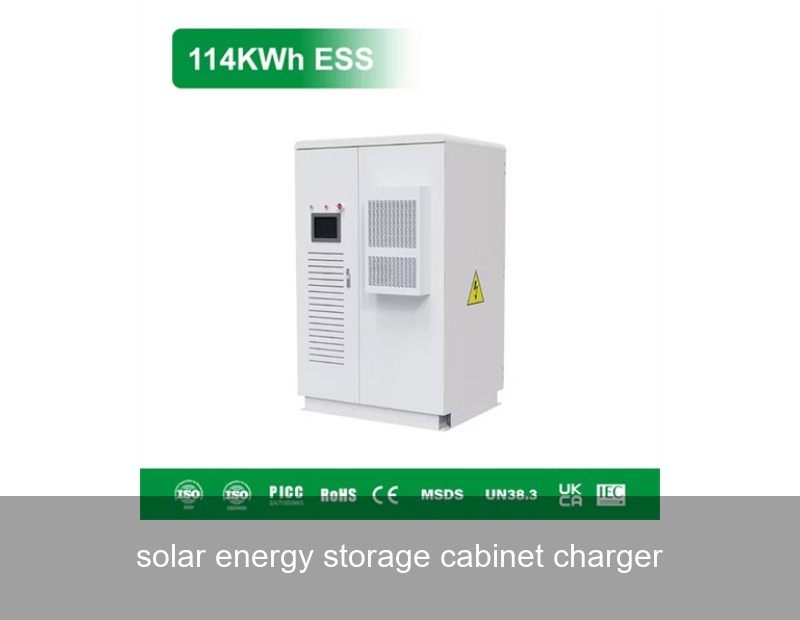
Let's break down the name. A solar energy storage cabinet charger isn't just one device; it's an integrated system, often housed in a sleek, durable cabinet. Think of it as the brain and battery bank of your solar array. Its primary functions are threefold: to store the DC electricity generated by your solar panels, to condition that power (via an inverter/charger) into usable AC electricity for your home, and to manage the entire flow of energy intelligently. This all-in-one approach contrasts with piecemeal setups, offering superior safety, efficiency, and ease of monitoring.

Companies like Highjoule have pioneered the development of these integrated systems. Since 2005, Highjoule has been at the forefront, designing smart, efficient, and sustainable power solutions. Their cabinet-based systems, such as the Highjoule H-Series Commercial Stack and the Residential PowerHub, exemplify this integrated philosophy. They combine high-density lithium-ion battery modules, advanced hybrid inverters, and proprietary energy management software into a single, UL-certified cabinet, simplifying installation and providing peace of mind.
The Problem: Solar Energy's Intermittency and the "Duck Curve"
The phenomenon is clear: solar panels produce the most energy in the middle of the day, precisely when many households are empty. Conversely, energy demand peaks in the early evening when the sun is setting. This mismatch creates a challenge known as the "duck curve" for grid operators, a graph of net load that dips during the day and spikes sharply in the evening.
The data is telling. According to the U.S. Department of Energy, high solar penetration without storage can lead to grid congestion and curtailment of renewable energy—essentially wasting clean power. For the individual, this means exporting excess solar energy to the grid at low, wholesale rates, only to buy it back at night at much higher retail prices.
The Solution: Integrated Storage & Smart Management
This is where your solar energy storage cabinet charger becomes a game-changer. It solves the intermittency problem by capturing the midday surplus. The system's intelligent controller makes real-time decisions: power your home directly, charge the battery bank, or, if both are satisfied, export to the grid. During peak hours or a grid outage, it seamlessly switches to battery power.
The benefits are substantial:
- Maximized Self-Consumption: Increase the portion of your own solar energy you use from 30-50% to 70% or more.
- Peak Shaving: Avoid drawing expensive grid power during peak tariff periods.
- Backup Power: Provide critical electricity during outages, keeping lights and refrigerators on.
- Grid Support: Advanced systems can participate in grid services programs, generating revenue.
Key Components of a Modern System
Understanding the parts helps you appreciate the whole. A top-tier cabinet system integrates:
| Component | Function | Highjoule Example |
|---|---|---|
| Battery Modules | The energy reservoir. Typically lithium-ion (LFP chemistry is now the safety & longevity leader). | Highjoule's LFP cells, with a 10+ year warranty and >6000 cycle life at 80% depth of discharge. |
| Hybrid Inverter/Charger | The heart. Converts DC from panels/battery to AC for home. Also charges battery from AC or solar. | Integrated multi-mode inverter with >97% efficiency and seamless transition to backup mode. |
| Battery Management System (BMS) | The brain. Monitors cell voltage, temperature, and state of charge for safety and longevity. | Highjoule's AI-powered BMS with predictive analytics and cell-level balancing. |
| Energy Management System (EMS) | The strategist. Software that optimizes energy flow based on weather, tariffs, and usage patterns. | Highjoule EnergyOS™, accessible via a user-friendly app for real-time control and scheduling. |
| Enclosure (Cabinet) | The body. A secure, thermally managed, and aesthetically designed housing for all components. | IP54-rated, wall-mounted or floor-standing cabinet with integrated cooling and safety disconnects. |
A Real-World Case Study: Resilience in California, USA
Let's look at a concrete example. A medium-sized winery in Napa Valley, California, faced two major challenges: frequent Public Safety Power Shutoffs (PSPS) to prevent wildfires, and extremely high demand charges from their utility. Their operations, including refrigeration and irrigation, were at risk.
The Solution: They installed a 250 kWh Highjoule H-Series Commercial Stack system, integrated with their existing 150 kW solar array. The cabinet-based system was chosen for its scalability and robust thermal management, crucial for the valley's hot summers.
- Energy Independence: The system now provides 8-10 hours of full backup power for critical loads, ensuring fermentation tanks remain stable during outages.
- Cost Savings: By discharging stored solar energy during the 4 PM to 9 PM peak window, they reduced their demand charges by 40% in the first year.
- ROI: Projected payback period was calculated at just under 6 years, factoring in state incentives (SGIP) and ongoing savings.

This case highlights how a solar energy storage cabinet charger isn't just an expense; it's a strategic investment in business continuity and financial predictability.
Choosing the Right System for Your Needs
Selecting a system requires careful consideration. Ask yourself and potential providers these questions:
- Capacity & Power: What is your daily energy consumption, and what are your critical loads during an outage? (Size your battery in kWh for capacity, kW for power).
- Chemistry & Warranty: Does the system use safe, long-life LFP chemistry? What is the warranted capacity after 10 years?
- Integration: Can it work with both new and existing solar arrays? Is the inverter hybrid-ready?
- Intelligence: How smart is the software? Can it adapt to time-of-use rates and weather forecasts?
- Scalability: Can you easily add more battery cabinets in the future if your needs grow?
Highjoule's approach is to provide modular, scalable solutions that can start with a residential PowerHub (starting at 10 kWh) and scale to multi-megawatt-hour industrial microgrids, all managed by the same intelligent software platform.
Future Trends and Your Next Steps
The landscape is evolving rapidly. We're moving towards vehicle-to-home (V2H) integration, where your EV battery can act as a backup for your home. AI-driven energy forecasting is becoming standard, and virtual power plant (VPP) participation is turning distributed home systems into a collective grid asset. Your solar energy storage cabinet is the foundational platform that will enable these future capabilities.

The technology is proven, the economics are improving, and the need for resilience is clearer than ever. So, the most important question isn't whether you need a solar energy storage system, but how will you design your system to not only save money today but also adapt to the energy landscape of tomorrow? We invite you to assess your energy profile and explore how an integrated cabinet solution can be tailored for your home or business.
 Inquiry
 Online Chat