


How Much Intelli Energie Do You Really Need? A Guide to Smart Power Management
Have you ever looked at your energy bill and wondered, "Where is all this power going?" Or perhaps you're considering a solar installation and are puzzled by the term 'intelligent energy' or 'Intelli Energie' systems everyone is talking about. You're not alone. The transition to renewable energy isn't just about generating power; it's about managing it intelligently. But the core question remains: how much Intelli Energie capacity is right for your home or business? This isn't just a matter of kilowatt-hours; it's about optimizing your entire energy ecosystem for efficiency, resilience, and cost savings. Let's break it down.
Table of Contents
The Phenomenon: From Dumb Consumption to Smart Energy
For decades, our relationship with electricity was simple: consume what you need from the grid and pay the bill. The rise of solar panels introduced a new variable—self-generation—but often without sophisticated management. Excess energy was sold back, and deficits were bought, a process that is becoming less economical as feed-in tariffs decline, particularly in markets like Germany and California.
This is where Intelli Energie comes in. It represents the shift from passive consumption to active, predictive management. An Intelli Energie system doesn't just store solar power in a battery; it learns your usage patterns, forecasts weather and generation, automatically shifts loads to off-peak times, and can even form part of a community-based virtual power plant (VPP). The goal is maximized self-consumption, minimized grid dependency, and optimized cost.

Image: A modern energy-independent home requires intelligent management, not just generation.
The Data: Why Size and Intelligence Matter
Getting the capacity wrong can be costly. An undersized system leaves you reliant on the expensive grid, while an oversized system represents a poor return on investment. The key metrics are:
- Daily Energy Consumption (kWh): Your baseline. The average U.S. home uses about 30 kWh per day (U.S. EIA), while a German household might use closer to 10-12 kWh.
- Peak Power Demand (kW): The maximum power you draw at any moment (e.g., when running an AC, oven, and EV charger simultaneously). This determines the power rating of your inverter.
- Solar Generation Profile: How much energy your rooftop produces and when.
- Backup Requirements: Which critical loads (refrigerator, lights, medical equipment) do you need during a grid outage, and for how long?
An intelligent system dynamically balances these factors. For instance, it might decide to charge the battery from the grid during a super off-peak rate at 2 AM, use solar to power the home and charge an EV during the day, and then discharge the battery to cover the evening peak, all while reserving 30% capacity for a potential outage.
A Real-World Case: The Berlin Bakery
Consider a mid-sized artisan bakery in Berlin. Their challenge: high energy costs from industrial ovens and refrigeration, combined with a desire to go green.
- Phenomenon: Spiking demand charges and volatile energy prices.
- Data: Daily consumption: 250 kWh. Peak demand: 80 kW. Roof space allowed for a 50 kWp solar array.
- Solution: A tailored Intelli Energie system was installed, featuring a 120 kWh battery storage unit and an advanced energy management system (EMS). The EMS was programmed with the bakery's production schedule.
- Outcome: The system pre-charges batteries using night-time wind power (when German grid renewables are high), uses solar during the day, and strategically discharges to "shave" peak demand when ovens fire up. Results: 70% reduction in grid consumption during peak hours, 40% lower overall energy costs, and full backup for cold storage. This level of optimization is what defines true Intelli Energie.
Calculating Your Intelli Energie Needs: A Practical Framework
So, how do you translate this to your situation? Follow this logic ladder:
| Step | Question to Ask | Action/Data Point |
|---|---|---|
| 1. Analyze | What is my current energy footprint? | Review 12 months of utility bills. Note total kWh usage and highest kW demand. |
| 2. Audit | What are my major loads and when do they run? | List high-power appliances (HVAC, EV, pool pump, machinery) and their schedule. |
| 3. Objective | What are my primary goals? (Bill savings, backup, sustainability?) | Prioritize. Backup needs directly dictate battery capacity (kWh). |
| 4. Generation | How much solar/wind can I generate? | Consult a solar installer for a site assessment and production estimate. |
| 5. Integrate | How will all components communicate? | This is the "Intelli" part. Ensure your chosen system has a smart EMS that can integrate and automate. |
A rule of thumb for residential backup: A 10-15 kWh battery can cover essential loads for a day. For full self-sufficiency, you often need to size your battery to cover consumption from evening until solar generation picks up the next day, typically 15-30 kWh for an efficient home.
How Highjoule Delivers Intelli Energie Solutions
This is where expertise matters. Since 2005, Highjoule has been at the forefront of designing and deploying intelligent energy systems. We don't just sell batteries; we provide integrated Intelli Energie Ecosystems. Our approach ensures the question of "how much" is answered with precision.
Our flagship product, the Highjoule Nexus Platform, is the brain of the operation. It combines high-density lithium-ion battery storage with a proprietary AI-driven energy management system. For our residential clients, the Highjoule Home Hub offers scalable storage from 10 to 30 kWh, seamlessly integrating with existing solar and providing whole-home or critical-load backup. For commercial and industrial applications like the Berlin bakery, our Highjoule C&I Series offers modular storage solutions from 100 kWh to multi-megawatt-hour scale, with advanced software for demand charge management and grid services participation.

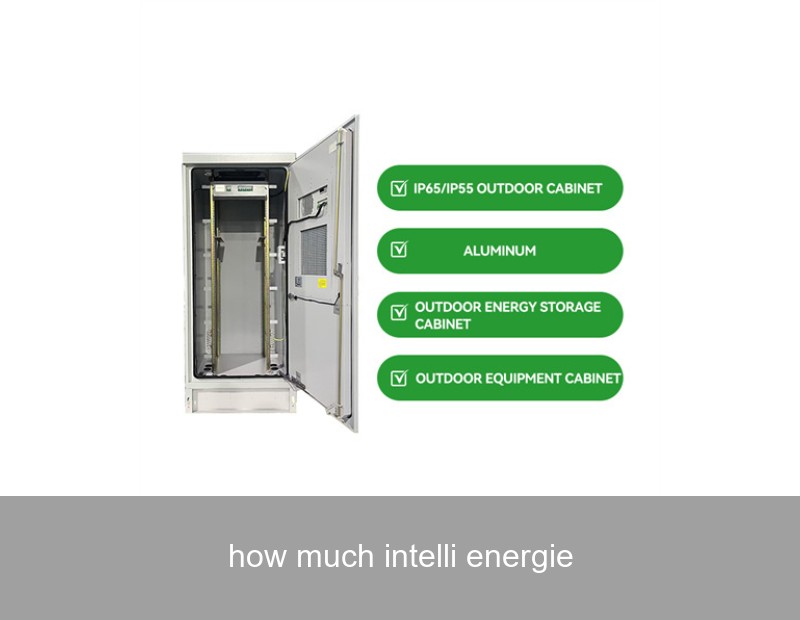
Image: Commercial-scale Intelli Energie systems require robust hardware and sophisticated software, like Highjoule's Nexus Platform.
Our process involves deep energy analytics, custom system design, and ongoing performance optimization. We ensure your system is sized correctly for today and adaptable for tomorrow—whether that's adding an EV charger, heat pump, or expanding your business.
The Future of Intelligent Power: Beyond the Battery
The evolution of Intelli Energie is moving towards full ecosystem integration. Imagine your system not only managing your home's power but also:
- Automatically bidding your stored energy into a local flexibility market to earn revenue.
- Coordinating with your EV to use it as a bidirectional storage asset (Vehicle-to-Home or V2H).
- Responding in real-time to grid carbon intensity signals, optimizing for the greenest possible consumption.
These aren't futuristic dreams; they are active developments in the U.S. and European markets. The next generation of Intelli Energie will be about becoming an active, beneficial node in a decentralized and resilient grid.
Ready to Define Your Intelli Energie Needs?
The journey to intelligent energy management starts with a conversation about your specific patterns, goals, and challenges. It's about finding the sweet spot where technology meets practicality to deliver real value. What would you prioritize first: slashing your peak demand charges, ensuring resilience against increasing grid outages, or maximizing your use of rooftop solar?
 Inquiry
 Online Chat