


How Much Does It Cost to Operate a Solar System? The Complete Guide for Homeowners and Businesses
You've made the smart decision to invest in solar panels. The sun is shining, your system is generating clean energy, and you're feeling good about your environmental impact and lower electricity bills. But a common question arises after installation: how much does it really cost to operate a solar system year after year? Unlike traditional grid power, the operational costs are unique. This guide breaks down the true, ongoing "operating" expenses of a solar photovoltaic (PV) system, helping you maximize your return on investment for the next 25+ years.
Table of Contents
- The Myth of "Zero-Cost" Solar Operation
- Breaking Down Operational Costs
- The Game Changer: Adding Energy Storage
- Real-World Case Study: A German Bakery
- Strategies to Reduce Your Operational Costs
- Future-Proof Your Solar Investment
The Myth of "Zero-Cost" Solar Operation
Let's clear the air first. Once installed, sunlight is free. However, operating a solar system to deliver optimal, reliable, and safe power over its 25-30 year lifespan is not cost-free. Think of it like a car: after purchase, you still budget for insurance, occasional maintenance, and cleaning. Your solar array is similar. The key is that these costs are typically very low compared to the value of electricity produced, but understanding them is crucial for accurate financial planning.
Breaking Down Operational Costs: From Inverters to Insurance
To understand how much it costs to operate a solar system, we need to look at the main components that incur ongoing expenses. Here’s a detailed breakdown.
1. System Monitoring & Software Subscriptions
Modern solar systems are intelligent. They come with monitoring platforms that show you real-time production, consumption, and system health. While basic monitoring is often included, advanced features like detailed energy analytics, fault alerts, or integration with home automation systems may require a monthly or annual software subscription. This is a key operational cost for maximizing self-consumption and identifying issues early.
2. Preventive Maintenance & Cleaning
Solar panels are famously low-maintenance, but they aren't no-maintenance.
- Cleaning: Dust, pollen, bird droppings, and pollution can reduce efficiency by 5-25% depending on your location (NREL Study, 2021). Professional cleaning services, especially for large commercial rooftops, are an operational expense. Many homeowners opt for DIY cleaning.
- Inspections: An annual professional inspection can identify loose connections, mounting issues, or inverter warnings before they lead to significant production loss.
3. Inverter Replacement
This is often the single largest anticipated operational cost. While solar panels can last 30+ years, string inverters typically have a lifespan of 10-15 years. Replacing a central inverter is a significant expense. This is where technological choices matter. Microinverters or advanced string inverters with longer warranties can mitigate this future cost.

Image Source: Unsplash - A modern inverter is the heart of your solar system's operation.
4. Insurance and Administrative Costs
Adding your solar system to your homeowner's or business insurance policy will likely increase your premium, though often only slightly. For businesses, there may be administrative costs related to renewable energy certificates (RECs) or reporting. Additionally, some utilities charge a small monthly fee for grid connection and net metering administration, even if your net bill is zero.
| Cost Category | Low Estimate (USD/€) | High Estimate (USD/€) | Notes |
|---|---|---|---|
| Monitoring Software | $0 | $150 | Basic often free; premium tiers cost more. |
| Cleaning & Inspection | $0 (DIY) | $500 | Depends on system size, roof accessibility. |
| Inverter Replacement Fund* | $100 | $300 | *Setting aside yearly for future replacement. |
| Insurance Increase | $50 | $200 | Varies greatly by region and policy. |
| Total Annual Range | $150 | $1,150 | Typically 1-3% of initial system cost. |
The Game Changer: How Energy Storage Affects Operational Costs
Adding a battery energy storage system (BESS) changes the solar system operation equation. It increases your energy independence and resilience but introduces a new component with its own lifecycle. The good news? Advanced systems are designed to minimize this operational burden.
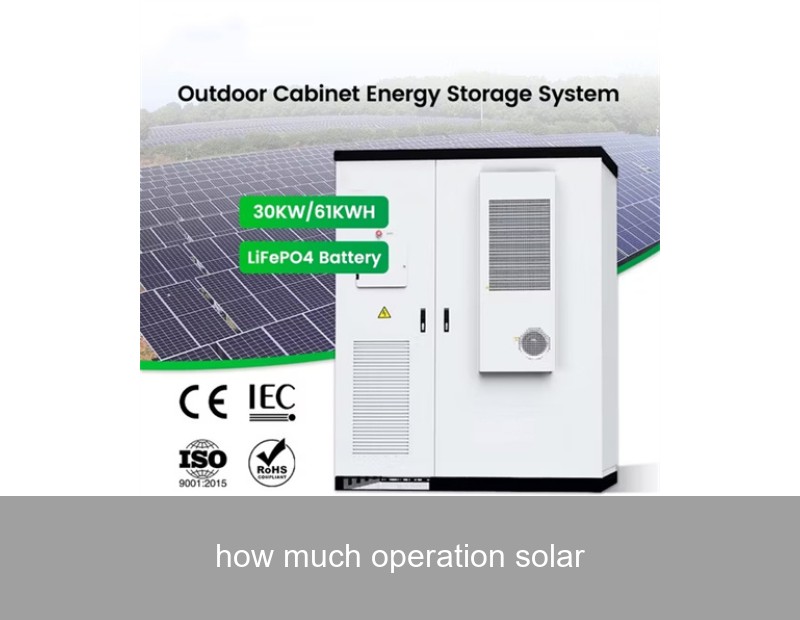
This is where a provider like Highjoule adds immense value. Highjoule's integrated solar-plus-storage solutions are built with operational efficiency in mind. Our HPS Series residential and HES Series commercial battery systems use sophisticated lithium iron phosphate (LFP) chemistry, known for its long cycle life and inherent safety, reducing long-term degradation concerns. More importantly, our EnergyOS™ platform intelligently manages the entire system—solar production, battery charging/discharging, and home consumption—automatically. This AI-driven software maximizes self-consumption, reduces grid reliance, and proactively monitors system health, effectively streamlining operations and keeping those hidden costs in check. You're not just buying hardware; you're investing in a seamless, low-touch energy ecosystem.
Real-World Case Study: A German Bakery's Operational Savings
Let's look at concrete data. A family-run bakery in Bavaria, Germany, installed a 50 kW rooftop solar system in 2018. By 2021, they were consuming 70% of their solar generation on-site, but the 30% exported to the grid at a low feed-in tariff. Their daytime operation didn't perfectly match solar peaks, and they faced high evening energy costs.
Phenomenon: High grid electricity prices and misalignment between solar production and consumption patterns.
Data: Pre-storage, annual electricity bill: €18,500. Solar provided 65% of total usage.
Action: In 2022, they integrated a Highjoule HES-50 commercial storage system (50 kWh capacity) with EnergyOS™.
Result: The system optimized their energy flow. It stored excess midday solar power and discharged it during the evening baking and heating cycles. Their grid consumption dropped by an additional 40%. Their first-year operational data showed:
- Self-consumption of solar power increased from 70% to over 95%.
- Annual electricity bill reduced to €9,200, a savings of €9,300.
- The simple payback period for the added storage system was under 5 years.
- Operational costs for the combined system (monitoring, insurance) were estimated at €800/year, far outweighed by savings.
This case, documented in a Fraunhofer ISE report on PV trends, illustrates that while adding storage increases capital expenditure, intelligent operation can dramatically reduce ongoing grid energy costs, creating a strong net positive financial outcome.
Strategies to Reduce Your Operational Costs
How can you actively manage and minimize the cost to operate your solar system?
1. Choose High-Quality, Long-Warranty Components
Invest in tier-1 panels with 25+ year power output warranties and inverters with at least 10-15 year warranties. Consider extended warranties. Highjoule, for instance, offers industry-leading warranties on its battery systems, backed by robust performance guarantees, directly protecting your long-term operational budget.
2. Opt for an Integrated Smart Energy System
A disjointed system (panels from brand A, inverter from B, storage from C) often leads to higher operational complexity and software costs. An integrated solution from a single provider, like Highjoule's full-stack offerings, ensures seamless communication, unified monitoring, and simpler, more cost-effective maintenance.
3. Leverage Intelligent Energy Management
Use smart software to automate energy use. Schedule high-load appliances (EV charging, pool pumps) to run during peak solar production. An advanced system like EnergyOS™ can do this automatically, squeezing every possible kilowatt-hour from your solar production and storage.

Image Source: Unsplash - Smart monitoring is key to optimizing operational efficiency.
Future-Proof Your Solar Investment
The energy landscape is shifting. Time-of-use rates, demand charges for businesses, and less favorable net metering policies are becoming common. When evaluating how much it will cost to operate a solar system over its lifetime, you must factor in these external grid changes. A system that is "operationally smart" today will protect you from these future financial risks.
A static solar-only installation might see its financial returns erode as grid policies change. In contrast, a flexible, storage-ready, or storage-inclusive system with intelligent software can adapt its operational strategy—prioritizing self-consumption, providing backup power, or even participating in grid services programs—to maintain and even improve its economic value over time.
So, the ultimate question isn't just about today's minimal operational costs. It's about designing a system whose operational intelligence ensures maximum savings and resilience for decades. Is your current or planned solar system equipped to adapt and thrive in the future energy market, or will its operational limitations become a cost center?
 Inquiry
 Online Chat