


How Much Does a Salient Battery Cost? Unpacking the Value of Zinc-Based Storage
If you're exploring the future of energy storage, you've likely heard the buzz around lithium-ion alternatives. Among the most promising is salient energy technology, specifically zinc-bromine flow batteries. As a project manager, homeowner, or sustainability officer, your immediate question is practical: "How much does a Salient battery system actually cost, and what am I really getting for my investment?" This isn't just a question about kilowatt-hours. It's about total cost of ownership, safety, and long-term reliability. Let's move beyond the hype and dive into the real numbers and considerations that define the value of this innovative technology.
What is Salient Energy? (And Why It's More Than Just Zinc)
First, a quick primer. When professionals ask about "Salient batteries," they're often referring to a specific type of flow battery that uses zinc and bromide salts dissolved in water as its electrolyte. Unlike solid lithium-ion batteries, the energy is stored in liquid tanks. This fundamental difference drives unique advantages: exceptional cycle life with minimal degradation, inherent non-flammability, and the ability to scale energy capacity independently from power. For long-duration storage (think 4+ hours), critical backup, or applications where safety is paramount, salient technology presents a compelling case. It’s not about replacing lithium-ion for your electric vehicle, but about providing a more sustainable and stable backbone for stationary storage.
The Core Question: How Much Does a Salient Battery System Cost?
Let's address the headline figure. Providing a single number like "$500 per kWh" would be misleading. The total installed cost of a salient energy battery system is a composite of several factors and typically ranges between $400 and $800 per usable kilowatt-hour (kWh) for a fully integrated, commercial-scale system. Why the wide range? A 50 kWh residential system will have a higher per-kWh cost than a 2 MWh industrial installation due to economies of scale. More importantly, the system's duration—how many hours of storage it provides—dramatically impacts the total price. A "10 kW / 40 kWh" system (4-hour duration) and a "10 kW / 100 kWh" system (10-hour duration) share similar power conversion costs, but the latter's larger electrolyte tanks increase the energy capacity cost.

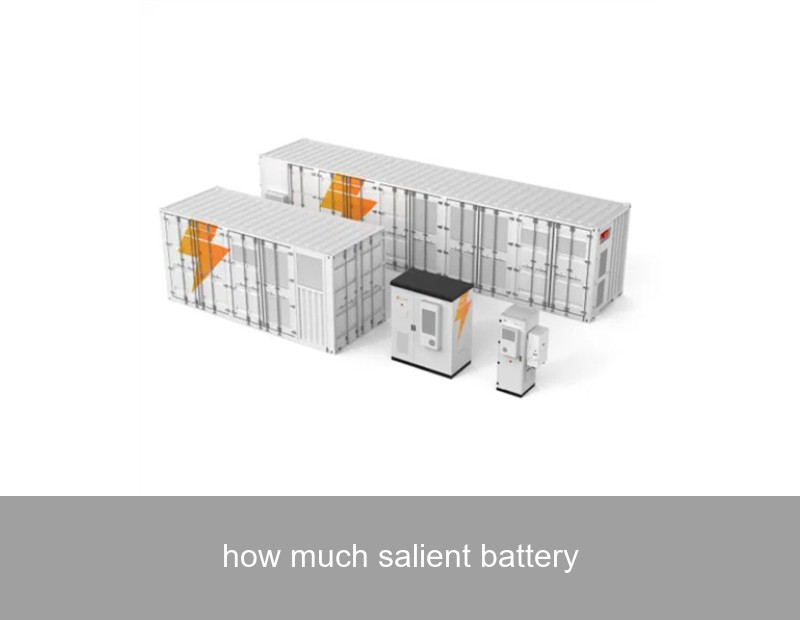
Image: A modern battery storage installation. Systems like zinc-bromine flow batteries require careful integration. (Photo by American Public Power Association on Unsplash)
Breaking Down the "How Much": A Multi-Layered View
To understand the investment, consider these core components:
- Stack & Power Module: The heart that converts chemical energy to electricity. This defines your system's power (kW).
- Electrolyte & Tanks: The "fuel" and its storage. This defines your system's energy capacity (kWh). Scaling duration often means just adding more electrolyte.
- Power Conversion System (PCS): The inverter that manages AC/DC conversion and grid connection.
- Balance of Plant (BOP): Piping, pumps, containment, climate control, and the all-important energy management system (EMS).
- Installation & Integration: Civil works, electrical interconnection, and commissioning.
A holistic provider like Highjoule simplifies this complexity. We don't just sell battery cells; we deliver turnkey, intelligent storage solutions. Our HPS Series for commercial & industrial applications integrates the battery, advanced thermal management, and our proprietary Adaptive Grid OS into a single, optimized package. This integrated approach controls costs, ensures performance, and provides a single point of accountability, which is a critical part of the value equation often missing from a simple per-kWh quote.
| Cost Factor | Impact on Salient/Zinc-Bromine Battery | Consideration for Total Budget |
|---|---|---|
| System Size & Duration | High impact. Longer duration increases cost primarily through electrolyte volume. | Precisely analyze your load profile. Do you need 2, 6, or 10+ hours of storage? |
| Site-Specific Requirements | Medium to High impact. Indoor vs. outdoor installation, seismic ratings, ambient temperature. | An integrated solution provider can handle these variables efficiently. |
| Grid Interconnection & Permitting | Variable impact. Can be significant based on local utility rules and jurisdiction. | Factor in soft costs. Experienced partners have streamlined this process. |
| Long-Term Maintenance | Lower than lithium for long-duration. Electrolyte lasts decades; stack may need refurbishment after 10,000+ cycles. | Focus on Levelized Cost of Storage (LCOS), not just upfront capital cost. |
Beyond the Price Tag: The Value Proposition of Salient Technology
So, why consider a salient battery if the upfront $/kAh might be comparable to or higher than some lithium-ion? The answer lies in total cost of ownership and risk mitigation.
- 25+ Year Lifespan: Zinc-bromine flow batteries can offer over 10,000 deep cycles with negligible capacity fade. You're not planning a replacement in 10 years.
- Zero Fire Risk: The water-based electrolyte is non-flammable. This drastically reduces insurance premiums (a key operational cost) and opens up siting options closer to critical assets or in dense urban areas. For example, a NFPA report highlights the importance of fire safety codes for energy storage, a area where salient technology excels.
- Sustainable & Recyclable: Zinc is abundant, easily recycled, and avoids conflict minerals. This aligns with corporate ESG goals and future-proofs your investment against supply chain volatility.
A Real-World Case: Salient Batteries in a Californian Microgrid
Let's ground this in data. A 2023 microgrid project at a winery in Napa Valley, California, provides a perfect case study. The goal: achieve energy independence, manage peak demand charges, and ensure uninterrupted operation during Public Safety Power Shutoffs (PSPS).
The system integrated 250 kW of solar PV with a 250 kW / 1,000 kWh (4-hour) zinc-bromine flow battery. The salient battery's ability to discharge fully for 4+ hours daily without degradation was critical. In its first year, the system:
- Reduced the facility's peak demand charges by over 40%.
- Provided 12 full off-grid backup events during grid outages, with the longest lasting 11 hours.
- Achieved a calculated Levelized Cost of Storage (LCOS) of $0.19/kWh over the projected 25-year life, competitive with lithium when full lifecycle and safety mitigations are factored in.
The winery's management noted that the non-flammable nature of the battery was a decisive factor, allowing installation close to the production facility without requiring expensive fire suppression upgrades.
How Highjoule Integrates Next-Gen Tech Like Salient Into Reliable Systems
At Highjoule, we view storage chemistry as a tool in a broader toolkit. Our expertise lies in matching the right technology to the application. For long-duration, high-cycle, safety-first projects, we actively develop and integrate salient/zinc-bromine solutions into our platform. Our Adaptive Grid OS is chemistry-agnostic, meaning it can optimally manage the unique charge/discharge profiles and maintenance needs of a flow battery just as well as it manages lithium-ion or other technologies.
For a commercial client asking "how much," we provide a transparent analysis comparing not just upfront cost, but 25-year financial and operational projections. We handle the entire process—from feasibility and design, leveraging tools like those from the National Renewable Energy Laboratory (NREL), to installation, grid interconnection, and ongoing performance optimization. Our service ensures the technology delivers on its promised value, making the answer to "how much" a story about long-term savings and resilience, not just an invoice total.

Image: Renewable energy and storage at an agricultural site, similar to the Napa Valley microgrid case study. (Photo by Thomas Richter on Unsplash)
Making the Decision: Is a Salient Battery Right for Your Project?
Ask yourself these questions:
- Is my primary need long-duration storage (4+ hours) for daily cycling, like demand charge management or solar time-shifting?
- Is absolute safety and non-flammability a top priority due to site location, insurance costs, or regulatory environment?
- Am I planning for a 20+ year asset and want to minimize replacement cycles and long-term operational risks?
We invite you to share your specific project parameters—your peak load, daily energy profile, and resilience goals. What unique challenge on your site makes the safety and longevity of a technology like zinc-bromine flow batteries particularly attractive?
 Inquiry
 Online Chat