


How Much Electricity Does a Solar Panel Produce? Understanding kW Output and Real-World Energy
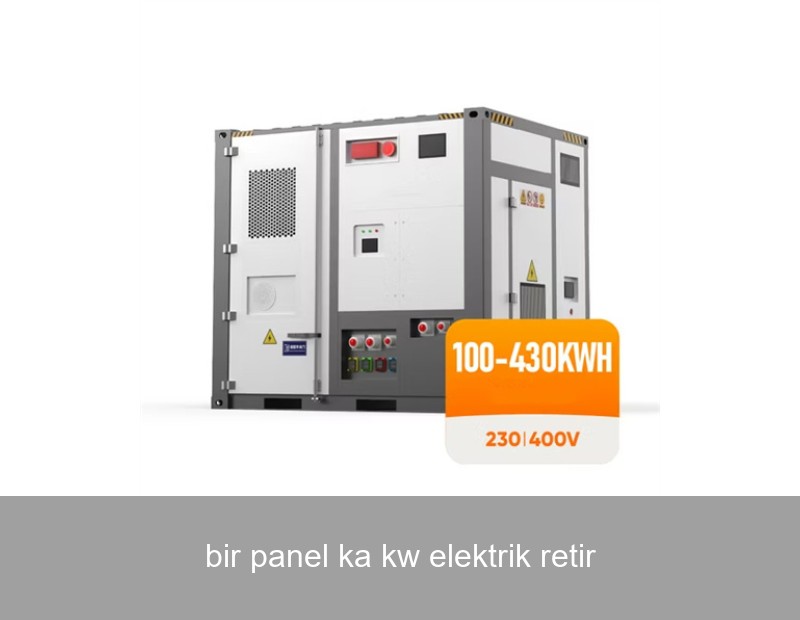
If you're considering solar power for your home or business, one of the most fundamental questions you likely have is: bir panel kaç kw elektrik üretir – or, how many kilowatts of electricity does one panel produce? The answer isn't a single number, but a fascinating exploration of technology, environment, and smart energy management. Understanding panel output is the first step toward unlocking true energy independence, which is where advanced energy storage systems become the game-changer. Let's demystify the numbers and see how maximizing your solar investment is about more than just the panels on your roof.
Table of Contents
- The Basics: From Nameplate kW to Real-World kWh
- Key Factors That Determine Your Panel's Actual Output
- Thinking Beyond the Panel: The Critical Role of Energy Storage
- Highjoule Solutions: Integrating Smart Storage with Solar Production
- Optimizing Your System for Maximum Return
The Basics: From Nameplate kW to Real-World kWh
First, let's clarify a crucial distinction: power (kW) vs. energy (kWh). A solar panel's rated capacity, like 400W or 550W, is its potential power output under ideal laboratory conditions (known as Standard Test Conditions or STC). This is its peak kilowatt (kW) rating.
But what you pay for on your electricity bill is kilowatt-hours (kWh) – the energy consumed over time. So, the better question is: How many kWh will one panel produce per day, month, or year?
Here's a simplified calculation for a 450W panel:
- Peak Power: 450W = 0.45 kW
- Peak Sun Hours: (This varies massively by location. Southern Europe might average 4.5, while Northern Germany gets around 2.8). Let's use 4 hours as an example.
- Daily Energy Production: 0.45 kW x 4 hours = 1.8 kWh per day.
- Annual Energy Production: 1.8 kWh/day x 365 days = ~657 kWh per year.
As you can see, a single modern panel can generate a meaningful amount of electricity. A typical residential installation of 20 panels could therefore produce around 13,140 kWh annually—potentially covering a significant portion of a family's energy needs. But this is just the starting point.
Key Factors That Determine Your Panel's Actual Output
Why doesn't every 450W panel produce exactly 1.8 kWh daily? Because real-world conditions are rarely "standard." Here are the major variables:
- Geographic Location & Solar Irradiance: This is the biggest factor. The same panel will produce vastly more energy in Arizona, USA, than in Scotland, UK. Panel Orientation and Tilt: South-facing (in the Northern Hemisphere) at an optimal angle captures the most sun.
- Shading and Soiling: Even partial shading from a chimney or tree can drastically reduce output. Dust and dirt also have an impact.
- Temperature: Counterintuitively, solar panels become less efficient in extreme heat. Their performance is rated at 25°C (77°F).
- Panel Degradation: High-quality panels degrade slowly, typically losing around 0.5% of their output per year.

Image Source: Unsplash. A well-installed residential solar array.
To get a precise estimate for your location, tools like the European Commission's PVGIS or the NREL PVWatts Calculator are invaluable authoritative resources. They use decades of weather data to model your system's production.
Real-World Case Study: A German Household's Solar Journey
Let's look at concrete data from a project in Hamburg, Germany. A family installed a 10.8 kWp system (24 x 450W panels) on their south-east/west-facing roof in 2022.
- Calculated Initial Annual Production: ~9,500 kWh (using PVGIS).
- First-Year Actual Production: 10,112 kWh (exceeding estimates!).
- Household Annual Consumption: Approximately 11,000 kWh.
The Phenomenon & The Problem: The system generated over 90% of their annual needs. However, production peaked at midday, while consumption spiked in the mornings and evenings. On sunny days, they were exporting over 60% of their solar energy to the grid at low feed-in tariffs. On cloudy days and at night, they were buying expensive electricity from the utility.
The Data: Their self-consumption rate—the solar energy used directly in the home—was only about 35% without storage. This is a common pattern that limits both energy independence and financial return.
| Metric | Without Storage | With Storage Added (2023) |
|---|---|---|
| Solar Self-Consumption Rate | ~35% | ~85% |
| Grid Electricity Purchased | ~7,150 kWh/year | ~1,650 kWh/year |
| Grid Dependence During Evening | 100% | < 20% |
This case clearly shows that asking "bir panel kaç kw elektrik üretir" is only half the story. The real question becomes: How much of that precious, self-generated electricity can I actually use?
Thinking Beyond the Panel: The Critical Role of Energy Storage
This is where the modern energy ecosystem evolves. Solar panels are the generators, but a battery energy storage system (BESS) is the heart of true energy resilience. It time-shifts your solar production, storing excess daytime energy for use when you need it most.
For our German family, adding a 13.5 kWh storage system was transformative. It increased their self-consumption to 85%, drastically cut grid purchases, and provided backup power during brief outages. Their system's value skyrocketed, not just its output.
Highjoule Solutions: Integrating Smart Storage with Solar Production
At Highjoule, we've been at the forefront of this integration since 2005. We understand that the perfect solar investment isn't just about maximizing panel kW, but about optimizing your entire energy flow. Our smart storage solutions are designed to capture every kilowatt-hour your panels produce and deliver it precisely when needed.
For residential and commercial clients across Europe and the US, our product suite answers the real challenge behind the initial solar panel question:
- Highjoule HEM Series (Home Energy Manager): A scalable lithium-ion phosphate (LFP) battery system that seamlessly integrates with new or existing solar arrays. Its adaptive learning software predicts consumption patterns and weather to optimize charge/discharge cycles, ensuring you get the most out of your panels.
- Highjoule CEM Series (Commercial Energy Manager): For businesses and industrial applications, these larger-scale systems manage demand charges, provide uninterrupted power for critical operations, and enable participation in grid services, turning a solar investment into a revenue stream.
- Highjoule Microgrid Controllers: For campuses or remote locations, our technology can island from the main grid, running entirely on solar and storage for extended periods.

Image Source: Unsplash. A sleek home battery storage installation.
By pairing Highjoule's intelligent storage with your solar panels, you're not just generating electricity; you're building a personal, efficient, and resilient energy ecosystem.
Optimizing Your System for Maximum Return
So, how do you apply this knowledge? When planning your system:
- Size Your Solar Array Correctly: Use tools to estimate production, but also analyze your hourly consumption. Oversizing without storage often leads to wasted energy.
- Prioritize Self-Consumption from Day One: Factor in storage from the initial design phase. The economics are increasingly favorable, especially with volatile energy prices.
- Choose a System with Smart Energy Management: Look for storage that offers sophisticated software, like Highjoule's platforms, which can adapt to time-of-use rates and even grid signals.
- Think Long-Term: Consider future needs like electric vehicle charging, which can be seamlessly integrated into a solar-plus-storage managed system.
The journey from wondering about a single panel's output to achieving energy independence is an exciting one. It's a shift from being a passive consumer to an active prosumer.
Now that you know the layers behind "bir panel kaç kw elektrik üretir", what's the first step you'll take to not just generate, but truly own your clean power?
 Inquiry
 Online Chat