


How Much Solar Can Your City Rooftop Really Generate? A Data-Driven Guide
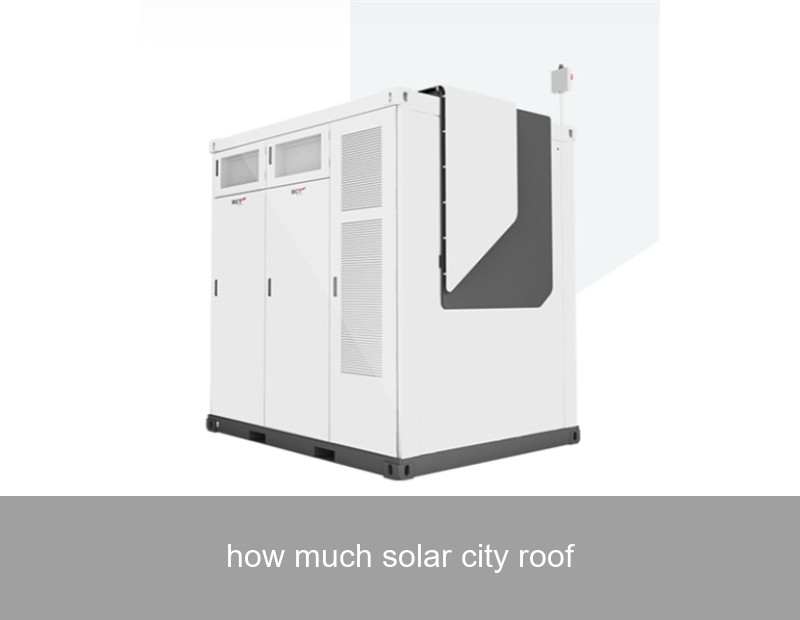
Look up at the rooftops in your neighborhood. How many are bare, soaking up sun that could be powering homes and businesses? If you're wondering, "how much solar can my city roof actually produce?" you're asking the right question. The potential is staggering, but the exact answer depends on a fascinating interplay of location, technology, and smart energy management. As a global leader in advanced energy storage, Highjoule has been helping commercial, industrial, and residential clients since 2005 to not just generate solar power, but to maximize its use efficiently and sustainably.
Table of Contents
The Untapped Potential of City Rooftops
It's more than just a few panels on a house. We're talking about a decentralized energy revolution. Studies, like those from the National Renewable Energy Laboratory (NREL), have consistently shown that rooftop solar PV could meet a significant portion of national electricity demand. In the EU and US, city rooftops—commercial, industrial, and residential—represent a vast, underutilized asset. The phenomenon is clear: energy costs are volatile, grid infrastructure is aging, and the demand for clean, local power is rising. But the leap from potential to reality requires moving beyond simple generation to intelligent energy management.
Credit: Unsplash - The solar potential of urban rooftops is immense.
Key Factors Determining Your Solar Yield
So, "how much" can you expect? Let's break it down. The output of a city rooftop solar system isn't a guess; it's a calculation based on concrete variables.
- Geographic Location (Solar Insolation): A roof in Phoenix will naturally outperform one in Seattle. This is measured in peak sun hours per day.
- Roof Orientation and Tilt: In the Northern Hemisphere, south-facing roofs with a tilt angle roughly equal to the local latitude are ideal.
- Available Roof Area and Shading: Physical space limits system size. Nearby buildings or trees causing shade significantly reduce output.
- Local Regulations and Grid Policies: Net metering rules, permitting processes, and grid interconnection fees vary by city and utility, impacting economics.
- Technology Efficiency: Higher-efficiency monocrystalline panels generate more power per square meter, crucial for space-constrained city roofs.
| City Example | Avg. Peak Sun Hours/Day | Estimated Annual Output for a 10kW System* | Key Consideration for City Dwellers |
|---|---|---|---|
| Los Angeles, USA | 5.5 | 14,000 - 16,000 kWh | High yield, but potential grid congestion during peak sun. |
| Berlin, Germany | 2.8 | 7,000 - 9,000 kWh | Lower insolation makes system design and consumption alignment critical. |
| Manchester, UK | 2.5 | 6,200 - 8,000 kWh | High self-consumption rate needed for best ROI due to lower feed-in tariffs. |
*Output estimates are illustrative and depend on the specific factors listed above.
A Real-World Case: Solar + Storage on a London Retail Park
Let's move from theory to hard data. A major retail park in Greater London faced rising operational costs and wanted to lock in long-term energy price stability and reduce its carbon footprint. The challenge? Their large, flat rooftops were perfect for solar, but their energy consumption peaked in the early evening—long after the sun had peaked.
The solution was a 500 kW rooftop solar array coupled with a Highjoule HVC 500 commercial battery energy storage system (BESS). Here’s what happened:
- Solar Generation: The system generates approximately 450,000 kWh annually, covering about 30% of the site's daytime base load.
- Storage Role: The Highjoule BESS stores excess solar generated midday, then discharges it during the expensive 4-7 pm peak demand period.
- Financial Outcome: By avoiding peak grid charges and increasing self-consumption of solar from ~40% to over 80%, the project achieved a payback period of under 6 years. It also provides the site with backup power resilience.
This case, validated by publicly available UK renewable energy statistics, shows that asking "how much solar" must be followed by "and how will I use every kilowatt-hour?"
Beyond Panels: The Critical Role of Energy Storage
This brings us to the most important insight for modern city solar projects: generation is only half the story. Without storage, a significant portion of your beautifully generated solar power might be exported to the grid at low rates, only for you to buy back expensive power at night. This mismatch is the single biggest barrier to maximizing the value of your rooftop.
An intelligent battery storage system like those from Highjoule transforms your solar array from a passive generator into an active energy asset. It allows you to:
- Maximize Self-Consumption: Use your own solar power day and night.
- Provide Backup Power: Keep critical loads running during grid outages.
- Participate in Grid Services: In some markets, you can earn revenue by helping to stabilize the local grid.

Credit: Unsplash - Intelligent storage is key to unlocking solar's full value.
The Highjoule Solution: Intelligent Storage for Urban Solar
At Highjoule, we design our systems with the urban energy producer in mind. Our HVC Series for Commercial & Industrial and ResiCore Series for residential applications are built on a single principle: seamless integration. They don't just store energy; they intelligently manage it using our proprietary energy management system (EMS).
Our EMS acts as the brain of your solar-plus-storage system. It continuously analyzes weather forecasts, your consumption patterns, and real-time electricity prices (in deregulated markets) to make millisecond decisions on whether to charge, discharge, or hold. This ensures that every kilowatt-hour of your precious rooftop solar is used in the most economically optimal way possible. For microgrid applications, this intelligence is what allows clusters of buildings to operate independently and resiliently.
Your Roof, Your Power Plant: What's Next?
The question "how much solar can my city roof generate?" is the starting point, not the finish line. The true metric of success is: "How much of my energy bill can my rooftop solar system eliminate, and how resilient can it make me?"
With the right combination of high-efficiency PV and an intelligent Highjoule storage system, your rooftop can become a reliable, clean power plant. The technology is proven, the economics are increasingly compelling, and the need for sustainable, local energy has never been greater.
What's the first step? We recommend getting a professional site assessment that models not just solar generation, but 24/7 consumption and the added value of storage. What would it mean for your business or home to have predictable energy costs for the next 20+ years?
 Inquiry
 Online Chat