


How Much Power Does a Server Rack Use? A Guide to Efficiency and Cost
If you're managing a data center or an on-premise server room, one question is constantly on your mind: how much power does a server rack use? It's not just idle curiosity. The answer directly impacts your operational costs, carbon footprint, and infrastructure's reliability. In an era of rising energy prices and increasing sustainability pressures, understanding your server rack power consumption is the first step toward a smarter, more resilient, and cost-effective operation.
Gone are the days when power was an afterthought. Today, the energy draw of your IT hardware is a central planning metric. Let's break down what you need to know, from typical power ranges to the innovative solutions that can turn your energy burden into a strategic advantage.
Key Factors Affecting Server Rack Power Consumption
There's no single number that fits all racks. Power usage can vary wildly based on several key factors:
- Rack Density: This is the primary driver. A rack filled with high-performance computing (HPC) blades or dense storage arrays will consume far more than one with a few network switches.
- Hardware Generation: Newer servers are generally more energy-efficient per compute unit, but higher performance ceilings can lead to greater total power draw if fully utilized.
- Utilization Rate: A server running at 10% CPU load uses significantly less power than one at 90% load, though idle servers still consume a substantial base load.
- Cooling Overhead: This is critical. The power used by the IT equipment itself (the "IT Load") is only part of the story. The energy required to remove the heat—through Computer Room Air Conditioning (CRAC) units or other cooling systems—adds a significant overhead, often 30-50% or more of the IT load.

Credit: Unsplash - A modern server rack's power draw depends heavily on its density and hardware.
The Real Cost of Power and Heat
To understand the true impact, we must look at Power Usage Effectiveness (PUE). A PUE of 1.5 means that for every 1 kW powering your servers, an additional 0.5 kW is used for cooling and other overhead. If your server rack uses 8 kW of IT load, your total facility draw is 12 kW. In regions like Europe, where industrial electricity prices can exceed €0.25/kWh, that 12 kW rack costs over €26,000 annually to run (12 kW * 24 hrs * 365 days * €0.25). The heat generated by this energy consumption isn't just a cost; it's a risk to uptime if cooling fails.
How to Measure Your Rack's Power Draw
Accurate measurement is key. Don't rely on nameplate ratings, which indicate maximum theoretical draw. Use these methods:
| Method | Description | Best For |
|---|---|---|
| Intelligent PDUs (Power Distribution Units) | Provide per-outlet or per-phase power monitoring in real-time. The gold standard for rack-level management. | Precise monitoring, capacity planning, and chargeback. |
| Server ILO/iDRAC/BMC Interfaces | Most enterprise servers have built-in management controllers that report power consumption. | Device-level insights and historical trends. |
| Clamp-on Power Meters | Handheld devices that measure current on a power cable. Useful for spot checks. | Initial audits or non-instrumented racks. |
Case Study: Reducing Costs and Carbon Footprint in a German Manufacturing Firm
A mid-sized automotive parts manufacturer in Bavaria was facing steep energy costs from its on-site data room, which supported its ERP and design systems. The core of the issue was three high-density server racks with a combined measured IT load of 22 kW and a poor PUE of 1.7 due to outdated cooling.
- Problem: Annual energy cost for the data room was approximately €85,000. The facility also experienced brief grid instability during peak manufacturing hours, posing a risk to IT operations.
- Solution: The company partnered with Highjoule to implement a two-pronged approach. First, they installed a Highjoule HI-Stack Commercial Battery Energy Storage System (BESS) with a capacity of 50 kWh/30 kW alongside the server room. Second, they integrated smart, rack-level PDUs for granular monitoring.
- Result: The BESS was programmed for peak shaving, drawing power from the batteries during the grid's most expensive periods. It also provided seamless backup power for critical loads during minor grid sags. This strategy, combined with insights from the new monitoring, led to a 23% reduction in the facility's peak demand charges and improved overall power quality. The project is on track to reduce their energy-related carbon emissions from IT operations by an estimated 18 tonnes annually.
Beyond Efficiency: The Need for Power Resilience
Efficiency is one side of the coin; resilience is the other. For businesses across the US and Europe, grid volatility and extreme weather events are making clean, uninterrupted power a necessity. A server rack's vulnerability isn't just its power draw, but its dependence on a flawless grid supply.
This is where traditional Uninterruptible Power Supply (UPS) systems show their limits. While essential for ride-through during brief outages, they often rely on generator backup for longer events, which can be noisy, polluting, and slow to start. The modern solution integrates renewable energy and advanced battery storage to create a self-sufficient microgrid for your critical infrastructure.

Credit: Unsplash - On-site solar generation can power server infrastructure when paired with smart storage.
Highjoule Solutions: Smart Energy Management for Your Infrastructure
At Highjoule, we understand that the question "how much power does a server rack use?" is the starting point for a much larger conversation about sustainability, cost, and risk. Since 2005, we've been helping businesses answer this question and then go further by providing integrated, intelligent power solutions.
Our HI-Stack Commercial BESS is a prime example. It's more than just a battery. It's a smart grid asset that can be configured to:
- Peak Shaving: Automatically discharge during high-rate periods to slash demand charges.
- Backup Power: Provide clean, instantaneous backup for critical server loads, bridging gaps until generators start or as a cleaner alternative.
- Solar Integration: Store excess energy from on-site photovoltaic (PV) systems to power your servers with green energy around the clock, maximizing your self-consumption and ROI on solar. You can learn more about the fundamentals of this integration from the U.S. Department of Energy.
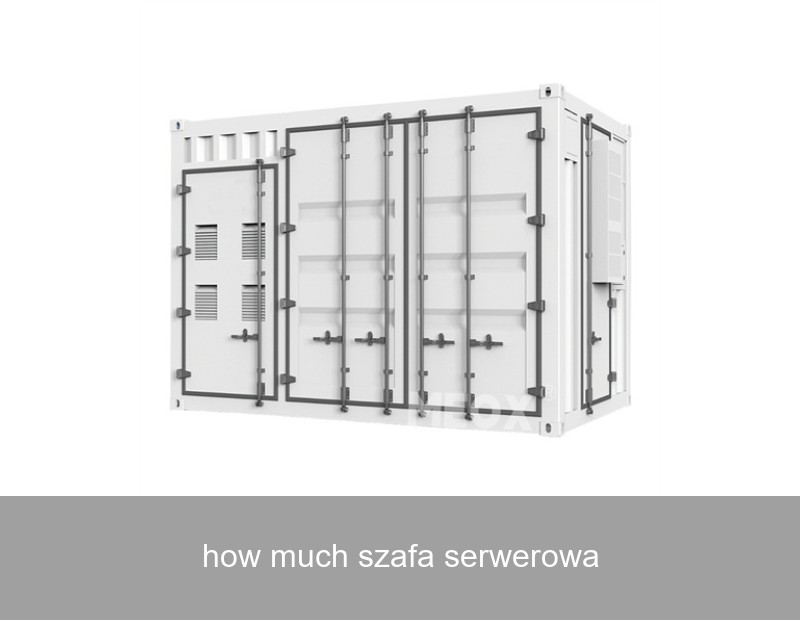
For larger-scale needs, our containerized Megapack solutions can power entire data centers or commercial microgrids, turning your facility into a hub of energy stability. Paired with our energy management software, you gain unparalleled visibility and control over your power flow, from the grid connection down to individual server racks.
Future-Proofing Your Infrastructure
The trend is clear: rack densities are increasing with the adoption of AI and edge computing. According to a Uptime Institute report, average rack densities continue their steady climb. This makes proactive energy strategy non-negotiable. Simply paying a larger utility bill is no longer a viable or responsible business strategy.
So, the next time you ask about your server rack's power consumption, ask yourself a follow-up: "What am I going to do about it?" Are you prepared to turn that energy liability into a point of control, savings, and sustainability?
What would a 20% reduction in your data center's energy costs and a significant boost in its resilience mean for your organization's bottom line and environmental goals this year?
 Inquiry
 Online Chat