


Unlocking Higher Solar Yields: A Deep Dive into the Tiger Neo N-Type 72HL4 (BDV) Module
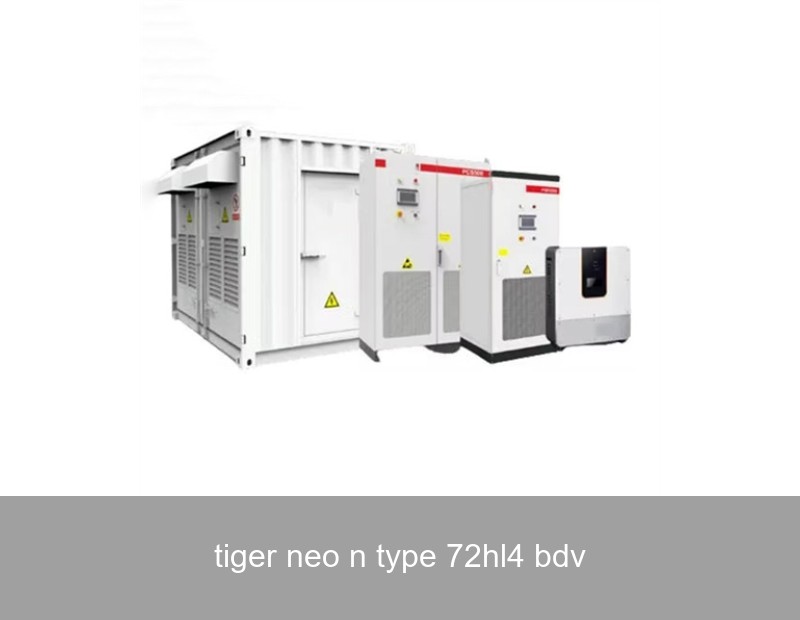
If you're planning a commercial or industrial solar project in Europe or the US, you've likely heard the buzz around N-type technology. The shift from traditional P-type to more advanced N-type solar cells isn't just a minor upgrade—it's a fundamental leap in efficiency and longevity. At the heart of this revolution sits a powerhouse: the Tiger Neo N-Type 72HL4 (BDV) module. But what makes this bifacial, double-glass panel so special for your energy needs? Let's break down the technology and, crucially, explore how pairing it with the right storage system from a company like Highjoule can maximize your return on investment.
Table of Contents
- The N-Type Advantage: More Than Just a Letter
- Decoding the Tiger Neo 72HL4 (BDV): Specifications That Matter
- From Spec Sheet to Solar Farm: A Real-World Case Study
- Beyond Generation: Why Your Tiger Neo Array Needs Intelligent Storage
- Future-Proofing Your Energy Assets
The N-Type Advantage: More Than Just a Letter
Most solar panels on roofs today use P-type silicon cells. They're reliable but have a known weakness: they degrade faster when exposed to light and heat, a phenomenon called Light-Induced Degradation (LID). N-type cells, like those in the Tiger Neo series, use a different silicon base material. This technical difference translates into three major benefits for project developers and asset owners:
- Higher Initial Efficiency: N-type cells start with a higher conversion efficiency, meaning they convert more sunlight into electricity from day one.
- Radically Lower Degradation: They are virtually immune to LID. When you see a panel's "first-year degradation" spec, this is where N-type shines.
- Better Temperature Performance: They lose less power on hot days, a critical factor for sunny climates in Southern Europe and the American Southwest.
Think of it this way: an N-type panel isn't just a better runner; it's a runner who starts faster, slows down less in the heat, and maintains their pace for decades longer.
Decoding the Tiger Neo 72HL4 (BDV): Specifications That Matter
So, what does the "Tiger Neo N-Type 72HL4 BDV" name tell us? "72HL4" indicates a 72-cell half-cut layout, a design that reduces electrical resistance and improves shade tolerance. "BDV" stands for Bifacial, Double Glass, Vented frame. Let's look at what this means in a practical table:
| Feature | Benefit for Your Project |
|---|---|
| N-Type TOPCon Cell | Higher efficiency (often >22%), lower degradation, superior temperature coefficient. |
| Bifacial Design | Captures light reflected from the ground (albedo), boosting energy yield by up to 15-25% in optimal installations. |
| Double Glass Construction | No plastic backsheet. Enhanced durability, fire resistance, and 30-year+ product warranty. Ideal for harsh environments. |
| Low Power Temperature Coefficient (-0.29%/°C) | Loses less output on hot days compared to standard panels (-0.35%/°C or higher), ensuring stable summer performance. |
| First-Year Degradation ≤1% | More of your initial power capacity is preserved, leading to a higher lifetime energy output. |

These aren't just numbers on a datasheet. They directly impact your project's levelized cost of energy (LCOE) and long-term profitability.
The Silent Profit Killer: Understanding Power Degradation
Degradation is the gradual decline in a panel's power output. A typical P-type panel might have a first-year degradation of 2% and an annual rate of 0.45% thereafter. The Tiger Neo N-Type 72HL4 dramatically improves this with ≤1% in year one and ~0.4% annually. Over a 30-year lifespan, this difference compounds. The N-type panel can deliver 5-10% more total energy over its life. For a 1 MW plant, that's hundreds of thousands of kilowatt-hours—and significant revenue—left on the table if you choose the wrong technology.
From Spec Sheet to Solar Farm: A Real-World Case Study
Let's ground this in reality. A 2023 installation in Northern Italy provides a perfect example. A food processing plant opted for a 500 kW rooftop array using Tiger Neo N-Type 72HL4 (BDV) modules. The site was chosen for its high albedo (light-colored roofing material) to leverage the bifacial gain.
- Project Size: 500 kW DC
- Modules: ~1,400 Tiger Neo N-Type 72HL4 panels
- Key Metric - Performance Ratio (PR): The system achieved an average PR of 89% in its first full year of operation, exceeding the projected 86%. PR measures how close the system gets to its theoretical output under real-world conditions.
- Bifacial Gain: Data logging revealed an average bifacial gain of 9.7%, directly attributable to the BDV design and site selection.
The plant's manager noted that even during the peak summer heatwaves, the system's output remained remarkably stable, crediting the panel's low-temperature coefficient. This consistent, high yield is crucial for offsetting their high, constant energy consumption. You can explore more on performance metrics from authoritative sources like the National Renewable Energy Laboratory (NREL).
Beyond Generation: Why Your Tiger Neo Array Needs Intelligent Storage
Here's a critical insight: the highest-performing solar module only solves half the equation. To truly capitalize on this efficient, stable generation—especially with volatile energy prices in Europe and the US—you need to control when you use that power. This is where Highjoule transforms a great solar investment into a resilient energy asset.
Highjoule's advanced Battery Energy Storage Systems (BESS) are the perfect partner for high-efficiency solar arrays. Imagine your Tiger Neo system producing a surplus at midday. Instead of selling it back to the grid at a low rate, a Highjoule BESS stores it. You can then dispatch that stored energy during expensive peak evening hours (peak shaving) or during a grid outage to ensure operational continuity.
Highjoule's solutions for commercial and industrial clients include:
- Containerized BESS: Scalable, plug-and-play units for large-scale energy management and grid services.
- Commercial Hybrid Inverters: Seamlessly integrate solar, storage, and grid power with intelligent energy routing software.
- Microgrid Controllers: For facilities seeking complete energy independence, capable of islanding and managing multiple generation sources.

By pairing Tiger Neo's superior generation profile with Highjoule's smart storage, you move from being a passive generator to an active manager of your energy ecosystem, directly boosting your bottom line.
Future-Proofing Your Energy Assets
Investing in N-type technology like the Tiger Neo 72HL4 is a decision for the next 30+ years. Its lower degradation and robust double-glass construction ensure it will be a reliable asset long into the future. Similarly, integrating a flexible, software-upgradable storage platform from Highjoule prepares your business for evolving utility rate structures, future electrification needs, and a growing emphasis on carbon neutrality. It's a holistic approach to energy resilience. For a deeper understanding of storage value streams, the Energy Storage News platform offers valuable market insights.
Your Energy Landscape
We've seen how the technical excellence of modules like the Tiger Neo N-Type 72HL4 (BDV) creates a foundation for high-yield, reliable solar generation. And we've explored how coupling that generation with intelligent storage from Highjoule unlocks true energy independence and financial optimization. The question now is about your specific site. Have you calculated the potential bifacial gain on your property, or analyzed how peak shaving with storage could impact your facility's operational costs this coming year?
 Inquiry
 Online Chat