


Hybrid Solar Energy Storage Cabinet: Your Off-Grid Power Independence Solution
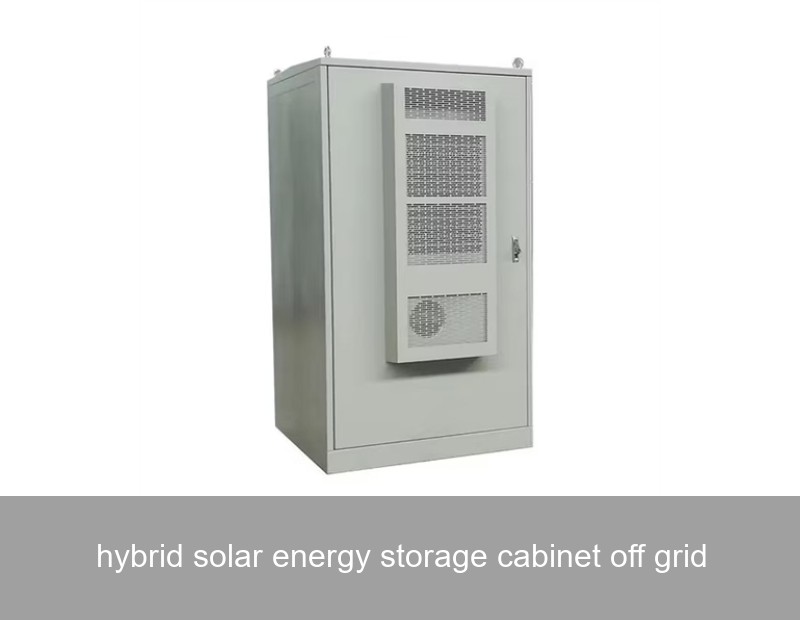
Table of Contents
Imagine a severe storm knocks out the grid in your remote community or your off-grid industrial site. While others are plunged into darkness, your lights stay on, your critical equipment hums steadily, and your energy security remains unshaken. This isn't just a dream of energy independence; it's the practical reality delivered by a modern hybrid solar energy storage cabinet for off-grid applications. Moving beyond simple solar setups, these integrated systems are the cornerstone of true, resilient power autonomy for homes, businesses, and remote operations across Europe and the United States.
The Off-Grid Power Challenge: More Than Just Panels
For decades, going off-grid meant relying on noisy, polluting diesel generators or building an oversized, expensive solar array to cover the worst weather days. The sun doesn't always shine, and consumption patterns are unpredictable. This mismatch leads to a common dilemma: waste energy during sunny periods or face shortages when it's cloudy. According to the National Renewable Energy Laboratory (NREL), the key to cost-effective off-grid systems isn't just more solar panels, but intelligent storage and energy management to balance generation and demand. This is where the hybrid approach becomes non-negotiable.
What is a Hybrid Solar Energy Storage Cabinet?
Think of a hybrid solar energy storage cabinet as the intelligent heart and brain of your off-grid power station. It's not just a battery box. It's a pre-engineered, all-in-one unit that seamlessly integrates solar power, battery storage, and often a backup generator into a single, smart system. Unlike grid-tied systems that feed excess power to the utility, a true off-grid hybrid system is designed for self-sufficiency, making critical decisions every second to prioritize solar charging, manage battery discharge, and activate backup sources to ensure an uninterrupted power supply.

Image Source: Unsplash (Representative image of energy storage technology)
Key Components of a Robust Off-Grid System
To understand its value, let's break down what's inside a high-quality hybrid cabinet:
- High-Capacity Battery Bank: Typically using Lithium Iron Phosphate (LiFePO4) chemistry for safety, long life (often 6000+ cycles), and stable performance in wide temperature ranges.
- Hybrid Inverter/Charger: The core component that converts DC solar power to AC for use, charges the batteries, and can also integrate an AC backup source like a generator.
- Solar Charge Controller (MPPT): Maximizes the energy harvested from your photovoltaic (PV) panels by constantly tracking the optimal power point.
- Integrated Energy Management System (EMS): The software intelligence that automates operation, monitors system health, and allows for remote control via a user-friendly app.
- Safety & Protection Systems: Includes circuit breakers, surge protection, fire suppression, and thermal management to ensure safe operation 24/7.
Real-World Impact: A Case Study from California
Theoretical benefits are one thing; real-world performance is another. Consider the challenge faced by a remote vineyard in Sonoma County, California. Their operations—including irrigation pumps, refrigeration for harvested grapes, and security systems—were dependent on an aging, unreliable diesel generator. Fuel costs were exorbitant, maintenance was constant, and the carbon footprint was at odds with their sustainable brand.
The Solution & The Data: They installed a customized off-grid hybrid system centered on a 40kWh hybrid storage cabinet, paired with a 25kW solar array. The system was designed to:
- Power all critical loads 24/7.
- Use the generator only as an automated, last-resort backup during extended poor weather.
- Provide peak shaving for the high-power irrigation pumps.
| Metric | Before System | After System Installation |
|---|---|---|
| Diesel Fuel Consumption | ~8,000 liters/year | < 500 liters/year |
| Estimated Operational Cost (Fuel & Maint.) | $12,000+ USD/year | ~$800 USD/year |
| System Availability (Uptime) | ~94% (prone to outages) | > 99.8% |
| CO2 Emissions Reduction | Baseline | Approx. 21 metric tons/year |
This data, corroborated by trends from the U.S. Department of Energy, highlights the transformative financial and environmental ROI of a well-designed hybrid off-grid solution.
The Highjoule Advantage: Engineered for Off-Grid Reliability
As a global leader in advanced energy storage since 2005, Highjoule understands that off-grid isn't a niche—it's a critical requirement for resilience. Our HPS Series Hybrid Power Stations are engineered specifically for the demands of off-grid living, remote industrial sites, and critical microgrids.
What sets a Highjoule hybrid solar energy storage cabinet apart? We build intelligence and durability into every unit:
- Adaptive Hybrid Logic: Our proprietary EMS doesn't just switch between sources; it predicts weather patterns and load schedules to optimize battery cycling, significantly extending system lifespan.
- Scalable & Modular Design: Starting from a compact 10kWh cabinet, our systems can be scaled modularly to multi-megawatt-hour installations, growing with your energy needs.
- Extreme Environment Ready: Built and tested to operate reliably from the freezing winters of Scandinavia to the hot, arid climates of the American Southwest, with an IP54 rating for dust and water resistance.
- Comprehensive Remote Monitoring: The Highjoule Energy Portal provides real-time insights, alerting, and control from anywhere in the world, giving you peace of mind for your remote asset.

Image Source: Unsplash (Representative image of modular battery technology)
For a commercial or industrial client, our team provides end-to-end services—from initial site assessment and custom design to installation support and long-term performance monitoring—ensuring your off-grid investment delivers from day one.
The Future of Off-Grid Living and Operations
The technology is evolving rapidly. The next generation of hybrid cabinets is integrating artificial intelligence for even smarter load forecasting and is beginning to incorporate other renewable sources like small-scale wind. As noted by research from institutions like the International Energy Agency (IEA), the convergence of declining battery costs, smarter software, and robust hardware is making energy independence via hybrid systems more accessible and reliable than ever before.
So, whether you're designing a self-sufficient homestead, securing a critical telecommunications tower, or eliminating the fuel burden of a remote worksite, the question is no longer if you can go off-grid reliably, but how to design the system that will serve your specific needs for the next 20 years. What is the one critical load in your operation that you cannot afford to lose power to, even for a minute?
 Inquiry
 Online Chat