


Finding the Best Hybrid Solar Energy Storage Cabinet for Your 1MW Project: A Complete Guide
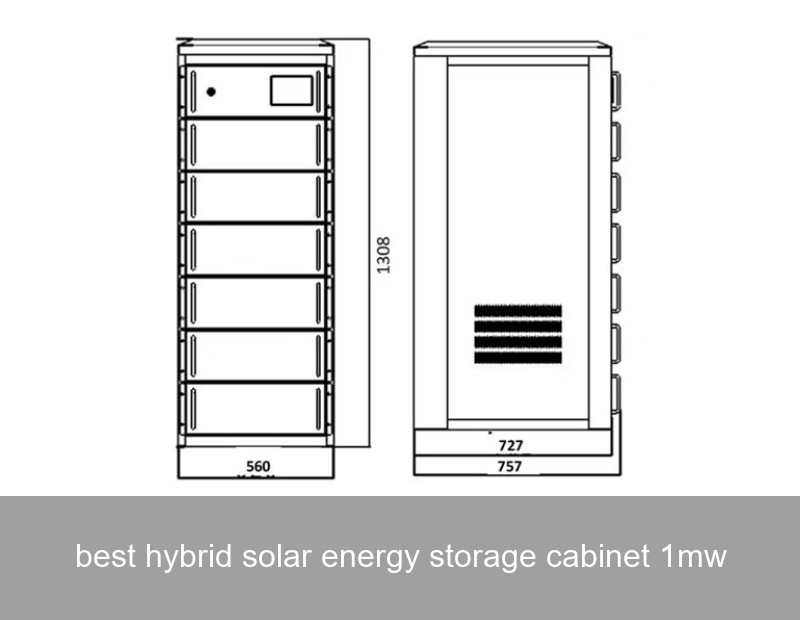
As the global shift towards renewable energy accelerates, commercial and industrial energy consumers face a pressing challenge: how to maximize the value of their solar investment. You've likely seen the phenomenon—a solar plant producing a surplus at midday, only for that clean energy to go underutilized, while expensive grid power is drawn in the evening. This is where the search for the best hybrid solar energy storage cabinet for a 1MW scale becomes critical. It's not just about storing energy; it's about creating an intelligent, resilient, and profitable power ecosystem. For a 1MW system, the stakes are high, and the choice of storage technology directly impacts your ROI, energy independence, and sustainability goals. This article will guide you through the essential considerations, backed by data and real-world applications, to help you make an informed decision.
Table of Contents
What Exactly is a 1MW Hybrid Solar Energy Storage Cabinet?
Let's demystify the terminology. A hybrid solar energy storage cabinet for a 1MW application is far more than a simple battery box. It is an integrated, containerized solution that typically combines:
- Battery Racks: Housing the core energy storage cells, often Lithium Iron Phosphate (LFP) for safety and longevity.
- Power Conversion System (PCS): The brain that manages AC/DC conversion, allowing bi-directional flow of power.
- Thermal Management: A critical climate control system to maintain optimal battery temperature.
- Energy Management System (EMS): The software intelligence that decides when to charge, discharge, or hold based on weather, tariffs, and load.
- Safety & Grid Interconnection: Includes comprehensive protection, monitoring, and grid-compliance hardware.
At the 1MW/typically 2-4MWh scale, these components are pre-assembled into a secure, walk-in cabinet or containerized unit, offering a plug-and-play solution that drastically reduces on-site installation complexity and cost. The "hybrid" capability means it can seamlessly integrate with your existing solar PV array and the grid, operating in multiple modes to optimize financial and operational outcomes.
Key Considerations for Choosing the Best 1MW System
Selecting the right partner and product requires looking beyond basic specs. Here’s a logical framework to evaluate your options:
Phenomenon: The Solar Curtailment & High Demand Charge Dilemma
Many large-scale solar operators experience the pain of curtailment—wasting excess solar generation—while simultaneously facing steep demand charges from utilities during peak periods.
Data: The Numbers That Define Value
The economics are compelling. According to the National Renewable Energy Laboratory (NREL), pairing storage with solar can increase the value of solar by up to 40% through arbitrage and grid services. For a 1MW system, a single peak shaving event can save thousands in demand charges. Key performance metrics to scrutinize include:
| Metric | Why It Matters for 1MW | Benchmark Target |
|---|---|---|
| Round-Trip Efficiency | Directly impacts how much stored energy you can actually use. | > 95% |
| Cycle Life (@ 80% DoD) | Determines the system's lifespan and levelized cost of storage. | > 6,000 cycles |
| Scalability & Modularity | Can you easily expand capacity as your needs grow? | Modular cabinet design |
| Grid Service Capabilities | Can it provide frequency regulation or voltage support for additional revenue? | UL 9540 & IEEE 1547 compliant |
Insights: The Make-or-Break Factors
- Total Cost of Ownership (TCO): The cheapest upfront cost often leads to higher long-term expenses. Evaluate TCO over a 10-15 year horizon.
- Software Intelligence: The EMS is where the magic happens. It should be adaptable, with forecasting algorithms that learn your load and weather patterns.
- Safety & Warranty: Look for certifications (UL, IEC) and a robust warranty that guarantees performance over time. LFP chemistry is now the industry standard for large-scale storage due to its inherent stability.

Credit: Representative image of a modern industrial energy storage system. A well-designed cabinet prioritizes safety, accessibility, and thermal management.
Case Study: Manufacturing Plant in Bavaria, Germany
Let's look at a concrete example. A mid-sized automotive parts manufacturer in Bavaria installed a 1.2MW solar array. Despite significant generation, their grid demand charges remained high, and they had no backup for critical processes.
The Solution: In 2023, they deployed a 1MW/2.2MWh hybrid energy storage cabinet system. The system was configured for three primary functions: solar self-consumption optimization, peak shaving, and backup power for key production lines.
The Data-Driven Outcome (12-month period):
- Solar Self-Consumption Rate: Increased from 35% to over 85%.
- Demand Charge Reduction: Achieved an average reduction of 28%, saving approximately €52,000 annually.
- ROI Timeline: Projected payback period of 6.5 years, factoring in German subsidy programs for commercial storage.
- Resilience: Provided seamless backup power during two grid outages, preventing an estimated €200,000 in production line stoppages.
This case, documented in a Fraunhofer ISE study on energy costs, highlights how the right storage cabinet transforms a solar asset from a cost-saver into a strategic, revenue-protecting investment.
The Highjoule Solution: Engineered for 1MW Excellence
At Highjoule, with nearly two decades of experience since 2005, we've engineered our H-Cube MegaSeries specifically to meet the rigorous demands of the best hybrid solar energy storage cabinet for 1MW applications. We understand that your needs extend far beyond a commodity product.
Our H-Cube MegaSeries is a pre-integrated, containerized solution that delivers:
- Unmatched Energy Density & Safety: Utilizing our proprietary, UL 9540-certified LFP battery modules and multi-layer safety architecture, we pack more reliable storage into a smaller footprint.
- Adaptive AI-Powered EMS: The "Highjoule Neuron" platform doesn't just follow pre-set rules. It uses machine learning to forecast local weather and load patterns, dynamically optimizing dispatch to maximize your financial return, whether through arbitrage, demand charge management, or participation in grid service markets.
- Proven Global Deployment: From microgrids in California to industrial parks in the Netherlands, our systems are designed for diverse grid codes and climatic conditions, ensuring reliable performance in your specific location.
- Full-Service Partnership: We provide more than hardware. Our service includes comprehensive feasibility analysis, interconnection support, and remote performance monitoring, ensuring your project achieves its intended outcomes from day one.
Choosing Highjoule means selecting a partner committed to the long-term success and sustainability of your energy infrastructure.

Credit: A commercial-scale solar installation paired with storage. The storage cabinet (often containerized) is sited for easy grid and PV interconnection.
Future Trends and Your Next Step
The landscape is evolving rapidly. We're moving towards virtual power plants (VPPs), where distributed assets like your 1MW storage system can aggregate to provide grid stability and new revenue streams. The best hybrid cabinet today is one that is software-upgradable and ready to participate in these future markets.
So, as you evaluate the path to energy resilience and cost control for your operation, we leave you with this question: Is your current energy strategy simply managing your utility bill, or is it actively building a more valuable, independent, and sustainable asset for the next decade?
We invite you to connect with Highjoule's technical experts for a customized analysis of your site's potential. What specific load profile and tariff structure are you looking to solve?
 Inquiry
 Online Chat