


Hybrid Solar Panel Inverter: The Intelligent Heart of a Modern Energy System
You've decided to go solar. The panels are on the roof, soaking up the sun. But when the grid goes down, so do you. And in the evening, you're back to buying expensive utility power. This common experience highlights a missing piece in traditional solar setups. The solution? A hybrid solar panel inverter. This isn't just an upgrade; it's a complete rethinking of how a home or business manages energy. It's the intelligent core that seamlessly integrates solar generation, battery storage, and grid power, giving you true energy independence and control. For over 15 years, Highjoule has been at the forefront of this intelligent energy revolution, designing systems that don't just store power, but think for themselves.
Table of Contents
- What is a Hybrid Solar Inverter?
- Hybrid vs. Traditional: A Clear Advantage
- Key Benefits of a Hybrid Inverter System
- A Real-World Case Study: Resilience in California
- Choosing the Right System for Your Needs
- The Highjoule Solution: Intelligence Meets Reliability
- Your Energy Future: A Question of Control
What Exactly is a Hybrid Solar Panel Inverter?
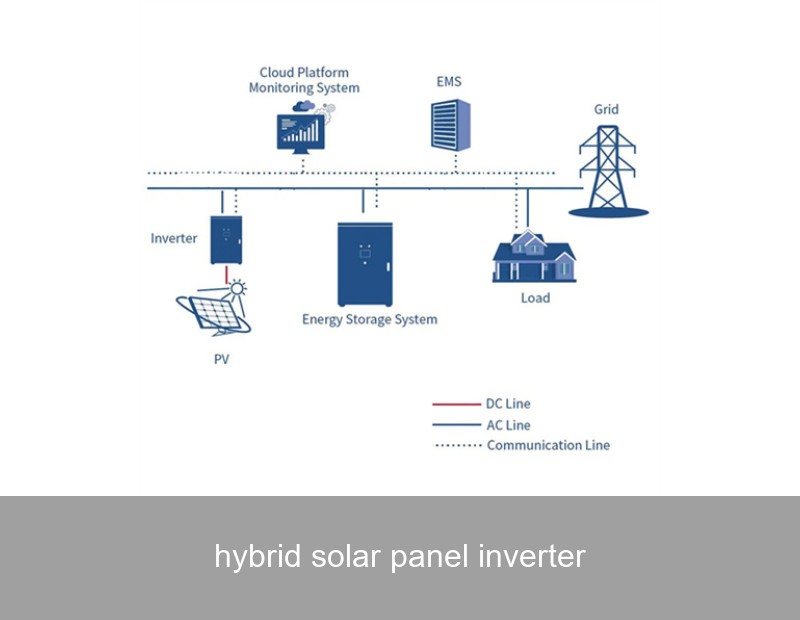
Think of your solar energy system as a team. The panels are the producers, the batteries are the savers, and the grid is the backup player. A traditional system needs two coaches: a solar inverter to convert the panels' DC power to AC for your home, and a separate battery inverter to manage charging and discharging. A hybrid inverter combines both coaches into one brilliant strategist. It's a single, compact unit that performs multiple critical functions:
- DC-to-AC Conversion: It converts direct current (DC) from your solar panels into usable alternating current (AC) for your appliances.
- Battery Management: It intelligently charges your battery storage with excess solar energy and dispatches that power when needed.
- Grid Interaction: It safely synchronizes with the utility grid, allowing you to import or export power based on rules you set.
- Backup Power Creation: During a grid outage, it can instantly isolate your home (forming a "microgrid") and power critical loads from solar and batteries.

Image Source: Unsplash - A modern hybrid inverter forms the core of an efficient energy system.
This integration is more than just convenient. It allows for sophisticated, software-driven energy management that maximizes self-consumption, protects you from outages, and can even optimize for time-of-use electricity rates.
Hybrid vs. Traditional Systems: A Side-by-Side Comparison
| Feature | Traditional System (Solar + Separate Battery Inverter) | Hybrid Inverter System |
|---|---|---|
| System Architecture | Multiple components, more complex wiring. | Integrated, streamlined, often a single unit. |
| Efficiency | Potential for conversion losses between multiple devices. | Higher overall efficiency due to integrated conversion paths. |
| Backup Power Readiness | Often requires additional hardware and configuration for backup. | Backup functionality is typically built-in and seamless. |
| Monitoring & Control | May require multiple apps or interfaces. | Unified monitoring and control through a single platform. |
| Scalability | Can be complex to expand later. | Often designed for easier expansion of solar or battery capacity. |
| Space & Installation | Requires more physical space and labor. | Generally more compact, with potentially lower installation complexity. |
Key Benefits: Why the Shift is Towards Hybrid
The data and user experiences are clear: hybrid systems are becoming the default choice for new installations. The benefits extend far beyond simple backup.
1. Maximized Self-Consumption and ROI
A hybrid system is inherently frugal. Its primary goal is to use every watt you generate. Instead of sending excess solar energy to the grid for a minimal feed-in tariff, it stores it for your personal use in the evening. This dramatically increases your energy self-consumption rate, sometimes doubling it, which directly shields you from rising retail electricity prices and improves your return on investment.
2. Uninterrupted Power Supply (UPS) Functionality
This is the most tangible benefit for many. In regions prone to storms, wildfires, or an aging grid infrastructure, power outages are a major disruption. A hybrid inverter with backup capability can switch your home to battery power in milliseconds—so fast that your computers and lights won't even flicker. You keep your lights on, your fridge cold, and your internet running.
3. Intelligent Energy Arbitrage
In areas with time-of-use (TOU) billing, electricity costs more during "peak" evening hours. A smart hybrid system can be programmed to avoid using the grid during these expensive periods, relying instead on stored battery power. It essentially "buys" energy from the sun (free) or the grid when rates are low, and "sells" it to you when rates are high, creating significant savings.

Image Source: Unsplash - Smart monitoring apps give you complete control over your energy flow.
A Real-World Case Study: Resilience in California, USA
Let's look at concrete data from a residential installation in Sonoma County, California—a region frequently impacted by Public Safety Power Shutoffs (PSPS) to prevent wildfires.
The Challenge: A family with a 7 kW existing solar array faced 5-7 extended grid outages per year, each lasting 12-48 hours. Their traditional solar system would shut down during these outages, nullifying their investment when they needed it most.
The Solution: They retrofitted their system with a Highjoule HPS-10 Hybrid Power Station, integrating a 10 kWh lithium-ion battery pack. The hybrid inverter managed the integration of the old solar panels and the new battery seamlessly.
The Data-Driven Outcome (Over 12 Months):
- Outage Resilience: Experienced 6 grid outages totaling 112 hours. The hybrid system provided uninterrupted power for essential loads (refrigeration, lighting, comms, well pump) for 100% of the outage time.
- Financial Impact: Increased solar self-consumption from 35% to 82%. Reduced their electricity bill by an additional 60% during summer peak months by avoiding TOU rates.
- Peace of Mind: The system's automatic operation and clear mobile app monitoring eliminated the stress associated with impending PSPS events.
This case mirrors findings from the National Renewable Energy Laboratory (NREL), which notes that pairing solar with storage significantly enhances resilience and economic value.
Choosing the Right Hybrid System: Key Considerations
Not all hybrid inverters are created equal. When evaluating options, ask these critical questions:
- Backup Power Capability: Does it provide true, seamless backup during a grid failure? What circuits can it support?
- Scalability: Can you easily add more batteries or solar panels in the future?
- Efficiency Rating: Look for peak efficiency numbers (often 97-98%+). Higher efficiency means less wasted energy.
- Software & Monitoring: Is the user interface intuitive? Does it offer smart features like time-based control or weather forecasting integration?
- Grid Services & Compliance: Is it certified for grid connection in your region (e.g., UL 1741-SA in the US, G99 in the UK)? Can it participate in virtual power plant (VPP) programs?
The Highjoule Solution: Where Intelligence Meets Reliability
At Highjoule, we've spent nearly two decades refining the intelligence of the hybrid inverter. Our products, like the HPS Series Hybrid Power Stations, are designed for the demands of the European and North American markets. They are more than just hardware; they are a complete energy management ecosystem.
Our systems feature industry-leading round-trip efficiency, ensuring you get the most out of every sunbeam. The Highjoule Energy OS platform allows you to set custom modes—like "Maximize Savings" or "Storm Watch"—which automatically optimizes your energy flow based on weather alerts and tariff schedules. For commercial clients, our Industrial Hybrid Systems offer scalable, three-phase solutions that manage demand charges and provide critical process backup.
What truly sets us apart is our focus on long-term system health and safety. Our proprietary battery management algorithms ensure optimal temperature and charge cycles, extending the life of your investment. Every system is backed by comprehensive monitoring and a robust warranty, because we build technology you can trust for the long run.
Your Energy Future: A Question of Control
The transition to renewable energy isn't just about the source of your electrons; it's about who controls them. A hybrid solar panel inverter shifts that control decisively to you. It transforms a simple solar array into a resilient, intelligent, and economical personal power plant.
As you consider your next step towards energy independence, what specific energy challenge—be it unpredictable bills, frequent outages, or simply a desire for a sustainable footprint—is most important for you to solve with the technology available today?
 Inquiry
 Online Chat