


Why Your ICT Cabinet Supplier is the Key to Unlocking Energy Efficiency
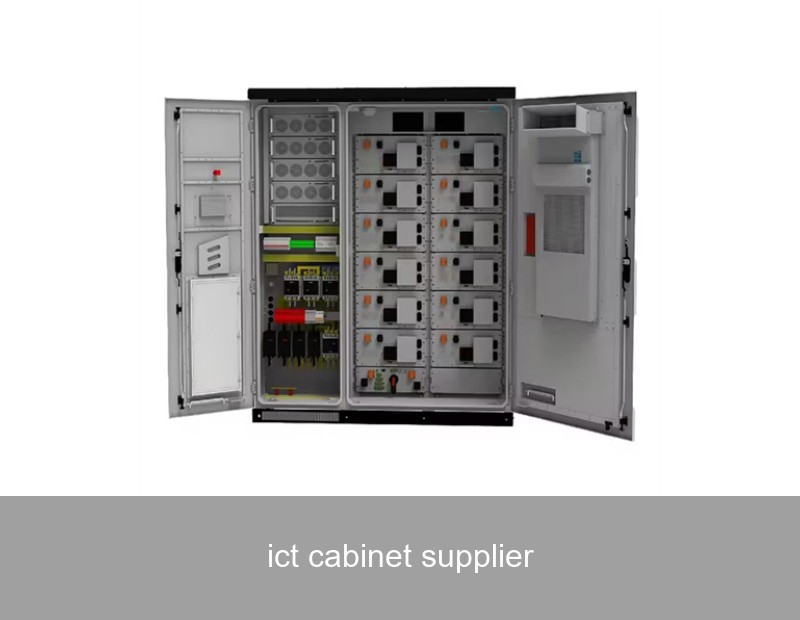
If you're managing a data center, telecom facility, or any critical IT infrastructure, you've likely spent considerable time selecting the right ICT cabinet supplier. You've compared specs on dimensions, cooling compatibility, and cable management. But here's a thought-provoking question: did you evaluate them as a strategic partner for your energy resilience and sustainability goals? The modern ICT cabinet is no longer just a passive metal enclosure. It's the frontline of a massive energy challenge, and your choice of supplier is becoming pivotal. This article explores how the role of the ICT cabinet provider is evolving from a hardware vendor to an essential ally in building efficient, reliable, and future-proof digital infrastructure, with a special focus on integrated power solutions.
Table of Contents
- The Silent Energy Crisis in the Server Room
- Beyond the Box: The Modern ICT Cabinet as an Energy Hub
- Case Study: Power Dynamics in Frankfurt's Data Hub
- Integating Storage: The Game-Changer Your Cabinet Supplier Should Offer
- Choosing Your Energy-Aware ICT Cabinet Partner
- Is Your Infrastructure Ready for What's Next?
The Silent Energy Crisis in the Server Room
Let's start with a universal phenomenon. Walk into any server room or edge data location, and you'll feel the heat and hear the consistent hum. This is the sound of energy consumption—and significant energy waste. The U.S. Department of Energy estimates that data centers consume 1-2% of global electricity demand, a figure projected to grow. The challenge isn't just the sheer amount of power drawn by servers; it's the compounding inefficiency. Power travels from the grid, through transformers, uninterruptible power supplies (UPS), power distribution units (PDUs), and finally to the IT load. At each step, losses occur, primarily as heat.
Traditional thermal management then uses more energy (sometimes equaling the IT load itself) to cool that waste heat. This creates a vicious cycle of high demand, high cost, and a large carbon footprint. For facility managers, this translates to soaring electricity bills, capacity constraints on existing circuits, and vulnerability to grid instability or rising energy prices, particularly acute in markets like Europe and parts of the U.S.
Beyond the Box: The Modern ICT Cabinet as an Energy Hub
This is where the narrative around your ICT cabinet supplier must change. The forward-thinking supplier now views the cabinet not as an endpoint, but as the central node in a microgrid. This integrated approach considers several critical layers:
- Intelligent Power Distribution: Advanced PDUs integrated within the cabinet that offer per-outlet monitoring and control, allowing you to see real-time energy use down to the specific server level.
- Dynamic Cooling Alignment: Cabinets designed with optimized airflow management (sealed doors, variable speed fans, hot/cold aisle containment kits) that work in concert with your cooling system to reduce its workload.
- The Missing Link: On-Demand Power Storage. This is the most transformative element. Imagine if your ICT cabinet framework could seamlessly incorporate a battery energy storage system (BESS) directly into the power chain.
This is precisely where Highjoule's expertise transforms the proposition. As a global leader in advanced energy storage since 2005, Highjoule partners with leading ICT cabinet suppliers and system integrators to embed smart storage solutions directly into the infrastructure footprint. Our compact, high-density lithium-ion battery systems, like the Highjoule CubeSeries, are designed for easy integration within or adjacent to cabinet rows. They don't just provide backup power; they enable "peak shaving" – storing grid power during off-peak, low-cost periods and discharging it during expensive peak hours, directly cutting energy costs. They also stabilize power quality, protecting sensitive IT equipment from sags and surges.

Image Source: Unsplash. A modern data center aisle showcasing organized ICT cabinets, where integrated energy management is critical.
Case Study: Power Dynamics in Frankfurt's Data Hub
Let's look at a real-world scenario in one of Europe's most competitive data center markets: Frankfurt, Germany. A mid-sized colocation provider was facing a dual challenge: rising regional energy prices and a client demanding a greener power profile for their hosted servers. Their existing infrastructure, with standard cabinets and a centralized UPS, was inefficient and limited.
They partnered with a progressive system integrator who acted as both an ICT cabinet supplier and a solution architect. The solution involved:
- Deploying new, high-airflow cabinets with integrated, sensor-based PDUs.
- Installing a distributed storage approach using Highjoule's Modular Rack Storage (MRS) units in specific cabinet rows dedicated to the sustainability-focused client.
The results over one year were telling:
| Metric | Before Integration | After Integration |
|---|---|---|
| Peak Demand Charge | 100% (Baseline) | Reduced by 28% |
| Energy Cost for Client Cabinets | €X/month | €0.78X/month |
| Effective PUE (Power Usage Effectiveness) for the Row | 1.65 | Improved to 1.38 |
| Grid Dependency During Peak | 100% | ~60-70% |
The Highjoule MRS systems were programmed to discharge during the 2-3 daily peak hours defined by the local utility. This not only saved money but also allowed the provider to market a "grid-resilient, lower-carbon" hosting package. The ICT cabinet supplier delivered the physical framework, but the integrated storage intelligence provided by Highjoule unlocked the tangible financial and environmental benefits.
Integrating Storage: The Game-Changer Your Cabinet Supplier Should Offer
So, what should you look for? The next-generation ICT cabinet supplier or integrator should be conversant in energy storage as a core component of the cabinet ecosystem. Here’s what that partnership enables:
- Density & Scalability: Solutions like Highjoule's are designed for high energy density, minimizing the floor space "tax" of adding storage. You can start with a few cabinets and scale storage capacity modularly.
- Advanced Energy Management Software (EMS): This is the brain. A good EMS, such as Highjoule's Neuron Platform, allows you to set strategies for the storage system—peak shaving, demand response readiness, time-of-use optimization—all through a simple interface. It turns stored energy into an active asset.
- Enhanced Reliability: While traditional UPS systems offer short-term bridge to generator, an integrated BESS can provide longer, more sustainable backup, and can cycle daily without degradation, serving dual purposes.
For commercial and industrial applications, from edge data centers to telecom switching stations, this integration means moving from a cost center to a managed, value-generating asset. Highjoule works behind the scenes with infrastructure partners to make this transition seamless, providing the storage technology, control software, and engineering support that allows the cabinet to become a true smart energy hub.

Image Source: Unsplash. A professional monitoring energy management software, crucial for optimizing integrated cabinet-storage systems.
Choosing Your Energy-Aware ICT Cabinet Partner
When evaluating your next ICT cabinet supplier or system integrator, elevate the conversation. Go beyond gauge steel and hinge quality. Ask them:
- How do your cabinet solutions facilitate improved power and cooling efficiency?
- Do you offer integrated intelligent PDUs with monitoring capabilities?
- Can you design a solution that incorporates on-site battery energy storage for both backup and daily cost savings?
- Do you have partnerships with established energy storage technology providers like Highjoule to deliver a validated, reliable system?
Their answers will reveal whether they are a commodity vendor or a strategic partner invested in your operational and financial resilience.
Is Your Infrastructure Ready for What's Next?
The trends are clear: energy costs are volatile, sustainability mandates are tightening, and digital demand is inexorable. The passive server rack is a relic of the past. The cabinet of the future is an active, intelligent participant in your facility's energy ecosystem. The question isn't just "who will supply my next set of cabinets?" but rather "which partner will help me transform my ICT infrastructure into a pillar of energy efficiency and reliability?"
When you're ready to have that conversation, consider how the combined expertise of a forward-thinking integrator and an advanced storage provider like Highjoule can map a path forward. What would a 25% reduction in your peak demand charges do for your bottom line this year?
 Inquiry
 Online Chat