


Independent Energy Storage Elements: The Key to a Resilient and Decarbonized Grid
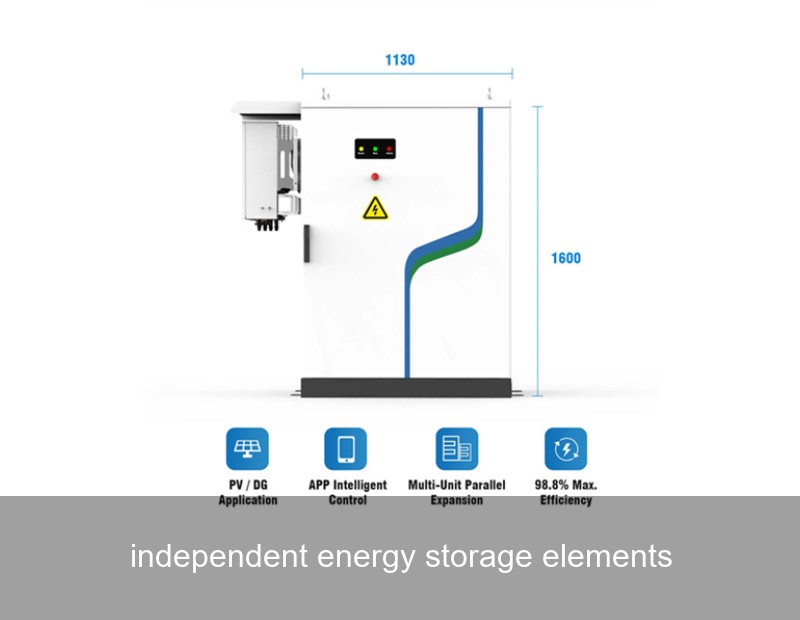
Imagine your home or business as a self-sufficient energy island. The sun powers your day, and the excess energy gets stored for a rainy—or rather, a cloudy—day. This isn't just a dream for off-grid cabins; it's the emerging reality for modern grids, powered by independent energy storage elements. These are the modular, intelligent building blocks that allow us to capture, hold, and dispatch electricity on demand, transforming how we interact with power. For grid operators in Europe and businesses in the U.S., the volatility of renewable sources like solar and wind is a well-known challenge. The solution lies not just in generating clean energy, but in mastering its timing through sophisticated storage. This article delves into why these independent storage units are becoming the cornerstone of a reliable, efficient, and sustainable energy future.
Table of Contents
- The Phenomenon: From Intermittency to Independence
- The Data: Quantifying the Storage Imperative
- The Architectural Evolution: From Monoliths to Modular Elements
- The Highjoule Approach: Intelligent Independence at Scale
- Case Study: Grid Stability in Northern Germany
- The Future Landscape: What Does True Energy Independence Look Like?
The Phenomenon: From Intermittency to Independence
We've all seen the graphs: solar production peaks at midday and plunges at night; wind power can arrive in unpredictable gusts. This intermittency is the fundamental hurdle for renewables. Traditionally, grids relied on fossil-fuel "peaker" plants—quick to fire up but expensive and polluting—to balance these swings. The modern phenomenon is the shift from this centralised, reactive model to a decentralised, proactive one. Independent energy storage elements sit at the heart of this shift. Think of them not as a single giant battery, but as a network of intelligent units. They can be deployed at utility scale, within a commercial facility, or behind a residential meter. Their independence is key: they can charge during periods of low demand or high generation, and discharge precisely when and where needed, autonomously responding to grid signals or local consumption patterns.
The Data: Quantifying the Storage Imperative
The numbers paint a clear picture of urgency and opportunity. According to the International Energy Agency (IEA), the world needs to add close to 600 GW of energy storage capacity by 2030 to stay on track for net-zero emissions goals. In the U.S. alone, the Energy Information Administration (EIA) projects that battery storage capacity will multiply significantly, driven by both policy and economics. Let's break down the value streams:
| Challenge | How Independent Storage Helps | Impact |
|---|---|---|
| Solar Curtailment (wasted energy) | Captures excess midday solar for evening use | Can increase renewable utilization by 20-30% |
| High Demand Charges for Businesses | Discharges during peak hours to flatten demand | Can reduce commercial electricity bills by 10-30% |
| Grid Congestion & Infrastructure Stress | Provides localized power, deferring costly grid upgrades | Enhances grid resilience and defers capital expenditure |
The data is unequivocal: storage is no longer a luxury; it's a critical infrastructure component for decarbonization and cost control.
The Architectural Evolution: From Monoliths to Modular Elements
Early energy storage systems were often monolithic—custom-built, complex, and difficult to scale or service. The future is modular. This is where the concept of independent energy storage elements truly shines. A modern, best-in-class Battery Energy Storage System (BESS) is built from the cell level up with independence in mind:
- Modular Battery Packs: Self-contained units with integrated battery management systems (BMS) that can be added or replaced without taking the entire system offline.
- Independent Power Conversion (PCS): Scalable inverter systems that manage AC/DC conversion, allowing for flexible power and energy capacity configurations.
- Containerized Solutions: Pre-engineered, factory-tested units that arrive on-site as fully functional independent energy storage elements, drastically reducing installation time and complexity.

Image Source: Unsplash - Representative image of modular, containerized energy storage.
This architectural shift is crucial. It means systems can start small and grow with demand, ensure higher uptime through easy maintenance, and adapt to future battery chemistry improvements without a complete overhaul.
The Highjoule Approach: Intelligent Independence at Scale
At Highjoule, with nearly two decades of experience, we've engineered this principle of intelligent independence into every product we design. Our systems are conceived as networks of high-performance independent energy storage elements, orchestrated by our proprietary energy management software (EMS).
For instance, our H-Series Commercial & Industrial (C&I) ESS is built on a fully modular platform. Each rack is an independent element, featuring cell-level monitoring and thermal management. This allows a factory in Texas to seamlessly expand its storage capacity as it adds more production lines, or a supermarket chain in Germany to deploy identical systems across multiple locations with standardized maintenance protocols.
For utility and microgrid applications, our MegaJoule Utility-Scale Platform takes this further. It integrates multiple containerized independent energy storage elements, each with its own controls, into a virtual power plant (VPP). Our AI-driven EMS can then decide, based on weather forecasts, market prices, and grid health, which element to charge, which to hold in reserve, and which to discharge to maximize revenue or ensure community resilience. This isn't just storage; it's distributed intelligence.
Case Study: Grid Stability in Northern Germany
Let's look at a real-world application. Northern Germany has a very high penetration of wind energy. In regions like Schleswig-Holstein, grid operators frequently face congestion and the need for rapid frequency regulation to keep the grid stable as wind output fluctuates.
Project: A regional grid operator partnered with Highjoule to deploy a 20 MW / 40 MWh battery storage system. The system was designed as four independent 5 MW/10 MWh units, strategically placed at two substations.
Implementation: Each of these independent energy storage elements operates autonomously for primary frequency response, reacting to grid frequency deviations in milliseconds. However, they are collectively managed by a central Highjoule EMS for energy arbitrage—storing cheap, excess wind power at night and discharging during daytime price peaks.
- Provided over 99% availability for frequency containment reserve (FCR) services.
- Reduced local grid congestion incidents by an estimated 18%.
- Generated significant stacked revenue streams from both grid services and market trading.
This case demonstrates the dual value of independence: the distributed elements provide ultra-reliable grid services, while their centralized intelligence optimizes financial return. It's a model being closely studied across Europe and North America.
The Future Landscape: What Does True Energy Independence Look Like?
The journey is moving beyond single applications. The future grid will be a tapestry of millions of independent energy storage elements—from home Powerwalls to gigawatt-hour utility systems—all communicating and collaborating. This will enable:
- Hyper-Resilient Microgrids: Communities or campuses that can island themselves from the main grid during outages for days, not just hours.
- Seamless EV Integration: Your electric vehicle battery acting as a mobile storage element, powering your home during a blackout or selling power back to the grid when prices are high (vehicle-to-grid, V2G).
- Democratized Energy Markets: Where any prosumer with solar and storage can participate in peer-to-peer energy trading.

Image Source: Unsplash - Depicting a future of integrated residential renewable energy and storage.
In this landscape, the quality, intelligence, and interoperability of each independent energy storage element become paramount. Systems must be safe, long-lasting, and capable of sophisticated decision-making.
The Highjoule Commitment
Highjoule is at the forefront of this transition. Our mission is to provide the foundational, intelligent storage elements that make this resilient future possible. From our residential EcoCell solutions to our industrial H-Series and utility MegaJoule platforms, we design for independence, scalability, and sustainability. We don't just sell hardware; we provide a full lifecycle partnership—from feasibility studies and system design to long-term performance monitoring and optimization—ensuring our clients extract maximum value from their investment.
As you consider the role of energy storage for your business, community, or home, ask yourself: Is your strategy built on passive backup, or on active, intelligent energy independence? What could you achieve if your power was not just clean, but also precisely under your control?
 Inquiry
 Online Chat