


Industrial Backup Power Battery: Your Shield Against Costly Downtime
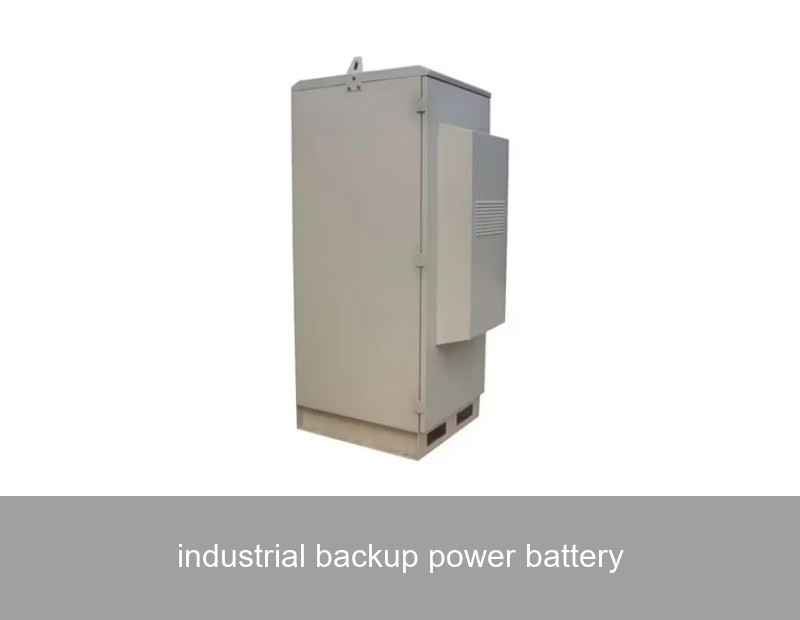
Imagine a critical production line grinding to a sudden halt. Data center servers flickering off. A refrigerated warehouse beginning to warm. For industrial and commercial facilities, a power outage isn't just an inconvenience; it's a direct assault on productivity, safety, and the bottom line. While traditional diesel generators have long been the default, a smarter, cleaner, and more responsive guardian is emerging: the industrial backup power battery system. This isn't just a battery; it's an integrated energy resilience solution that keeps your operations running seamlessly through grid disturbances. In this article, we'll explore why modern facilities are making the switch and how companies like Highjoule are leading this charge with intelligent, sustainable power solutions.
Table of Contents
- The High Cost of Unplanned Downtime
- Battery Backup vs. Generator: A Modern Comparison
- Key Components of a Robust Industrial Battery Backup System
- A Real-World Case Study: Securing Automotive Manufacturing
- The Highjoule Solution: Engineered for Industrial Resilience
- Future-Proofing Your Power: Beyond Basic Backup
The High Cost of Unplanned Downtime
Let's start with the stark reality. According to a report by the U.S. Department of Energy, power outages cost the U.S. economy tens of billions of dollars annually. For an individual facility, a single outage can result in:
- Lost Production: Stopped lines mean zero output, but fixed costs continue.
- Product & Material Loss: Spoiled goods, corrupted data, or interrupted chemical processes.
- Equipment Damage: A sudden "hard stop" or subsequent power surge can damage sensitive machinery.
- Labor Costs: Paying staff while they wait for power to return, plus potential overtime to catch up.
The phenomenon is clear: our industrial infrastructure is deeply vulnerable to grid instability, severe weather, and even planned brownouts. The data is undeniable. So, what's the traditional answer, and why is it falling short?
Battery Backup vs. Generator: A Modern Comparison
For decades, the diesel generator was the only answer. It's a known technology. But when we compare it to a modern industrial backup power battery system, the limitations become apparent.
| Feature | Traditional Diesel Generator | Industrial Battery Backup System |
|---|---|---|
| Response Time | 10-30 seconds to start and stabilize | Near-instantaneous (milliseconds) |
| Operational Noise & Emissions | High noise, produces CO2 and NOx emissions on-site | Silent operation, zero on-site emissions |
| Maintenance Requirements | Regular fluid changes, fuel testing, and exercise runs | Minimal, primarily electronic monitoring |
| Fuel Dependency | Requires on-site fuel storage and supply chain | Powered by the grid or renewable sources, no fuel needed |
| Dual-Use Capability | Only provides power during outages | Can provide daily energy cost savings (peak shaving, load shifting) |
The case here shifts from simple backup to intelligent energy management. A battery system isn't just sitting idle; it can be a financial asset every single day.
Key Components of a Robust Industrial Battery Backup System
Understanding the system helps demystify it. A top-tier industrial battery backup solution consists of:
- Battery Modules: Typically using lithium-ion (LiFePO4) chemistry for its safety, long cycle life, and stability. These are the energy storage units.
- Power Conversion System (PCS): The brain and muscle. This bidirectional inverter converts DC battery power to AC for your facility and manages the flow of electricity.
- Energy Management System (EMS): The strategic commander. This software intelligently controls when to charge, discharge, or hold, based on grid conditions, electricity rates, and your facility's load profile.
- Thermal Management & Safety Enclosure: A critical, often overlooked component. It ensures batteries operate within an optimal temperature range for performance, safety, and longevity.

Image Source: Unsplash - Representative image of a modern industrial battery installation.
A Real-World Case Study: Securing Automotive Manufacturing in Germany
Let's move from theory to practice. A major automotive parts supplier in Bavaria, Germany, faced a critical challenge. Their precision machining and robotic assembly lines were highly sensitive to voltage sags and micro-outages—events lasting less than a second that would still trigger shutdowns and cause costly recalibration. A traditional generator was far too slow to react to these events.
The Solution: The facility partnered with Highjoule to deploy a containerized industrial backup power battery system, specifically our H-IBS 500 solution. The system was integrated at the medium-voltage level of their facility's electrical infrastructure.
The Results (Data-Driven Impact):
- Zero Process Interruptions: The system's sub-20 millisecond response time has completely eliminated production stoppages due to grid disturbances for over 18 months.
- Annual Energy Cost Savings: By using the Highjoule EMS for peak shaving—discharging the battery during the most expensive grid rate periods—the facility saves approximately €85,000 annually on its energy bill.
- Carbon Footprint Reduction: The system is charged during off-peak hours and with excess solar from their rooftop PV, reducing their reliance on peak grid power, which is often fossil-fuel-based. This aligns with both corporate sustainability goals and local regulations.
This case perfectly illustrates the dual benefit: unbreakable power quality and tangible operational savings.
The Highjoule Solution: Engineered for Industrial Resilience
At Highjoule, we don't just sell batteries; we deliver guaranteed power resilience. Founded in 2005, our deep expertise in power electronics and system integration allows us to create solutions tailored to the harsh demands of industrial environments. Our approach centers on three pillars:
- Intelligent Design: Our flagship product for large-scale applications, the H-IBS Series, is built with a modular architecture. This means you can start with the capacity you need and scale up as your operations grow. We use industry-proven LiFePO4 battery cells and our proprietary, multi-layer safety protocols.
- Seamless Integration: We understand that every facility's electrical layout is unique. Our engineering team works closely with your consultants to design a system that integrates smoothly with your existing switchgear, generators (for hybrid systems), and renewable sources, ensuring compliance with all local codes in the EU and North America.
- 360° Support & Monitoring: Our cloud-based Highjoule Nexus™ platform provides real-time visibility into your system's performance, state of charge, and savings. Our support team, with experts in Europe and the US, is there for proactive maintenance and rapid response.
For us, an industrial backup power battery is the core of a modern, efficient, and self-aware energy ecosystem for your business.
Future-Proofing Your Power: Beyond Basic Backup
Looking ahead, the role of battery storage is expanding. It's becoming the cornerstone of the modern, decentralized grid. Your backup system can evolve to:
- Participate in Grid Services: In some regions, facilities can earn revenue by allowing grid operators to use a fraction of their stored energy for frequency regulation.
- Enable Microgrids: Combine your battery with solar PV and a generator to create an independent microgrid, capable of operating in "island mode" for extended periods.
- Support EV Fleet Charging: Use the battery to buffer high-power demands from electric vehicle charging stations, avoiding costly demand charges.

Image Source: Unsplash - Industrial facility with renewable energy integration.
Ready to Transform Your Power Resilience from a Cost Center to a Strategic Asset?
The shift from passive backup to active energy intelligence is not a question of "if" but "when." As energy prices fluctuate and climate resilience becomes paramount, the businesses that act now will secure a competitive advantage. What is the single most critical process in your operation that a 2-second power interruption would jeopardize? Identifying that vulnerability is the first step toward building a truly resilient and efficient enterprise. Let's discuss how a Highjoule industrial backup power battery system can be designed to protect it.
 Inquiry
 Online Chat