


Industrial Solar Panel Installation: Powering Your Business with Sustainable Energy
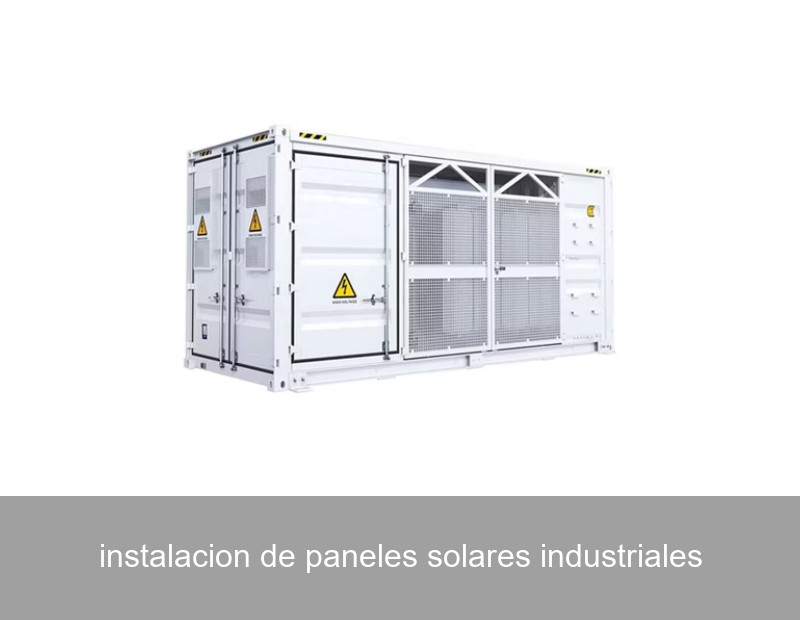
Have you ever looked at your factory's vast, unused roof space or that sprawling, sun-drenched yard and wondered if it could be more than just an asset on the balance sheet? What if it could become a direct source of clean, low-cost power, insulating your operations from volatile energy prices? That's the powerful promise behind instalacion de paneles solares industriales (industrial solar panel installation). It's no longer just a "green" gesture; it's a strategic financial decision, and for businesses across Europe and the U.S., the sun is rising on a new era of energy independence.
Table of Contents
The Rising Demand for Industrial Solar Power
The phenomenon is clear: from automotive plants in Germany to data centers in Texas, industrial facilities are turning to solar. The driver? A compelling mix of economics and sustainability. Energy costs represent one of the largest operational expenditures for industrial players. With grid electricity prices experiencing significant fluctuations, solar provides a predictable, long-term cost. According to the International Renewable Energy Agency (IRENA), the global weighted average levelized cost of electricity (LCOE) for utility-scale solar photovoltaics has fallen by a staggering 89% between 2010 and 2022. This makes solar not just competitive, but often the cheapest source of new electricity generation in many markets.
But the motivation isn't purely financial. Corporate sustainability goals, regulatory pressures like the EU's Green Deal, and the desire for a resilient brand image are powerful catalysts. An industrial solar installation is a visible commitment to these goals, reducing a facility's carbon footprint dramatically.
Beyond the Panels: The Critical Role of Energy Storage
Here's a crucial insight many overlook: an industrial solar array is most powerful when paired with intelligent energy storage. Think about it—the sun doesn't shine 24/7, but your factory might operate around the clock. Solar panels produce the most energy midday, which may not perfectly align with your peak consumption periods. Without storage, excess energy is often fed back to the grid at lower rates, missing a key opportunity.
This is where advanced Battery Energy Storage Systems (BESS) become the brain of the operation. A high-performance BESS does three critical things:
- Energy Time-Shifting: Stores surplus solar energy generated during the day for use in the evening or early morning, maximizing self-consumption.
- Peak Shaving: Discharges power during periods of high grid demand when electricity tariffs are at their peak, slashing demand charges.
- Backup Power: Provides critical backup for essential loads during grid outages, ensuring operational continuity.
As a global leader in advanced energy storage, Highjoule specializes in integrating its smart BESS solutions with industrial solar installations. Our systems are designed to seamlessly connect with new or existing solar arrays, creating a truly intelligent and resilient energy ecosystem for factories, warehouses, and industrial parks. We don't just provide hardware; we deliver a software-driven platform that optimizes every kilowatt-hour for maximum economic return.

An industrial rooftop solar installation transforms unused space into a power generator. Credit: American Public Power Association / Unsplash
The Industrial Solar Installation Process: A Step-by-Step Guide
A successful instalacion de paneles solares industriales is a meticulous engineering project. It's far more complex than a residential setup and requires deep expertise. Here’s a simplified overview of the key stages:
| Phase | Key Activities | Highjoule's Value-Add |
|---|---|---|
| 1. Feasibility & Design | Site assessment, shading analysis, energy load profiling, structural review, financial modeling. | Our experts model not just solar yield, but optimal storage sizing using our proprietary algorithms to ensure the best ROI. |
| 2. Engineering & Permitting | Detailed electrical & structural plans, navigating local grid interconnection and building permits. | We handle the complexity of integrating storage, which has its own set of codes and grid compliance requirements (like UL 9540 in the U.S.). |
| 3. Procurement & Installation | Sourcing tier-1 equipment, safe mounting of structures and panels, electrical wiring, and inverter setup. | We supply our fully integrated, containerized or modular Highjoule BESS units, ready for streamlined connection. |
| 4. Storage & Grid Integration | Installing the BESS, connecting it to the solar inverter system and the main electrical switchgear. | This is our core competency. Our systems include advanced bi-directional inverters and control systems for seamless integration. |
| 5. Commissioning & Monitoring | System testing, safety checks, grid interconnection approval, and launching monitoring software. | We commission the entire solar+storage system and provide access to our Highjoule Energy OS platform for real-time performance tracking and control. |
A Real-World Case: Manufacturing in Spain
Let's move from theory to practice with a concrete example. A mid-sized automotive parts manufacturer in Valencia, Spain, faced an annual electricity bill of over €480,000, with a significant portion from peak-time charges. Their goals were to reduce costs, achieve 30% renewable energy usage, and protect sensitive machinery from brief grid sags.
The Solution: A turnkey project involving a 750 kW rooftop solar installation coupled with a 500 kWh / 250 kW Highjoule IntelliBESS. The system was designed to cover base load with solar and use the battery explicitly for peak shaving and power quality management.
The Results (18 months post-installation):
- Energy Cost Reduction: 62% decrease in monthly demand charges and a 40% reduction in overall energy costs.
- Self-Consumption: Increased solar self-consumption rate from an estimated 55% to over 90%.
- ROI & Sustainability: Projected payback period of under 5 years. The facility now avoids approximately 420 tons of CO2 emissions annually.
- Resilience: The BESS provides seamless bridging power during micro-outages, preventing costly production halts.
This case, typical of projects in sun-rich European markets, highlights that the value of instalacion de paneles solares industriales is magnified exponentially when storage is part of the initial design, not an afterthought.

Modern Battery Energy Storage Systems (BESS) are key to maximizing solar investment. Credit: ThisisEngineering RAEng / Unsplash
Choosing the Right Technology Partner
Selecting a provider for your industrial solar and storage project is a critical decision. You need a partner with proven expertise in both domains. Look for:
- Deep Storage Expertise: Not all solar installers understand the nuances of battery chemistry, system sizing, and advanced grid services.
- Integrated Technology Stack: Ensure the solar inverters, battery management system (BMS), and energy management software (EMS) are designed to work together harmoniously.
- Long-Term Support: A 25-year solar asset needs a partner committed to its entire lifecycle, including storage system performance and software updates.
This is precisely where Highjoule positions itself. Founded in 2005, we've evolved from a storage specialist to a full-scale provider of intelligent, integrated solar-plus-storage solutions for industry. Our approach starts with your energy profile and financial objectives. We then design a system where our robust, UL/Certified BESS units and our cloud-based Energy OS work in concert with the solar array to deliver a reliable, optimized, and future-proof energy asset. We partner with leading solar EPCs or can manage the entire project, ensuring a single point of accountability.
For more on the technical standards governing these systems, the National Fire Protection Association (NFPA) provides crucial codes like NFPA 855 for energy storage installation.
Is Your Site Ready for a Transformation?
The data is compelling, the technology is proven, and the economic case is stronger than ever. Your vacant roof or land is an untapped revenue stream waiting to be activated. But the journey begins with a question: What does your facility's specific load curve look like, and how could shifting even 30% of your energy consumption to a self-managed solar-plus-storage system change your operational resilience and bottom line this year?
 Inquiry
 Online Chat