


Powering Progress: How an Installment Solar System in Karachi Can Secure Your Energy Future
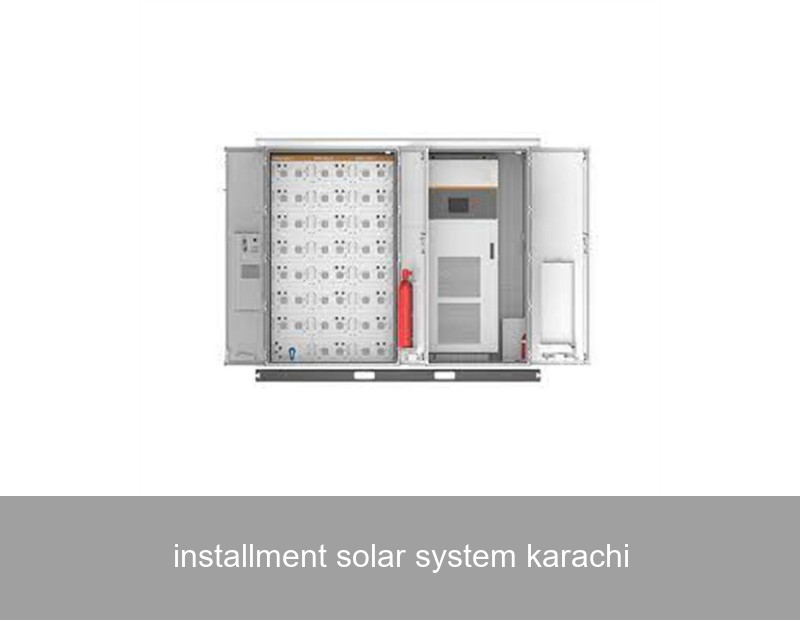
Imagine this: you're in the middle of a crucial video conference, or your factory's production line is humming at full capacity, and suddenly—the power goes out. In Karachi, a city of vibrant commerce and growing industry, load-shedding and grid instability are not just inconveniences; they are significant barriers to productivity, comfort, and economic growth. But what if you could lock in your electricity costs, gain energy independence, and do it all without a massive upfront investment? This is precisely the promise of an installment solar system in Karachi. It's more than just installing panels; it's a strategic shift towards a self-sufficient, sustainable, and financially predictable energy model.
The Core Challenge: Grid Reliability and Energy Independence
For businesses and homeowners in Karachi, the primary energy dilemma is twofold. First, the reliance on an overburdened national grid leads to unpredictable and costly outages. Second, soaring electricity tariffs from conventional sources eat into profits and household budgets. The initial capital required for a high-quality solar power system has traditionally been a hurdle for many. This is where the installment or "solar financing" model becomes a game-changer. It transforms solar from a capital expenditure (CapEx) into an operational expenditure (OpEx), similar to a predictable monthly utility bill, but one that eventually leads to ownership of the asset.
The Data Driving the Shift
Pakistan possesses exceptional solar potential, with most regions, including Karachi, receiving over 300 sunny days per year and solar irradiance levels ideal for generation. According to industry reports, the commercial and industrial (C&I) sector in Pakistan is leading the solar adoption charge, driven by the compelling return on investment (ROI) when offsetting high-tariff grid power. A well-designed system can often pay for itself in 3-5 years, after which the electricity it generates is essentially free for the remaining 20+ years of the system's life.

Image: Rooftop solar installations on commercial buildings, similar to opportunities in Karachi. Source: Unsplash
What is an Installment Solar System? Breaking Down the Model
An installment solar system allows you to finance the entire solar project—panels, inverters, mounting structures, and crucially, energy storage—through manageable monthly payments. Think of it as a solar lease or power purchase agreement (PPA) tailored for the local market.
- Low or No Upfront Cost: The primary barrier is removed. You can have a system installed with minimal initial investment.
- Fixed Monthly Payments: Your payments are predictable, often lower than or competitive with your current electricity bill, shielding you from future tariff hikes.
- Full Service Packages: Reputable providers include design, installation, permitting, monitoring, and maintenance in the package.
- Path to Ownership: At the end of the financing term (typically 5-7 years), you own the system outright and enjoy completely free solar energy.
Case Study: A Karachi Textile Factory's Transformation
Let's look at a real-world scenario to understand the impact. A mid-sized textile manufacturing unit in Korangi Industrial Area faced an average of 8 hours of daily load-shedding, forcing it to rely on expensive and polluting diesel generators. Their monthly electricity and diesel bill was approximately PKR 4.5 million.
In 2022, they opted for a financed solar solution:
| System Component | Details |
|---|---|
| Solar PV Capacity | 500 kW |
| Battery Storage | 250 kWh Lithium-ion system |
| Financing Term | 5 years |
| Monthly Installment | PKR 1.1 million |
The Results: The system now meets over 70% of their daytime load and provides critical backup during outages via the batteries. Their monthly energy expense (installment + reduced grid bill) dropped to PKR 1.8 million, saving them PKR 2.7 million monthly. Furthermore, they eliminated diesel costs and reduced their carbon footprint by an estimated 600 tons of CO2 annually. The system will be fully owned after 5 years, turning their major expense into a significant asset.
Beyond Panels: The Critical Role of Energy Storage
A common misconception is that solar panels alone solve the power outage problem. They don't—not unless paired with energy storage. Solar panels only generate power when the sun shines. During a grid outage, standard grid-tied solar systems shut down for safety reasons. This is where a solar-plus-storage system becomes non-negotiable for true energy security.
- Uninterrupted Power: Batteries store excess solar energy generated during the day and dispatch it during outages or at night, ensuring 24/7 power for critical loads.
- Maximized Self-Consumption: Store your solar surplus instead of exporting it at low rates, maximizing the financial return on your system.
- Grid Stability: Advanced systems can provide grid-support services, but their primary value in Karachi is providing a personal, reliable microgrid.
Highjoule's Smart Solutions for Robust Solar+Storage Systems
This is where a global technology partner like Highjoule adds immense value. Since 2005, Highjoule has been at the forefront of advanced energy storage solutions worldwide. For a robust installment solar system in Karachi, integrating Highjoule's products ensures longevity, intelligence, and safety.
Highjoule's H-Series Commercial & Industrial Battery Energy Storage Systems (BESS) are engineered for demanding environments. They feature:
- Ultra-Safe LFP Chemistry: Lithium Iron Phosphate batteries offer superior thermal and chemical stability, a critical safety consideration.
- Scalable Architecture: Start with what you need and expand storage capacity as your business grows, protecting your initial investment.
- Intelligent Energy Management System (EMS): The brain of the operation. Highjoule's EMS automatically optimizes when to charge from solar, when to discharge to power your facility, and when to draw from the grid, ensuring the lowest possible operating costs. It provides real-time monitoring and control via a user-friendly dashboard.
For larger commercial or microgrid applications, Highjoule's containerized MegaJoule solutions offer utility-scale storage in a pre-integrated, plug-and-play format, capable of powering entire facilities or communities.

Image: Advanced lithium-ion battery storage system in a commercial setting. Source: Unsplash
Choosing the Right Partner for Your Solar Installment Plan
Selecting a provider for your financed solar project is the most crucial decision. You need a partner who offers both financial flexibility and technical excellence.
- Technical Expertise: Do they design systems with high-quality, tier-1 components? Do they understand the necessity of integrating storage from the outset?
- Quality of Components: Insist on internationally certified solar panels and, for storage, proven, safe battery technology like Highjoule's LFP systems.
- Financial Transparency: The installment plan should be clear, with no hidden fees. Understand the total cost, interest (if any), and what happens at the contract's end.
- Comprehensive Service: Look for design, installation, grid approval assistance, and long-term maintenance and monitoring support.
As the International Energy Agency notes, the global solar supply chain is expanding, making quality components more accessible. Partnering with an installer who sources from reputable manufacturers and integrates advanced storage like Highjoule's ensures your system is a lasting investment, not just a temporary fix.
Your Energy Future Starts with a Question
Given the compelling economics of solar, the urgent need for reliable power, and the availability of installment plans, what is the single biggest factor holding your business or household back from making the switch to solar energy today? Is it clarity on the financial model, confidence in the technology's durability, or finding a truly trustworthy partner to navigate this transition with you?
 Inquiry
 Online Chat