


Understanding the New Solar Price in Sweden: Your Guide to Smarter Energy Investment
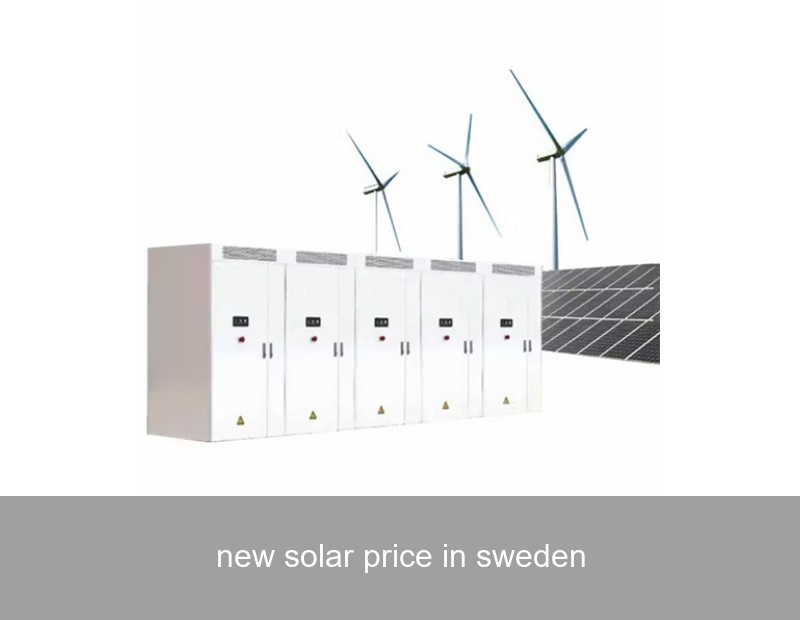
If you're a homeowner or business leader in Sweden, you've likely heard the buzz about solar energy becoming more affordable. But what does the "new solar price in Sweden" really mean for you? It's more than just a lower number on a quote; it represents a fundamental shift where sustainable power is now a compelling economic decision. Driven by technological advancements, supportive policies, and growing market maturity, the cost of harnessing the sun's energy has reached a tipping point. This article will demystify the current landscape, explore the data behind the trend, and show you how to navigate this opportunity to achieve energy independence and significant savings. As a global leader in advanced energy storage, Highjoule is at the heart of this transformation, ensuring that every kilowatt-hour your new solar panels produce is maximized for efficiency and value.
Table of Contents
- The Solar Price Shift: More Than Just Panels
- The Data Behind the Drop: Why Solar in Sweden Makes Cents
- From Theory to Reality: A Swedish Case Study
- Why a Battery is No Longer Optional
- The Highjoule Solution: Intelligent Storage for the New Price Era
- Navigating Your Investment: Key Considerations
The Solar Price Shift: More Than Just Panels
When we talk about the "new solar price," we must look at the total system cost and its lifetime value. The headline-grabbing reduction is in photovoltaic (PV) modules themselves. Over the past decade, global manufacturing scale and improved cell efficiency have driven panel costs down dramatically. But in Sweden, the story is enriched by other factors. The Swedish Energy Agency reports continued support through tax deductions for solar installations, enhancing the financial return. Furthermore, the rise of integrated energy solutions means the true value of your solar investment is unlocked not just by generation, but by how you manage and use that power. This is where the conversation evolves from solar price to system intelligence.

Image: A modern solar installation in a Nordic setting. Source: Unsplash
The Data Behind the Drop: Why Solar in Sweden Makes Cents
Let's look at some numbers. According to industry analyses, the levelized cost of electricity (LCOE) for solar PV in Scandinavia has fallen by over 60% since 2015. For a typical residential installation in Sweden, the total installed cost per watt peak (Wp) has decreased, making a 10 kW system more accessible than ever. But here's the critical insight: with lower generation costs, the proportion of system cost attributed to balance-of-system components and energy storage becomes more significant. You're not just buying panels; you're building a personal power plant. The economics now favor systems designed to capture surplus daytime production for use during expensive evening hours or less sunny days, fundamentally changing the payback period calculation.
The Role of Energy Storage in the Equation
Think of it this way: a solar panel system without storage is like a supermarket that only opens when the sun is shining. You might get great deals at noon, but you have nothing for dinner. A battery storage system, like those from Highjoule, is your pantry. It stores the abundant, low-cost energy you produce so you can use it when you need it most, drastically reducing your reliance on the grid and protecting you from volatile energy prices.
From Theory to Reality: A Swedish Case Study
Consider the real-world example of a medium-sized manufacturing workshop in Västerås. Facing rising and unpredictable electricity costs, they installed a 50 kW solar array in early 2023. The initial quotes were 20% lower than those from just two years prior. However, the real game-changer was integrating a Highjoule HES-50 Commercial Battery Storage System. The system was configured to prioritize self-consumption of solar energy and provide backup power for critical machinery.
| Metric | Before Installation | After Installation (6-month avg.) |
|---|---|---|
| Grid Electricity Purchased | 100% | 35% |
| Self-Consumption of Solar | 0% | 85%* |
| Estimated Annual Cost Saving | - | SEK 180,000 |
*The Highjoule system's intelligent management increased the self-consumption rate from an estimated 40% without storage to 85% with storage.
This case highlights that the new solar price is best leveraged as part of a holistic system. The workshop's manager noted, "The solar panels were the source, but the Highjoule battery was the brain. It made our investment work twice as hard."
Why a Battery is No Longer Optional
With the new, lower entry point for solar, adding storage is the logical next step to maximize return. Here are the key reasons:
- Maximized Self-Consumption: Store excess solar energy instead of selling it back to the grid at a lower price, then buy expensive power back later.
- Energy Security: Provides backup power during outages, a valuable feature for both homes and businesses.
- Grid Support & Potential Revenue: Advanced systems like Highjoule's can be configured to participate in grid services, opening future revenue streams.
- Long-Term Price Lock: Shield yourself from future electricity price hikes by using more of your own, predictable solar power.
The Highjoule Solution: Intelligent Storage for the New Price Era
At Highjoule, we've anticipated this shift. Our products are engineered to be the perfect complement to your new, competitively-priced solar array. We don't just sell battery boxes; we provide integrated energy management systems.
Our Residential HES-Series features scalable lithium iron phosphate (LFP) battery cabinets, known for their safety and long cycle life. They are managed by our proprietary Energy Hub, an inverter and software platform that intelligently directs energy flow based on your habits, weather forecasts, and real-time electricity prices.
For commercial and industrial clients, our HES-Containerized Megawatt-scale solutions offer turnkey storage for larger solar installations. These systems can manage demand charges, provide black-start capability, and integrate seamlessly with existing microgrid controls. Founded in 2005, Highjoule brings nearly two decades of global experience in making renewable energy systems reliable, efficient, and financially smart.

Image: Inside a modern battery energy storage system container. Source: Unsplash
Navigating Your Investment: Key Considerations
So, you're convinced by the new economics. What should you look for when planning your system?
- Quality of Components: Not all solar panels and batteries are created equal. Look for reputable brands with strong warranties and proven field performance.
- System Design & Software: The hardware must be orchestrated by smart software. Ensure your provider offers intelligent energy management that can adapt to your needs and future policy changes.
- Total Lifetime Value: Calculate payback based on total system cost and projected energy savings over 15-20 years, not just upfront price. A slightly higher initial investment in a superior storage system can yield far greater long-term savings.
- Installation Partner: Choose an installer who understands integrated solar-plus-storage systems and can provide a clear performance guarantee.
As the International Energy Agency (IEA) confirms, solar PV is set to dominate global capacity additions, and pairing it with storage is the key to its stability and value.
The new solar price in Sweden opens a door. But will you step through and build a system that merely generates electricity, or will you create an intelligent energy asset that provides independence, resilience, and optimized savings for decades to come? What is the first question you will ask your energy consultant about integrating storage with your solar project?
 Inquiry
 Online Chat