


Integrated Green Energy Solutions: Powering a Sustainable Future
Have you ever looked at your energy bill and wondered, "There must be a better way"? You're not alone. Across Europe and the US, businesses and homeowners are grappling with volatile energy prices and a growing desire to reduce their carbon footprint. The answer is increasingly clear: a shift from fragmented power sources to smart, unified systems. This is where integrated green energy solutions come into play, transforming how we generate, store, and consume energy. By seamlessly combining solar panels, advanced battery storage, and intelligent energy management software, these systems create self-sufficient energy ecosystems. As a leader in this space since 2005, Highjoule is at the forefront of designing and deploying these intelligent systems for commercial, industrial, residential, and microgrid applications, proving that sustainability and reliability can go hand-in-hand.
Table of Contents
- The Energy Puzzle: A Problem of Disconnection
- What Are Integrated Green Energy Solutions?
- The Data Don't Lie: Why Integration is the Key
- Case Study: A Bavarian Dairy Farm's Journey to Energy Independence
- Highjoule's Role: The Intelligence Behind the Integration
- The Future Energy Landscape: Microgrids and Beyond
- Is Your Home or Business Ready for This Integration?
The Energy Puzzle: A Problem of Disconnection
For years, the approach to renewable energy has often been piecemeal. A homeowner installs solar panels. A factory adds a backup diesel generator. While well-intentioned, these isolated components operate in silos, leading to inefficiency. Solar panels might produce excess energy at noon that goes unused, only for the property to draw expensive power from the grid in the evening. This disconnect is the core challenge. True energy resilience and cost savings aren't achieved by just adding green hardware; they are achieved through integration. The system must communicate with itself, making real-time decisions to optimize every kilowatt-hour.

Image: A modern home with an integrated solar and storage system. Credit: Unsplash
What Are Integrated Green Energy Solutions?
Think of an integrated green energy solution as a symphony orchestra. Each instrument (solar panels, batteries, inverters, grid connection) is talented on its own, but it's the conductor (the energy management system) that harmonizes them to create a perfect performance. Technically, it's a unified system that typically includes:
- Generation: Renewable sources like photovoltaic (PV) solar arrays.
- Storage: Lithium-ion battery energy storage systems (BESS) to capture surplus energy.
- Management & Conversion: Smart inverters and the core "brain" – an Energy Management System (EMS).
- Consumption & Grid Interaction: The existing electrical load of the building and a bidirectional connection to the public grid.
The magic happens in the software. An advanced EMS uses weather forecasts, electricity price signals, and consumption patterns to autonomously decide: should we store solar energy now, use it directly, or even sell it back to the grid for profit? This level of control is what defines a modern, integrated solution.
The Data Don't Lie: Why Integration is the Key
The theoretical benefits are compelling, but the data from real-world deployments is even more convincing. According to a 2022 report by the National Renewable Energy Laboratory (NREL), combining solar PV with storage can increase the value of solar by 20-40% by shifting energy to more valuable times. Let's break down the impact:
| Metric | Solar-Only System | Integrated Solar + Storage System |
|---|---|---|
| Self-Consumption | ~30-50% (excess exported) | 70-90%+ (excess stored for later) |
| Grid Dependence at Peak | High (evenings) | Low to Zero |
| Bill Savings Potential | Significant | Maximized (avoids peak tariffs) |
| Backup Power During Outage | None (grid-tied systems shut off) | Seamless, automatic backup |
For businesses, this isn't just about savings; it's about operational continuity. A single power outage can cost a medium-sized factory tens of thousands in lost production. An integrated system with islanding capability acts as an uninterruptible power supply for the entire facility.
Case Study: A Bavarian Dairy Farm's Journey to Energy Independence
Let's make this concrete with a story from southern Germany. The Müller family runs a mid-sized dairy farm with 200 cows. Their energy needs were substantial and constant: milking machines, cooling tanks, ventilation. Rising energy costs were eating into their margins, and their remote location made grid reliability a concern.
The Challenge: Reduce energy costs, ensure 24/7 power for critical cooling systems, and leverage available roof space and local subsidies.
The Integrated Solution (with Highjoule): Highjoule engineers designed a turnkey system featuring a 120 kWp rooftop solar array, a 240 kWh Highjoule CubeStack commercial battery storage unit, and the Highjoule Harmony EMS platform. The system was specifically programmed to prioritize the constant cooling load and pre-charge batteries before expected cloudy periods.
The Data-Driven Outcome (after 12 months):
- Grid Electricity Purchases Reduced by 92%: The farm now operates primarily on its own solar-generated and stored power.
- Annual Energy Cost Savings: €28,500: A combination of avoided consumption and revenue from feeding small surpluses into the grid during high-price periods.
- Full Backup for Critical Loads: During two regional grid outages totaling 8 hours, the milking and cooling operations continued without interruption.
- Carbon Footprint Reduction: Estimated annual CO2 reduction of 62 tonnes.

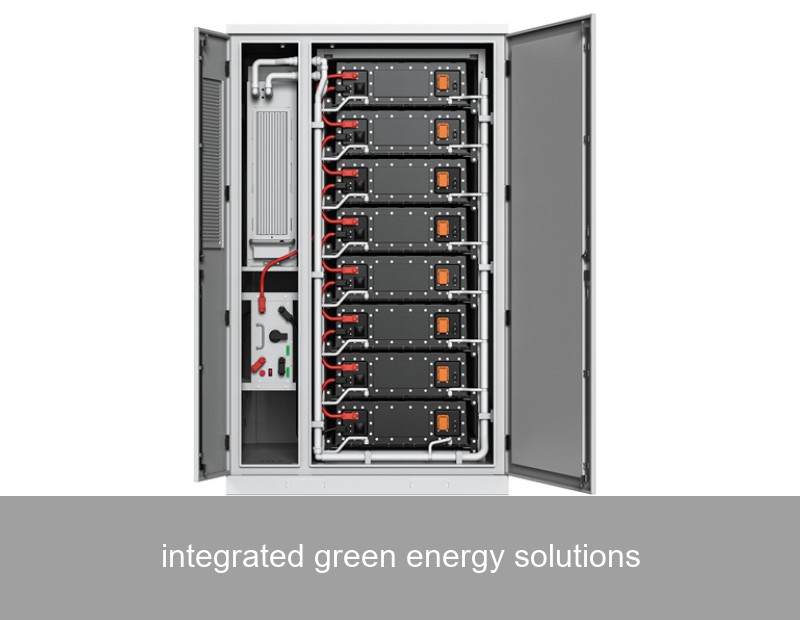
Image: A modular battery energy storage system similar to commercial installations. Credit: Unsplash
This case exemplifies the power of integrated green energy solutions. It wasn't just about installing solar panels; it was about creating a customized, intelligent energy system that understood and adapted to the farm's unique operational rhythm.
Highjoule's Role: The Intelligence Behind the Integration
So, what does it take to deliver such a result? At Highjoule, we believe integration starts with deep expertise in every component and, more importantly, in how they interact. Our product ecosystem is built for seamless synergy:
- Highjoule SolarSync PV Optimizers: Ensure each solar panel performs at its peak, even in shaded conditions, feeding clean energy efficiently into the system.
- Highjoule CubeStack Battery Systems: Our scalable, UL9540-certified battery storage solutions are the heart of energy resilience. Built with safety and longevity in mind, they are designed for thousands of cycles and are compatible with both new and existing solar installations.
- The Highjoule Harmony EMS Platform: This is the true "conductor." This cloud-connected platform uses AI-driven algorithms to forecast, optimize, and control the entire energy flow. Users can monitor performance, savings, and environmental impact from a simple dashboard on their phone or computer.
Our service goes beyond hardware. We provide comprehensive feasibility studies, system design, installation support via our certified partner network, and ongoing performance monitoring. For a hospital in California or a manufacturing plant in Poland, our goal is to deliver a complete, intelligent energy solution that works tirelessly in the background.
The Future Energy Landscape: Microgrids and Virtual Power Plants
The concept of integration is scaling beyond individual buildings. Imagine a neighborhood, an industrial park, or even an entire island where dozens of integrated systems—homes, businesses, and community solar—are connected and coordinated. This is a microgrid. Highjoule's technology is pivotal in these projects, allowing clusters of buildings to share energy locally, dramatically enhancing community-wide resilience, especially in areas prone to extreme weather as highlighted by the International Energy Agency (IEA).
Furthermore, when thousands of these distributed systems are aggregated, they form a Virtual Power Plant (VPP). A VPP can act like a single, flexible power plant, providing crucial grid services and stabilizing the broader electricity network. By choosing an integrated system from a provider like Highjoule, you're not just powering your property; you're potentially becoming a vital cell in a smarter, more resilient future grid.
Is Your Home or Business Ready for This Integration?
The journey towards a truly integrated energy setup begins with a question. What is your primary goal: locking in long-term energy costs, achieving unwavering backup power, meeting corporate sustainability targets, or all of the above? The technology is here, proven, and more accessible than ever. We invite you to consider: what would the ability to predict and control your energy costs do for your budget or business planning this year?
 Inquiry
 Online Chat